On 14 May 1995 the Dalai Lama publicly announced the six-year-old Gedhun Choekyi Nyima as the 11th Panchen Lama.
Tasked with recognising the next Dalai Lama, the Panchen Lama, or ‘Great Scholar’, is one of the most important figures in the Gelug school of Tibetan Buddhism, with a spiritual authority second only to that of the Dalai Lama. For centuries, successive Panchem Lamas have lived in and led the influential Tashilhunpo Monastery in Tibet’s second largest city Shigatse, playing a key role in the development of Tibetan Buddhist scholarship.
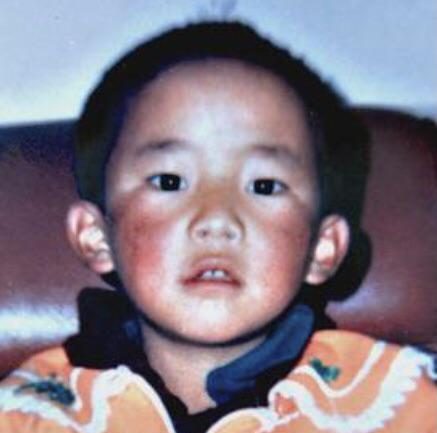
But Nyima has been denied this. Three days after he was recognised as the Panchen Lama, he and his family were abducted by the Chinese Communist Party (CCP). Nyima became the world’s youngest political prisoner, and he has not been seen in public since.
A rise and fall
Nyima’s predecessor Choekyi Gyaltsen is said to have initially been a supporter of China’s claim of sovereignty over Tibet. In September 1954 he attended the first session of China’s first ever National People’s Congress, where he met the country’s then leader Mao Zedong, and he later publicly supported the CCP when the Dalai Lama fled to India in 1959.
By 1962 however, Gyaltsen had fallen out of favour with the CCP after he wrote a comprehensive report – later known as the 70,000 Character Petition – outlining and criticising the government’s policies and actions in Tibet. In 1964 he was dismissed from all his official political positions and declared ‘an enemy of the Tibetan people’, and in 1968 he was imprisoned in the maximum-security Qincheng Prison in Beijing, where he remained for almost a decade before being released into house arrest in 1977.
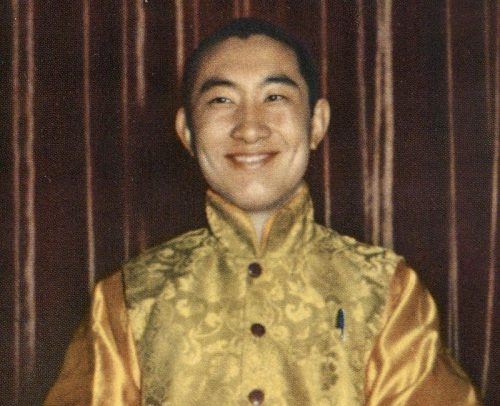
With the Chinese government eventually considering him fully rehabilitated – in part because he had renounced his monastic vows of celibacy and gone on to marry and have a daughter – Gyaltsen was subsequently restored to various positions of authority, including the vice-chairman of the National People’s Congress, in the 1980s, however by the end of the decade he was once again convinced that the Chinese government did not have Tibet’s best interests at heart.
On 23 January 1989 he delivered a speech at Tashilhunpo Monastery in which he claimed that ‘the price paid’ for Tibet’s development under Chinese rule had been ‘greater than the gains’. Five days later he was dead; the authorities reported that he had suffered a heart attack, but some Tibetans have suspected foul play ever since.
A compromised selection process
After Gyaltsen’s death, the CCP immediately attempted to seize control of the selection of his successor. On 30 January 1989 the State Council published a decision on the funeral and reincarnation of the 10th Panchen Lama, stating that the process would be led by the Democratic Management Committee of Tashilhunpo Monastery – with assistance from the government-controlled Buddhist Association of China (BAC) and its Tibet branch – who would in turn ‘report to the State Council for approval’.
In August 1989 the government appointed the abbot of Tashilhunpo Monastery, Chadrel Rinpoche, to lead the search committee, however they later attempted to replace him with a noted CCP supporter. Rinpoche was arrested shortly after Nyima was formally recognised; he subsequently spent almost two years in incommunicado detention, and in April 1997 was sentenced to six years imprisonment and three years deprivation of political rights for ‘plotting to split the country’ and ‘leaking state secrets’.
In late 1995 the Chinese government announced its own choice for Panchen Lama, the then-five-year-old Gyaincain Norbu. Widely rejected by most Tibetans, Norbu has been moulded into a vocal supporter of the CCP and its policies, urging monks and nuns to distance themselves from the exiled Dalai Lama, and repeatedly emphasising themes of national and ethnic unity which are often used as a pretext for the CCP’s crackdown on various religious and ethnic groups across the country.

Norbu has also been appointed to various positions of authority in China, including as president of the regional branch of the BAC in Tibet, in what has been seen as an unsuccessful attempt by the CCP to confer his selection with legitimacy and raise his profile in opposition to the Dalai Lama.
Obvious intentions
Three decades since his disappearance, Nyima’s circumstances remain unknown. The United Nations (UN) Committee on the Rights of the Child first called on the CCP to provide information about his whereabouts in May 1996, and it has done so repeatedly since, as have successive UN Special Rapporteurs on the right to freedom of religion or belief (FoRB), the UN Working Group on Enforced or Involuntary Disappearances, and multiple governments.
In May 2020 the CCP claimed that Nyima had ‘received free compulsory education when he was a child, passed the college entrance examination and now has a job’ and that he and his family did not wish to be disturbed in their ‘current normal lives’.
Such claims may be more convincing had the government not already changed its story multiple times, or if its true intentions were not obvious enough. The Dalai Lama will turn 90 in July and has been a prominent critic of the CCP for decades; it seems inevitable that when he dies the government will seek to use Norbu to select a new Dalai Lama who will be supportive of the regime and specifically of its ongoing and severe repression in Tibet.
The international community must continue to see right through this. It must hold the CCP to account for its ongoing violations of FoRB and other fundamental human rights in the Tibetan region, and it must continue to demand answers as to Nyima and his family’s well-being and whereabouts until the government provides a satisfactory response and ultimately releases them.
By CSW’s Press & Public Affairs Officer Ellis Heasley