‘Cuba needs more than words’: Why neutrality is not an option for religious leaders on the island. 

‘It was terrifying for my children… they started crying and screaming.’

On Sunday 22 March, in Guanabacoa, Havana Province, Cuba worshippers, including several minors, at the Christ Center Missionary Alliance were attacked with stones and concrete blocks by a neighbour who reportedly works for the Ministry of the Interior, and who has a history of hostile actions targeting the church. The church’s Pastors Yoennis Cala and Dayana Gómez, along with their young children, experienced moments of panic when a neighbour hurled objects at their home.

The incident marked one of several indicators of a new wave of repression in Cuba – one marked by detentions, acts of violence, and actions targeting individuals linked to religious belief and public expression, and one that reflects a troubling pattern across different regions of the country.

Continue reading “‘Cuba needs more than words’: Why neutrality is not an option for religious leaders on the island. “

A pastor arrested over YouTube videos, a child detained for days, a country in crisis. What is happening in Cuba?

On 15 March Pastor Rolando Pérez Lora was arrested in front his family in a park in Peñas Altas, Matanzas, in northern Cuba, moments after he had finished uploading a Bible teaching video to his YouTube channel.

It is not clear what offence the political police officers who arrested him believed he had committed. Pastor Pérez told CSW that he records and uploads videos in the park, which is one of only two locations in the area with public Wi-Fi, every week. His wife, Gelayne Rodríguez Ávila, joins him and often prays for those who gather to listen and request prayer.

Video footage taken by Mrs Rodríguez depicts her husband being forced into a patrol car by two officers as he protests: ‘You’re mistreating me for no reason. I haven’t done anything wrong.’ The cries of his young children can be heard in the background.

Continue reading “A pastor arrested over YouTube videos, a child detained for days, a country in crisis. What is happening in Cuba?”

The ouster of Nicolás Maduro will bring both fresh and familiar challenges for religious leaders in Venezuela

Until 3 January 2026, Nicolás Maduro sat as the head of the Venezuelan government. He derived much, if not all, of his legitimacy because he was handpicked as successor by the late president, Hugo Chávez, with the approval of the then leader of Cuba, Raúl Castro. This superseded the normal chain of succession, under which Diosdado Cabello, as head of the National Assembly, should have assumed the presidency until elections could be held.  

At the time, speculation was rampant about possible divisions within Chávez’s inner circle, and the possibility that Cabello might make a power grab of his own. However, Cabello, and other powerful Chávez loyalists, including General Vladimir Padrino, publicly accepted Chávez’s choice, allowing Maduro to ascend to the presidency.  

The result was what has been widely, and misleadingly, referred to as ‘the Maduro Regime’, but which, in truth, is a Chavista regime – set up strategically and intentionally with a cast of key players to ensure that the Chavista party, the United Socialist Party of Venezuela (PSUV) remains in power indefinitely. Over the past 13 years, members of this cast of players have supported Maduro’s position even as they consolidated power and massive wealth for themselves.

Continue reading “The ouster of Nicolás Maduro will bring both fresh and familiar challenges for religious leaders in Venezuela”

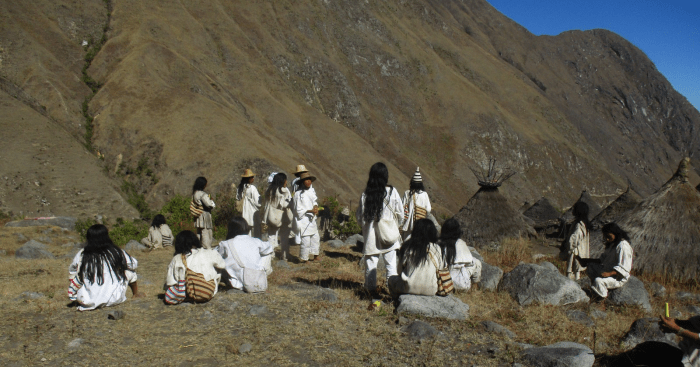
Despite government promises, ‘Total Peace’ remains elusive in Colombia today

On 4 April Maribel Silva, Isaíd Gómez and Isaíd’s uncle, Carlos Valero obeyed the summonses of an illegal armed group operating in the Calamar Municipality of Colombia’s Guaviare Department. The next day, James Caicedo, Jesús Valero, Maryuri Hernández, Nixon Peñalosa and Oscar García did the same. 

After the individuals failed to return home to their families in the hamlet of Agua Bonita in Pueblo Seco their family members reached out to representatives of the illegal armed group who had issued the summonses, but the group denied that any summonses had been issued. Later, the family members were indirectly warned that they should stop looking for their loved ones and ‘consider the case to be closed.’  

So their families were left waiting, in the horrific uncertainty of what might have happened to them, wondering whether to sit tight, holding onto hope that their family members still might return home, or to flee the region out of fear of reprisals and for the safety and protection of the lives of the children and parents of the disappeared individuals. All eight individuals had already relocated and settled in Guaviare after being displaced from Arauca Department due to violence and severe violations of freedom of religion or belief (FoRB), including the closure of churches and the targeting of Protestant pastors by illegal armed and criminal groups over the past decade.  

Continue reading “Despite government promises, ‘Total Peace’ remains elusive in Colombia today”

For authorities in Cuba’s prisons, the right to freedom of religion or belief is a tool to manipulate 

It has been understood for decades that conditions in Cuba’s maximum-security prisons are terrible. They have only grown worse over the past few years as the entire country has experienced an economic and infrastructure crisis, with critical shortages of food and medicine across the country alongside the repeat failure of the island’s entire electrical grid, sometimes for days at a time.  

Since 1989, the Cuban government has refused access to the International Committee of the Red Cross to monitor or assess prison conditions. Prisoners are held in unhygienic, sometimes overcrowded conditions, in cells infested with mosquitoes and bedbugs. The food served to prisoners is unpalatable, riddled with insects and worms, and low in nutrition. Despite rampant disease, including tuberculosis, dengue, and dysentery outbreaks, throughout the prison facilities, medical attention is inadequate, if provided at all.  

During the hot and humid summer months, temperatures inside the cells can rise to dangerous levels. Multiple former political prisoners have told CSW that the only water they had extremely limited access to, both for drinking and personal hygiene, was cloudy or dirty.  

Continue reading “For authorities in Cuba’s prisons, the right to freedom of religion or belief is a tool to manipulate “