By Ju Il-Lyong (North Korean Defector & Chair of Tong-il Majoong (TIMJ), a non-profit organisation dedicated to North Korean human rights and evangelisation).
Have you ever considered how a fragile chick comes into the world? When a fertilised egg is kept at the right temperature, it begins to develop quietly under the hen’s warmth. After about three weeks, the moment of hatching arrives. From inside the shell, the tiny creature starts to gently tap with its beak. But for the chick to break free and be born into life, something more is needed: the mother hen must hear that subtle sound and respond from the outside, pecking the shell in unison. Only through this simultaneous action—inside and out—can life emerge.
In many ways, this mirrors the journey of the North Korean people in their pursuit of freedom—freedom that is their inherent right. For nearly 80 years, they have lived under the iron grip of the Kim dynasty, isolated from the world by a regime-built shell of fear, deception and control. To the outside world, their voices have been muted, heard only faintly through the distorted lens of state propaganda.
And yet, while the world has not always seen it, something remarkable has been happening within. The North Korean people, through their own quiet resilience, have created spaces of resistance—building grassroots markets within a planned economy, shifting the economic balance from state to citizen. In some instances, the state has even been forced to apologise for failing these very people.
Now, they are beginning to tap—gently but persistently—on the shell that surrounds them, seeking to reach the outside world. The flow of information into North Korea—truth, freedom and the gospel—has become a vital response. It encourages, empowers and enlivens this inner awakening.
In the following article, I will explore this extraordinary transformation—and why now, more than ever, the world must respond.
Silent Revolution: Marketisation
For decades, North Korea adhered rigidly to a socialist planned economy. Citizens were assigned jobs by the state, production was entirely owned by the government, and the regime distributed fixed rations based on national plans. This system was sustained for years with vital support from the Soviet Union and China. However, as relations with China cooled in the 1990s and the Soviet Union collapsed, the economic foundation crumbled. The rationing system broke down, state supply chains stopped functioning, and widespread famine ensued—resulting in the death of an estimated three million people during what is now known as the ‘Arduous March.’
Yet the people did not remain idle. In the absence of state provision, North Koreans began bartering household items such as pots, blankets, and furniture for food. This evolved into a broader barter economy, eventually developing into underground markets. Though officially sanctioned markets had existed sporadically, they operated under strict state control, with fixed prices and limited, approved goods. The new black markets, however, grew outside of government control.
The regime responded with sweeping crackdowns, deploying state security agents to suppress the unauthorised trading. Yet traders adapted, moving from alley to alley to continue their business. The people’s instinct for survival proved stronger than the state’s grip. As the government’s control weakened, the regime was left with little choice: in the early 2000s, it officially acknowledged and legalized market activities (North Korean Review, 2016). This marked the people’s first silent victory—a triumph achieved not through protest or rebellion, but through quiet, persistent defiance of a failed system.
The markets grew rapidly. A new entrepreneurial class, known as donju (literally ‘money masters’), emerged, and their influence expanded to the point where, according to some experts, even government officials began borrowing capital from them to carry out state projects. Today, there are over 400 officially recognized markets in North Korea, and more than 80% of the population relies on them for survival (CSIS, 2018).
In an effort to regain control, the Kim regime launched a currency reform in 2009. By invalidating the old currency and allowing only limited exchanges for new bills, the state threatened to wipe out the hard-earned savings of ordinary citizens. The public backlash was swift and fierce. In a rare act of defiance, some residents reportedly burned the worthless bills in the streets.
Ultimately, the regime was forced to retreat. Then–Premier Kim Yong Il issued a formal apology to the people (RFA, 12 February 2010)—an extraordinary event in North Korean history, where the regime almost never admits fault. For a government that upholds the doctrine of the leader’s infallibility, this concession was nothing short of revolutionary. It was the people’s second silent victory.
Today, the market economy is entrenched even in Pyongyang, the very heart of the regime. There are now five competing taxi companies in the capital alone. No one ever taught North Koreans about capitalism or market economics. Yet, through their own resilience, they have cultivated the seeds of a free market economy within the confines of socialist orthodoxy. This evolution represents not just an economic shift, but a silent systemic transformation—perhaps the most profound revolution underway in North Korea today.
Freedom Seekers: The Jangmadang Generation
Just as the Kim dynasty has inherited and preserved a legacy of repression, so too has the North Korean people’s silent revolution been passed down and nurtured by a new generation. The Jangmadang (North Korean term for ‘market’) Generation are the heirs of this revolution—or perhaps more accurately, its next protagonists. The Jangmadang Generation (MG) refers to the youth born and raised in the wake of North Korea’s marketisation in the 1990s. Unlike previous generations, they grew up not under a rationing system, but within the framework of market life.
Many MGs have never once received state rations. Their livelihoods have depended entirely on income generated through market activity. To them, the market is not simply a place of commerce—it is the foundation of survival and a rare space of opportunity. In contrast, the government is seen less as a provider and more as a predator, regularly extracting up to 30 percent of their income in the form of stall fees or loyalty payments (Daily NK, 17 Dec 2019).
In this environment, the MG have chosen self-reliance over submission. They think for themselves, act independently, and survive on their own terms. In the truest sense, they are living ‘subjective’ lives—lives defined not by state control, but by personal agency.
Among this generation, loyalty to the regime is increasingly rare. While a small group of hardline loyalists may still exist, the majority of ordinary youth no longer express reverence for the leader. In fact, some go so far as to mock Kim Jong Un in private conversations, creating jokes at his expense (CSIS, 2 Nov 2016). This generation is also marked by a deep curiosity about the outside world. South Korean dramas, pop music, and fashion are not mere entertainment—they are glimpses into a different kind of life. For these young people, whose basic needs are met through the markets, external content becomes a means of self-expression and psychological liberation.
The influence of such content is visible. Following the popularity of Korean dramas, some customers began requesting the same hairstyles worn by TV characters. Shops, as if imitating fashion models, would dress well-styled individuals and have them walk past the storefront, and young people started to mimic not only their looks but also their mannerisms. The MG is not just consuming foreign media—they are internalising new cultural and personal identities.
Alarmed by the spread of South Korean influence, the North Korean regime enacted the ‘Law on the Elimination of Reactionary Thought and Culture’ in 2020. Under this law, the consumption of South Korean content is punishable by severe penalties, including even the death sentence. This crackdown is itself evidence of how widespread and impactful the influence of outside information has become.
Born from the market, the MG continues to live autonomously under a system they quietly resent. As their parents pioneered economic survival through underground trade, these youth now carry within them a growing fire—a second revolution driven not just by hunger, but by a longing for freedom.
Freedom Partners on the Outside
North Korean defectors have become catalysts for freedom—external allies responding to the quiet taps from within. Today, an estimated 300,000 North Korean defectors are living around the world. That’s roughly one for every 80 people still inside the country, and a number greater than the population of Chuncheon, a mid-sized city in South Korea with around 280,000 residents.
Many of these defectors maintain covert contact with their families back home, providing not only emotional support but also financial lifelines. According to some estimates, in 2015 alone, defectors collectively remitted between 10 to 15 million USD into North Korea. Given that one US dollar can sustain a family of four for a day in North Korea, the impact is both tangible and life-giving.
These courageous defectors are not merely sending money. Through the same clandestine routes, they are also passing on news of the outside world, the gospel, and the values of freedom, human rights and democracy. In the past, families of defectors were often punished, even sent to prison camps. But in recent years, the regime has begun to reframe them not as political liabilities, but as channels of hard currency, with some local officials even seeking to stay close to such families.
From remote farming villages to elite urban districts, defectors—who now live beyond the reach of the regime—continue to stand with those they left behind, quietly assisting friends and family who are pressing for change on the inside.
In places too dark for the world to see, North Koreans have begun to sprout seeds of freedom in their own quiet ways. They have pioneered underground markets, reshaped the economy, and raised a new generation ready for change. Now, it is the defectors—those who fled first—who are delivering vital momentum from the outside.
North Koreans are calling out to us:
‘I am alive.’
‘I have not given up—I am running toward life.’
‘I need your help to reach a free world.’
And the path to respond already exists. Through international pressure on the regime, and through sustained support from defectors, we can continue to deliver truth, hope and help directly to the people of North Korea.
As long as they have not given up on themselves, we must not give up on them. We must respond—not with indifference, but with love, with urgency, and with the heart of a mother hen answering the chick’s call from within the shell.
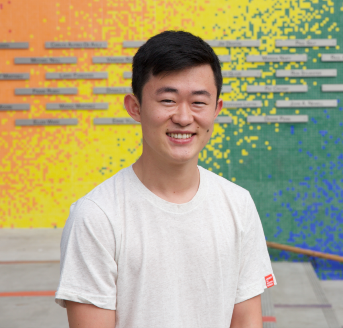
Ju Il-Lyong was born in 1996 in Chongjin, in the northern part of North Korea, as the youngest of three children. For nearly ten years, his parents secretly listened to banned South Korean radio broadcasts. Inspired by what they heard, they made the difficult decision to defect. His father escaped first, working in South Korea for a year to save enough money to bring the rest of the family out. They were reunited in 2012.
In 2022, Il-Lyong earned his Bachelor’s degree in Political Science and International Relations from Korea University, where he is now pursuing his Master’s degree in the same field.