United States (US) President Donald Trump’s Board of Peace – formally established on the sidelines of the World Economic Forum in January 2026 – purports to be an intergovernmental organisation mandated to carry out peacebuilding functions under international law. However within just a few weeks of its existence multiple concerns have arisen regarding its likely impact on the international system and human rights framework, with clear implications for situations of severe crisis around the world, including Gaza and Sudan.
Firstly, despite the organisation being billed initially as a means of implementing the Gaza ceasefire plan as enshrined in UN Security Council resolution 2803, the board’s charter makes no mention of Gaza, and instead details a mandate that possibly could undermine international law, including by supplanting crucial responsibilities of the United Nations (UN), while also potentially impacting its liquidity crisis.
Citizens of almost half of the countries that have joined the board so far are impacted by US travel bans imposed by the Trump administration. The board also appears to have been created on a ‘pay for play’ basis, with no clear oversight of the organisation’s nominally voluntary membership fees, particularly the USD 1 billion fee to secure permanent membership, raising the spectre of a potential world order where access to justice and the promotion, protection and fulfilment of human rights are dependent on a nation’s wealth, its military capability, and ultimately, its standing with the US president.
As its ‘inaugural chairman’, the president exercises more expansive powers than the UN Secretary General. As well as presiding over the governing board of member states, he also has the power to select board members, to veto any decisions adopted by a majority of members, to appoint his own successor as chair, and to dismiss board members ‘subject to a veto by a two thirds majority of Member States’, all of whom are beholden to him for said membership. Membership of the board is only accessed through an invitation from the chair and is limited to a three-year period, renewable only via an invitation from the chair. The sole means of exemption is for states to pay the US$D 1 billion permanent membership fee within the first year of the organisation’s charter entering into force. All amendments and decisions to dissolve the organisation must also be approved by the chairman.
The Board of Peace envisaged in Security Council resolution 2803 as a transitional administration of Gaza ‘to set the framework, and coordinate funding for, the redevelopment of Gaza pursuant to the Comprehensive Plan’ was designed as a temporary body, with a mandate ending on 31 December 2027, and renewable after consideration by the Council. However, the charter of the US president’s Board of Peace states that the organisation may be dissolved at the end of every odd-numbered year, to be decided by the chair. This mirroring of the term limits in the resolution 2803 raises further questions regarding the USD 1 billion permanent membership fee for an organisation that could potentially be terminated in its second year.
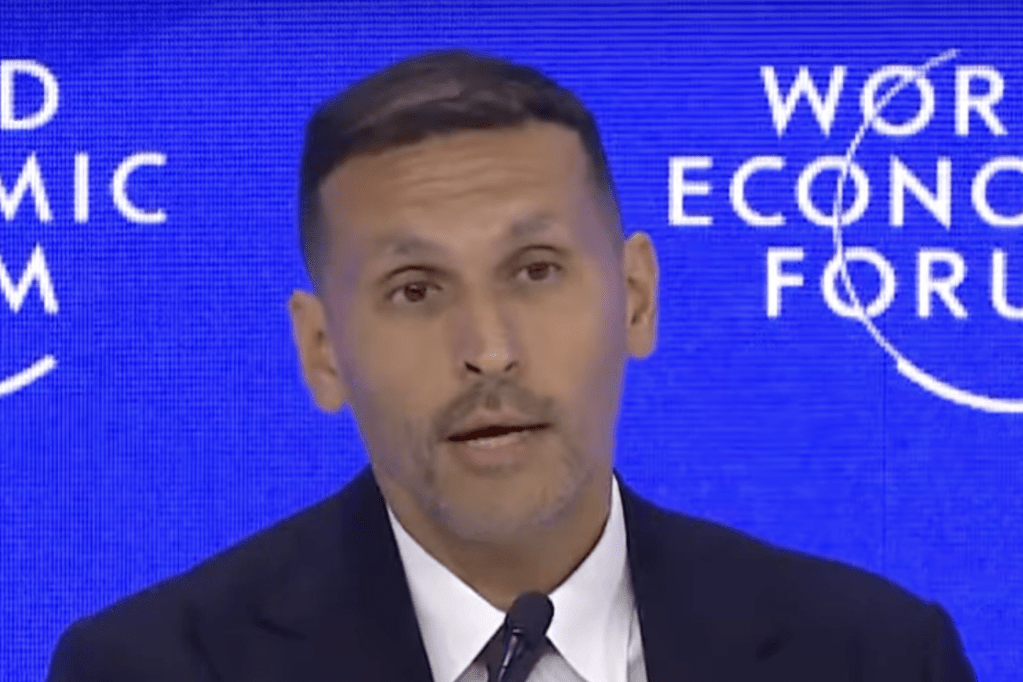
In addition, the human rights records of several current member states are less than stellar. CSW is particularly concerned at the inclusion on the board of the Chair of Manchester City, Melbourne City and Mumbai City football clubs, Khaldoon Khalifa Al Mubarak, on behalf of the United Arab Emirates (UAE), despite extensive and credible evidence of the UAE’s continued provision of military and financial support to the Rapid Support Forces (RSF) in Sudan, which currently stand accused of war crimes and crimes against humanity. The UAE’s inclusion is emblematic of the manner in which the board could be compromised by the inclusion of states that are actively undermining international peace and the advancement of human rights.
Evidence of how the board is likely to operate is already apparent.
On3 February the US hosted a hastily announced donor’s meeting in Washington DC to raise funds for Sudan. During the meeting the US government pledged USD 2 billion to the UN Office for the Coordination of Humanitarian Affairs (OCHA), which was warmly received, and the UN Under-Secretary-General for Humanitarian Affairs and Emergency Relief Coordinator, Tom Fletcher, subsequently praised both President Trump and the Board of Peace.
This meeting did not include representatives of the RSF, or the Sudanese Armed Forces (SAF), with whom it is has been in conflict since April 2023, which is not particularly unusual. However, more concerning is the total omission of members of Sudanese civil society and pro-democracy groups like Soumoud, which is led by the country’s former prime minister, Abdalla Hamdok.
The failure to include such groups means that their views will not be represented, and this will have implications for the implementation of whatever peace the US and others manage to negotiate. It is also notable that the German government has announced plans to host a funding conference for Sudan, building on the London conference in April 2025 and the Paris Conference in April 2024. It would perhaps be more beneficial and effective to coordinate these international interventions. However, the US president appears more inclined towards centring his interests, and the Board of Peace, in any negotiations.
The current international order has its shortcomings
One of the primary reasons for the creation of the UN was to ensure the maintenance of international peace and security in a post-war era in which two of the five permanent Security Council members possessed empires and a third was a one-party transcontinental federation of 15 republics. Over the following decades the world witnessed the often painful process of decolonisation and the dissolution of the Soviet Union, events which diminished three permanent members to differing extents, while expanding the UN’s membership as individual states gained independence. However, while membership of the organisation grew, its structures failed to accommodate the altered international dynamics sufficiently.
Consequently, as the Canadian Prime Minister Mark Carney highlighted at the annual meeting of the World Economic Forum in Davos, a multilateral system persisted in which the application of international law was dependent on the identity of the victim and perpetrator, stronger nations – and particularly the veto powers – could exempt themselves and their allies from rules whenever convenient, and trading relations remained asymmetrical.
The UN has long been in need of significant reform in order to ensure consistent accountability, an even application of international law and penalties for exploitative economic practices. However, embracing an organisation that has been described as ‘a top-down project to assert Trump’s control over global affairs’, whose membership includes business executives, and which does not appear to be founded, even nominally, on the principles of justice, non-discrimination, inherent human dignity and equity in international affairs, may not be the best way to achieve this.
By CSW’s Director of Advocacy Dr Khataza Gondwe