Attacks on places of worship in Manchester and Peacehaven did not arise in a vacuum. Political leadership is urgently needed. 

A man drives a car into a crowd of people outside an Orthodox synagogue on the holiest day of the Jewish calendar. He proceeds to attack those gathered outside, fatally stabbing one before being shot dead by police, who also tragically killed another whilst attempting to neutralise the attacker. 

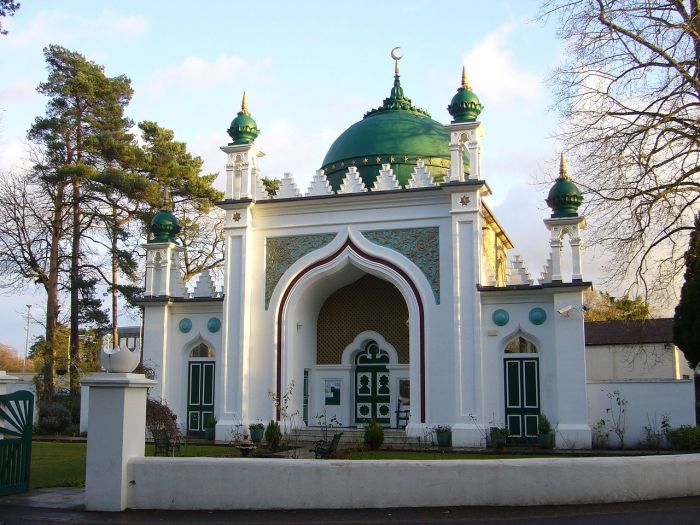
Two days later, two individuals in balaclavas set fire to the entrance of a mosque and a car parked outside it in what police are treating as a hate crime. Mercifully no-one was killed, with the two people who were inside the mosque able to escape.

At CSW, our work often involves reporting on attacks like these on places of worship in a number of countries – and often particularly in situations of conflict – around the world.  

Continue reading “Attacks on places of worship in Manchester and Peacehaven did not arise in a vacuum. Political leadership is urgently needed. “

How to tune into freedom of religion or belief during party conference season – and have your say 

The UK is currently in the middle of party conference season, when all the political parties gather to discuss policy ideas and their respective visions for the country.  

The Green Party, Liberal Democrats and Reform have already held theirs. Labour and Conservative conferences remain. 

For those of us committed to defending human rights, and freedom of religion or belief (FoRB) in particular, this season is about more than party gatherings and internal discussions. It is an opportunity to observe how political leaders are shaping policy at home and abroad in real time – and to engage, challenge, and push for FoRB to be central in those debates. 

Continue reading “How to tune into freedom of religion or belief during party conference season – and have your say “

Combating Hate Speech: The True Beginning of Peace and Human Dignity

This article by Ján Figeľ  and Sheikh Al Mafoudh bin Bayyah was originally published by The Diplomat Magazine on 30 July 2025.

‘Peace is built in the heart.’ Pope Leo XIV
‘War begins with words.’ – Sheikh Abdallah bin Bayyah

In an age marked by overlapping crises – from armed conflicts and ideological extremism to ethical breakdowns in public discourse – a need to return to the essence of words and their meaning is more urgent than ever. Words are not mere tools of expression; they are often sparks that ignite or extinguish fires. This is precisely what Sheikh Abdallah bin Bayyah, President of The Abu Dhabi Forum for Peace, warns of in his profound message: ‘War begins with words.’

With this statement he encapsulates an entire philosophy: that every physical war is preceded by a war of words, and every act of violence is rooted in a prior act of verbal aggression. Unless speech is restrained, purified of hatred, and founded on mutual respect, the path to peace will never begin.

Continue reading “Combating Hate Speech: The True Beginning of Peace and Human Dignity”

The UK government’s efforts to produce a definition of Islamophobia could prove counterproductive 

In February 2025 the UK’s Deputy Prime Minister Angela Rayner announced the convening of a working group chaired by Rt Hon Dominic Grieve KC to provide a definition of Islamophobia. She insisted that the definition would be non-statutory and align with the UK’s values of free expression, including the right to criticise a religion. Nevertheless, this action raises several concerns. 

While it can initially appear to be a useful tool for defining acts of religious hatred and incitement, in reality phobia terminology tends to hinder rather than assist efforts to address religion-related violations.  

It is imprecise, and is invariably used to shut down legitimate debate. Additionally, discussion about whether or not a given phobia is indeed occurring can often eclipse efforts to highlight and address the actual violations.   

Continue reading “The UK government’s efforts to produce a definition of Islamophobia could prove counterproductive “

Truth matters: How misinformation and sensationalism undermines support for victims of human rights violations

In early March, alarming reports surfaced of the killing of Christians in Syria. As a shocking outbreak of violence claimed the lives of over 1,000 people within just two days, including 745 civilians, many outlets were quick to claim that the country’s Christian community had been the target. 

GB News led with ‘Christians massacred as Syrian jihadist launches killing spree just weeks after toppling Assad’; a writer for the Times of Israel lamented what he identified as the media’s ‘predictable’ disdain for Syrian Christians; the Christian outlet Relevant Magazine claimed that ‘hundreds of Christians’ were among those killed, and countless posts on social media amplified claims of Christians being deliberately targeted and murdered in large numbers. 

Such reporting appeared to confirm the worst fears that many have harboured since December 2024, when President Bashir al-Assad was ousted by a coalition of rebel groups led by the Islamist military organisation Hayat Tahrir al-Sham (HTS), an organisation sanctioned by the US government. In the immediate aftermath of the takeover, many predominantly – though not exclusively – Christian outlets expressed understandable concern over impending threats to the country’s Christian community, with some warning of potential ‘ethnic cleansing’, ‘persecution’ and ‘genocide’. 

Continue reading “Truth matters: How misinformation and sensationalism undermines support for victims of human rights violations”