Attacks on places of worship in Manchester and Peacehaven did not arise in a vacuum. Political leadership is urgently needed. 

A man drives a car into a crowd of people outside an Orthodox synagogue on the holiest day of the Jewish calendar. He proceeds to attack those gathered outside, fatally stabbing one before being shot dead by police, who also tragically killed another whilst attempting to neutralise the attacker. 

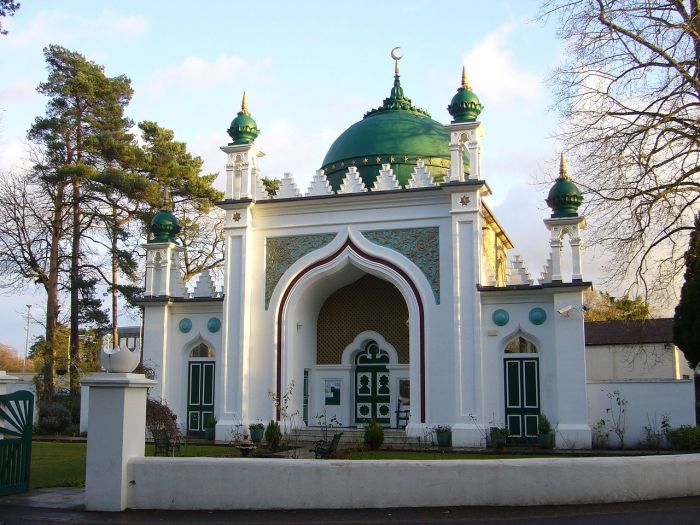
Two days later, two individuals in balaclavas set fire to the entrance of a mosque and a car parked outside it in what police are treating as a hate crime. Mercifully no-one was killed, with the two people who were inside the mosque able to escape.

At CSW, our work often involves reporting on attacks like these on places of worship in a number of countries – and often particularly in situations of conflict – around the world.  

Continue reading “Attacks on places of worship in Manchester and Peacehaven did not arise in a vacuum. Political leadership is urgently needed. “
How to tune into freedom of religion or belief during party conference season – and have your say 

The UK is currently in the middle of party conference season, when all the political parties gather to discuss policy ideas and their respective visions for the country.  

The Green Party, Liberal Democrats and Reform have already held theirs. Labour and Conservative conferences remain. 

For those of us committed to defending human rights, and freedom of religion or belief (FoRB) in particular, this season is about more than party gatherings and internal discussions. It is an opportunity to observe how political leaders are shaping policy at home and abroad in real time – and to engage, challenge, and push for FoRB to be central in those debates. 

Continue reading “How to tune into freedom of religion or belief during party conference season – and have your say “

The UK government’s efforts to produce a definition of Islamophobia could prove counterproductive 

In February 2025 the UK’s Deputy Prime Minister Angela Rayner announced the convening of a working group chaired by Rt Hon Dominic Grieve KC to provide a definition of Islamophobia. She insisted that the definition would be non-statutory and align with the UK’s values of free expression, including the right to criticise a religion. Nevertheless, this action raises several concerns. 

While it can initially appear to be a useful tool for defining acts of religious hatred and incitement, in reality phobia terminology tends to hinder rather than assist efforts to address religion-related violations.  

It is imprecise, and is invariably used to shut down legitimate debate. Additionally, discussion about whether or not a given phobia is indeed occurring can often eclipse efforts to highlight and address the actual violations.   

Continue reading “The UK government’s efforts to produce a definition of Islamophobia could prove counterproductive “
UK Parliament

Now the UK has a new Special Envoy, what does that mean for freedom of religion or belief?

After the new Labour government took office in July, one of CSW’s key priorities was ensuring the appointment of a Special Envoy for Freedom of Religion or Belief (FoRB). Without this role, the UK’s ability to advocate effectively for FoRB globally would have been severely impeded. The position was left vacant for months, raising concerns among civil society organisations, religious and belief groups, and parliamentarians committed to this fundamental human right. 

Finally, on 11 December, David Smith MP was appointed as the Special Envoy for FoRB — a significant shift, as the post is no longer ‘The Prime Minister’s’ Special Envoy, but a Special Envoy for FoRB in its own right. This distinction matters. It signals a potential recalibration of the role, embedding it more firmly within broader UK governmental structures while maintaining its critical focus on international religious freedom, although perhaps at the cost of the direct access to the Prime Minister enjoyed by previous Special Envoys. 

Continue reading “Now the UK has a new Special Envoy, what does that mean for freedom of religion or belief?”

How the new Labour government can craft a robust foreign policy with FoRB at its core

In many situations around the world, issues involving religion or belief either create or worsen instability, destabilising international peace and security. Despite this, there is no overarching consensus on practical steps to enhance the promotion and protection of freedom of religion or belief (FoRB) within a broader foreign policy framework.

A robust UK foreign policy that integrates FoRB would necessitate a multifaceted approach, strategically weaving FoRB into various aspects of international engagement. Such a policy would not only cement the UK’s commitment to human rights but also enhance its global influence by promoting peace, stability, and mutual respect among nations. Here is a comprehensive outline of what this foreign policy could look like:

1. Diplomatic Engagement

Special Envoy for FoRB: Establish a ministerial-level Special Envoy for FoRB to advocate for FoRB globally. This envoy would engage with international organisations, foreign governments, and civil society to address FoRB violations and promote interfaith engagement. In particular, the envoy would continue the UK’s admirable contributions to the International Religious Freedom or Belief Alliance (IRFBA).

Continue reading “How the new Labour government can craft a robust foreign policy with FoRB at its core”