Darkness falls quickly in Colombia due to its proximity to the equator, and it was no different on the night of Thursday 5 July 2007. As night closed in, Joel Cruz Garcia, a 27-year-old pastor, heard banging on the front door of the small home he shared with his wife Yuvy and their nine-month-old daughter in the village of El Dorado in the department of Huila. When the pastor opened the door, he was faced with a heavily armed group of individuals dressed in the uniform of the 17th Brigade of the Revolutionary Armed Forces of Colombia, better known as the FARC, who demanded that he come with them.
The pastor was given no choice, and his wife later recounted how even as the guerrillas manhandled him and ridiculed his faith, Joel quoted a Bible verse to them, saying, ‘To live is Christ and to die is gain.’
‘Good,’ the guerrillas responded. ‘Then you will die.’
The 17th Brigade planned to assassinate four pastors in El Dorado with the intention of eliminating all Protestant Christian leadership in the area in one night. Witnesses later shared that the leaders of the guerrilla group, had made public proclamations that they did not want any Protestants in the region. One of the four targeted pastors was not home, having travelled to another part of the country, a second somehow learned of the plot and managed to flee before the guerrillas could find him, but Joel and another 63-year-old pastor, Humberto Mendez, were kidnapped, tortured and executed.
Yuvy and her daughter were also forced to flee along with members of their extended family, and sought refuge in the capital city of a neighbouring department, where they lived in a precarious situation with no income or economic support.
Sadly, this case was not unique, but part of a policy implemented by the FARC and another leftist guerrilla group, the National Liberation Army, better known as the ELN, during Colombia’s decades long internal conflict.
Both groups systematically prohibited religious services and other types of religious activities, or put in place severe restrictions on religious expression, in areas under their control. Consequences for individuals, above all those in positions of leadership, who did not obey these prohibitions were severe. On the other side of the complex conflict, right-wing paramilitary groups also targeted church leaders because they recognised their leadership role and influence in their larger communities which often conflicted directly the objectives of the armed groups.
Twenty years ago, in October 2003, I visited Colombia for the first time, representing CSW at a conference held in the World Heritage Site city Cartagena de Indias. I took advantage of my presence there to respond to multiple requests CSW had received in the preceding years to investigate reports of the specific targeting of religious leaders by the various actors in the conflict which began in the 1960s but evolved with the emergence of different illegal armed groups over the following decades.
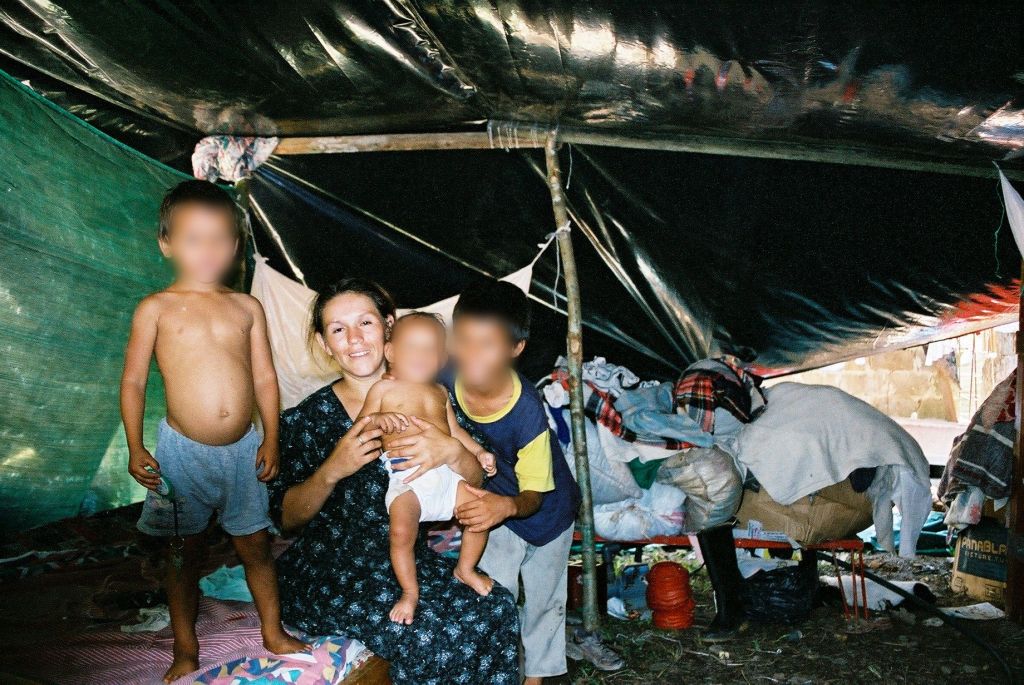
During this first visit, in addition to the Atlantic Coast, I travelled to the cities of Bogota and Medellin. My final stop was San Jose de Guaviare, a town located in the middle of a region with a very significant FARC presence. There I met and interviewed families who had been forcibly displaced from the surrounding area by the FARC as recently as weeks or days earlier. They shared stories of violence, oppression and fear. One Protestant pastor told me of the threats that they had received because of their refusal to obey FARC orders to shut the doors of their churches.
One young woman of around 18 years of age recounted how, prior to her displacement, she had grown up in an area with a total prohibition on religious expression imposed by the FARC. She and other Christians only managed to hold small prayer meetings in the homes of trusted individuals. This was similar to stories I had heard in countries like China and Vietnam, but that I never imagined could be the reality in a country like Colombia.
While I was in Medellin, a local human rights defender working with church leaders in the region handed me a list of 300 names. As I began to read it, I realized, to my horror, that the 300 people had been assassinated by illegal armed groups including the FARC, the ELN, the right-wing Self Defence Forces of Colombia, also known as the AUC, and other paramilitary groups. Each name on the list of 300 represented a church leader who had been assassinated in just three years, between 2000 and my arrival in 2003.
The 2003 visit to Colombia and what I learned there led to an agreement between CSW and the Evangelical Council of Colombia (CEDECOL) to implement a project to document cases involving serious human rights violations at the hands of illegal armed groups and experienced by individuals who had been targeted because of their attempts to freely exercise their freedom of religion or belief (FoRB). Over the next thirteen years, volunteers across Colombia, with the support of local organisations, documented thousands of cases, some of which were public, and many which were not, due to fear of reprisals from the illegal armed groups against survivors who has shared their testimonies.
These cases included the June 2007 murder of a pastor in the department of Arauca, who was shot nine times in front of his church by ELN guerrillas. At least 50 individuals witnessed the murder, including the pastor’s wife and three children. ELN leaders confirmed that he had been killed for ‘having held religious services in guerrilla territory.’
A few years later, another pastor in the same city was killed. His 15-year-old son, who witnessed his father’s assassination in 2010, said that the guerrillas asked his father, ‘if he didn’t know that worship was prohibited,’ before opening fire.
In another part of the country with a strong paramilitary presence, three armed and masked men broke into the home of Rafael Velázquez, pastor of the Foursquare Gospel Church following a religious service in the evening of 6 September 2009, in the village of Maranonal, Cordoba Department. The paramilitaries opened fire in front of the pastor’s wife and six young people from the church, killing Pastor Velázquez instantly.
I have always wondered, given the quantity of cases documented by CSW’s partners in Colombia in a ten-year period, what the true number of assassinated church leaders in the preceding, equally violent, decades, might be.
Our research clearly indicated similar motivations behind the attacks on communities of faith and their leaders. In some cases, especially with the FARC and the ELN, there was a clear ideological conflict. The political ideology of both groups considered the presence and influence of churches to be a problem to which the only response was eradication. The reasons were less ideological and more practical when it came to the paramilitary groups. These groups tolerated no independent, and much less critical, voices in the zones they controlled. When, for example, they were trying to recruit young people and children into their ranks, and a local pastor was preaching a message of peace and non-violence – that pastor became a problem to be eliminated.
The Colombian government recognises that not only were individuals victimized in the context of the internal conflict, but in some cases, specific categories of people, including journalists, human right defenders, members of indigenous and Afro-Colombian communities, and trade unionists were singled out and targeted in a unique way, experiencing a kind of collective suffering. Unfortunately, when Law 1448, also known as the Law of Victims, was adopted in 2011, the religious sector was excluded.
An initiative now exists, led by Senator Lorena Rios, formerly the coordinator of religious affairs at the Ministry of Interior of Colombia, to amend the law to include, belatedly, the religious sector. It is time that the Colombian government recognise that, within an extremely complex and long-running conflict with millions of victims, the religious sector, and, in particular, religious leaders like Joel Garcia Cruz, were systematically targeted by illegal armed groups in areas where one or more of these groups maintained a strong presence.
By CSW’s Head of Advocacy Anna Lee Stangl