‘Make the difference there’: Why we have to keep eyes on Sudan

Sorry guys, horrible stat incoming.

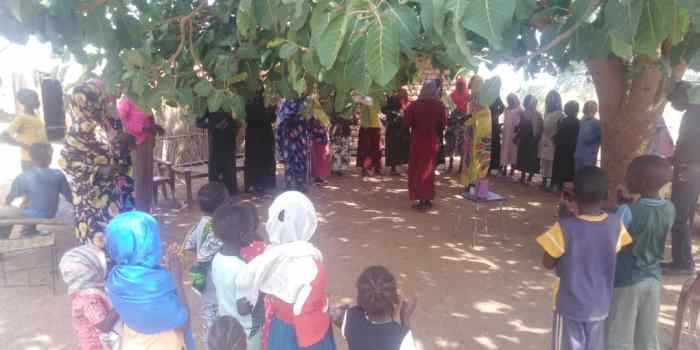
I was on a call with two of my colleagues to discuss potential poster designs that would catch people’s attention at a Christian festival, and encourage them to participate in our ‘Eyes on Sudan’ campaign, about the war in Sudan.

I had been Googling various facts and figures relating to the ongoing conflict in the country and had come across one that I found so upsetting that I felt I should at least give my friends – neither of them strangers to hearing distressing information – a moment’s warning so that they could steel themselves for what I was about to say:

Continue reading “‘Make the difference there’: Why we have to keep eyes on Sudan”

Small steps to justice: Why recent assessments of Sudan’s warring parties are significant, and how the international community must respond

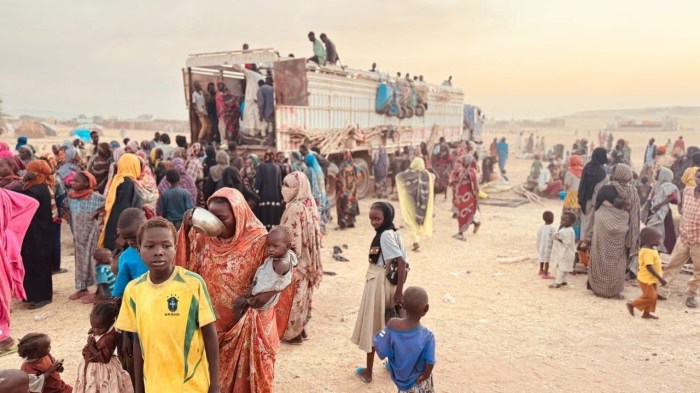
On 19 February the United Nations Independent Fact-Finding Mission (FFM) on the Sudan published a report that found that the Rapid Support Forces (RSF)’s siege and actions in the aftermath of the capture of the city of El Fasher in October 2025 bore the ‘hallmarks of genocide’.

Highlighting the militia’s systematic targeting of the non-Arab Darfuri Fur and Zaghawa communities the Chair of the FFM, Mohamed Chande Othman, said: ‘The scale, coordination, and public endorsement of the operation by senior RSF leadership demonstrate that the crimes committed in and around El-Fasher were not random excesses of war. They formed part of a planned and organised operation that bears the defining characteristics of genocide.’

Two weeks later the United States Commission for International Religious Freedom (USCIRF) recommended that the US State Department designate the RSF as an Entity of Particular Concern (EPC) in light of the ‘harmful effects to religious freedom and Sudan’s diverse religious and ethnic communities’ caused by the RSF’s campaign of mass atrocities and widespread human rights violations.

Continue reading “Small steps to justice: Why recent assessments of Sudan’s warring parties are significant, and how the international community must respond”

A police attack on a place of worship is a worrying sign of the erosion of civil and political rights in Kenya

On Sunday 25 January congregants at the Anglican Church of Kenya (ACK) Witima Parish, Nyeri County, heard shots outside of the building. Some church members went outside to investigate and saw what they believed to be the police and masked assailants surrounding the premises. In addition to the firing of live rounds, teargas was thrown into the church, with images shared on social media showing congregants covering their noses and mouths, and several individuals fainting.  

Historically there has been a respect for religious institutions in Kenya, especially for Christian churches and their leadership. Political leaders have often courted the church for political advantage and sway over key voting blocks and communities. This attack contrasts starkly with this backdrop, even within the context of increasing political and security tensions that have seen an increase in police officers unlawfully invading places of worship around the country.

Responding to the 25 January attack in the press, Bishop Gerald Muriithi of the Mount Kenya West Diocese of the Anglican Church of Kenya stated: ‘As a church we feel that our right to worship was violated, little children were traumatised, aged parents were harassed, the clergy were terrified and intimidated and political leaders were harassed.’

Continue reading “A police attack on a place of worship is a worrying sign of the erosion of civil and political rights in Kenya”

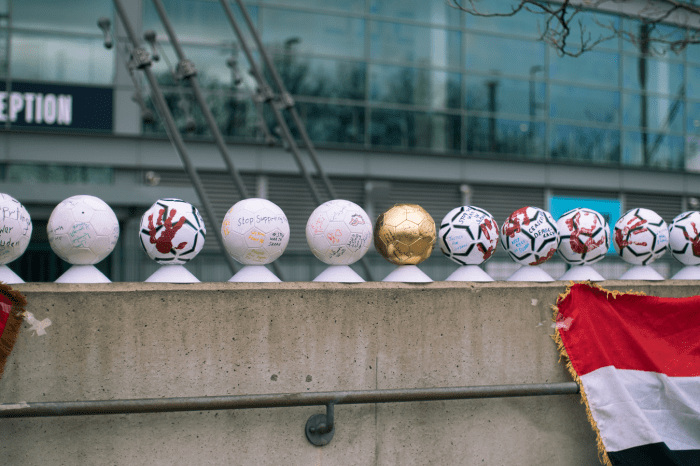
The Premier League must act on Man City owner’s involvement in the war in Sudan

In February 2021 Sheikh Mansour bin Zayed Al Nahyan, then the Deputy Prime Minister and now also the Vice President of the United Arab Emirates (UAE), received a controversial visitor. 

At the time General Mohamed Hamdan ‘Hemedti’ Dagalo was serving as Deputy Chairman of the Transitional Sovereignty Council of Sudan. He was also still the leader of the Rapid Support Forces (RSF), a group which is in reality the rebranded Janjaweed militia who were responsible for the 2003-05 Darfur genocide, and more recently, had presided over the June 2019 massacre of at least 120 pro-democracy protesters on the streets of Khartoum. 

Hemedti was already a friend to the UAE. The Emirates had reportedly paid him to send RSF fighters to Yemen as part of a Saudi-led collation to crush Houthi insurgents, in 2018. During his 2021 visit, he and Sheikh Mansour toured an arms fair, browsing exhibits of rockets and drones alongside the leader of the Chechen Republic. 

Continue reading “The Premier League must act on Man City owner’s involvement in the war in Sudan”

The inevitable result of Myanmar’s sham elections must not confer any legitimacy on its military regime 

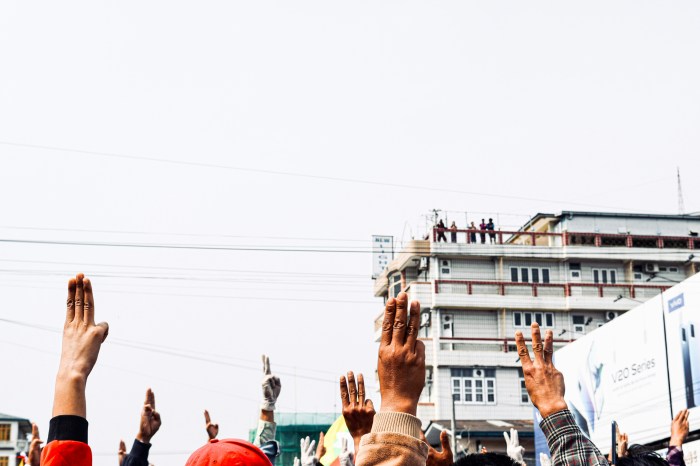
On 28 December Myanmar will begin its first general elections since its military junta seized power in a coup in February 2021. 

Of course, these elections will be neither free nor fair. They will take place against a backdrop of the continued detention of at least 22,000 political prisoners, including the country’s last freely elected leader Aung San Suu Kyi, the deregistration of numerous political parties by the military-controlled Union Election Commission (UEC), and the relentless killing of civilians. 

The outcome is guaranteed, but this can by no means be permitted to grant the regime a veneer of legitimacy on the international stage, and specifically among its neighbours in the Association of Southeast Asian Nations (ASEAN) where it seeks it most. 

Continue reading “The inevitable result of Myanmar’s sham elections must not confer any legitimacy on its military regime “