On 9 July 2015 the Chinese authorities launched an extensive crackdown on activists, lawyers, human rights defenders and their friends and family members. Dubbed the ‘709 Crackdown’ after the date on which it began, the campaign saw over 300 people detained, interrogated or imprisoned.
It is regarded as one of the worst crackdowns on human rights defenders in China’s history, and marked the start of a relentless stifling of dissent and activism that continues to date.
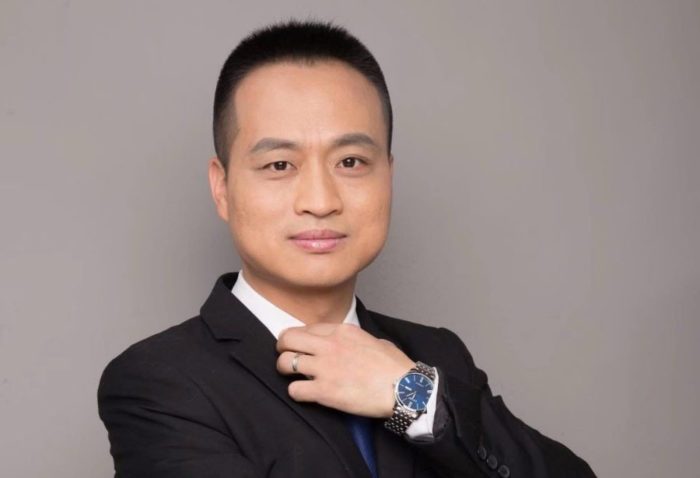
On the tenth anniversary of the crackdown, CSW presents an account from Christian lawyer Xiangui Fang who was caught up in it, and who has since had to flee China after the authorities threatened him with further imprisonment for continuing to defend human rights cases after his release:
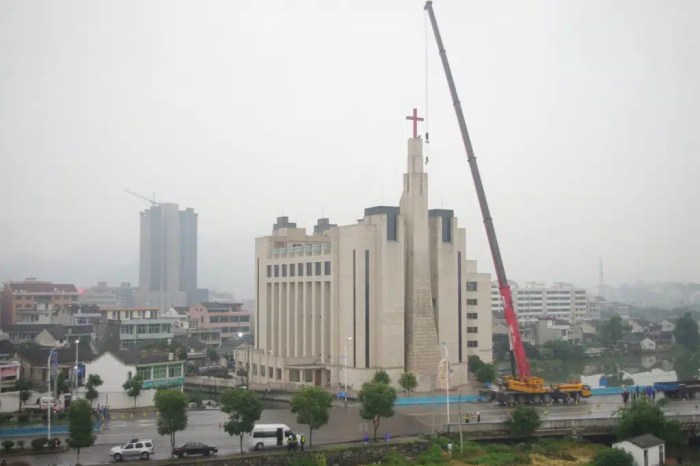
‘On 10 July 2015 I was handling a case in Cangnan County, Wenzhou [in Zhejiang Province], along with two other lawyers. We had planned to give a lecture the next day to a local church in a nearby town whose cross was under threat of forced removal.
Throughout the day, we kept receiving news of other lawyers being arrested. We even joked about whether we might be arrested too. Unexpectedly, at around 1am that night, shortly after we had fallen asleep, we were awakened by loud noises of someone violently forcing open the door. Soon, more than a dozen plainclothes individuals with unknown identities broke in. They blindfolded us, twisted our arms behind our backs, and dragged us downstairs in a humiliating manner—by the back of our collars and belts.
Once downstairs, we were each forced into separate private vehicles. At the time, we thought we had encountered some kind of violent criminals. Not long after, the cars arrived at a local police station, where our blindfolds were removed and we realized we were at Xincheng Police Station, under the jurisdiction of Cangnan County.
There was a typhoon in Wenzhou at the time, but the interrogation room had the air conditioning running, making the early morning feel especially cold and eerie—we didn’t even dare go to the bathroom. I wasn’t questioned until 4am. Several groups of people came in shifts to interrogate me. No written record was made. I was questioned again around noon the next day. In the end, I was sternly warned that they’d seen plenty of ‘diehard’ lawyers like me, and told that Wenzhou does not welcome us.
On 25 August we had planned to travel to Hangzhou the next day to meet with the [then] US President Barack Obama’s Ambassador-at-Large for International Religious Freedom. We had already drawn up a list of people who would go. That night, I had a bad feeling and jokingly said to an assistant that maybe we’d get pinned down here. Unexpectedly, at around 11.30pm, shortly after returning to our rooms and before we could even rest, plainclothes officers pushed open our door and, though polite in tone, told us they needed to take us to ‘understand a few things.’
Behind this politeness was a premeditated arrest operation. Within 24 hours, I was subjected to repeated interrogations. They asked me whether I knew about the memorial service and procession for Pastor Gao Jianguo, and who organised and planned it. They questioned me about the ‘Cross Protection Handbook’ which informed church members of their legal and religious rights and instructed them on how to lawfully defend those rights, about the accusations against the then-Secretary of Zhejiang Provincial Committee Xia Baolong, who was widely regarded as the central figure behind the cross demolition campaign, and about the alliance of churches across Wenzhou. I mostly responded with ‘I don’t know,’ ‘I don’t remember,’ or ‘I can’t recall.’
For things I couldn’t avoid, I only spoke about what I personally did and said I had no knowledge of what others did. I believed that the more I revealed, the more I would be treated as an ‘accomplice.’ They also pressured me to accuse the leading lawyer involved in the creation of the Cross Protection Handbook.
The domestic security officers didn’t get the answers they were looking for from me. At the end, they repeatedly asked if I had remembered anything else I wanted to say and gave me half an hour to think about it. After that, they formally placed me under criminal detention.
While I was detained at the Wenzhou City Detention Centre, I was interrogated almost every day for about a week. Later, the questioning focused primarily on the issue of the Cross Protection Handbook. I insisted that I wrote the initial draft, but I claimed not to know who revised it, finalised it, printed it, or distributed it.
On 7 September I was transferred from my cell to a solitary confinement room, where I remained until 12 September. The cell was less than six square metres, with a squat toilet located right next to the sleeping platform. Food was delivered at set times, a loudspeaker played the prison officer’s speeches 24/7 and harsh fluorescent lights were kept on all day and night. We were required to sit upright and remain still at designated times. These six days caused me extreme mental and physical distress. After I was transferred back to the regular cell, I was prohibited from speaking to others. During that time, I developed symptoms of Stockholm Syndrome, and even began to miss being interrogated, just to have someone to talk to.
Until I was placed under residential surveillance at a designated location (RSDL) on 24 September, I had not seen a lawyer even once. I was then transferred to a hotel in Ouhai District, which was completely padded inside. Armed police stood guard 24 hours a day, rotating every two hours. The lights were kept on 24 hours a day, and the windows were painted black. If the curtains were fully drawn, I couldn’t see any light from outside. I gauged time by when meals were delivered or by occasionally hearing loudspeaker broadcasting ads for ‘ladyboy and snake performances’ outside. I told myself to only remember the date and the day of the week. I learned to exercise using bottled water as weights and made it a rule to pray through every Friday night.
On 17 October I was moved again to a place known colloquially as the ‘Grape Shed,’ another RSDL site. I later learned it was part of the same legal enforcement centre where I had previously been interrogated. Here, the windows could be opened wider. The cook outside was a Christian woman who would often softly sing hymns, and we would sing along. In the neighbouring rooms, there were also Christian brothers who led us in singing and sometimes loud prayers. Hearing their voices confirmed that we were all being held in connection with the same case.
During my time at the Grape Shed, although my freedom was gone, my spirit remained vibrant. I especially cherish the memory of all of us singing Xiao Min’s hymn ‘Fellow Travelers.’ At that time, I felt that even if they dragged me out and executed me, I could face death joyfully. On the journey to meet the Lord, I wasn’t alone—I had brothers and the Lord with me.
Occasionally, domestic security officers would come to chat. One of them, surnamed Lin, claimed to be a law master’s graduate from China University of Political Science and Law, who had passed the judicial exam, studied in the US, and spoke excellent English. We debated topics like faith, the rule of law, and human rights lawyers, but it was mostly just talking at each other.
In early December, Officer Lin gave me a Bible, and I devoured it. I realised I could read over 80 chapters a day, and lamented how much time I had wasted on the outside.
Around this time, Officer Lin and Officer Pan Minghui (the officer in charge of my case—though these names may well have been fake) asked me to record a video. Lin pointed upward with his finger, implying that if ‘the top’ approved of the video, I could be released.
Officer Pan pressured me to accuse the lead lawyer, even saying I could use words like ‘shameless’ and ‘disgusting.’ He also demanded that I denounce Professor Fenggang Yang, director of the Center on Religion and Chinese Society of Purdue University, who had consulted on the Cross Protection Handbook and was then in the United States. They asked if I knew about [US-based rights organisation] ChinaAid and [ChinaAid founder] Pastor Bob Fu. I said honestly that I had a WeChat contact named Bob, possibly with the surname Fu, and we might’ve exchanged a few messages—but beyond that, I truly didn’t know.
When I was being pressured to record a video, I suddenly became alarmed and thought of the televised confessions. I asked the domestic security officer, ‘You’re asking me to record a video—will it be broadcast on TV?’. The officer replied with a question: ‘Have you ever seen a case like this shown on TV?’.
At that time, cases involving charges under Chapter One of the Criminal Law (offenses against the state) were indeed not commonly broadcast as televised confessions. I said I hadn’t seen any. I asked whether I should take a shower or shave before recording the video. The officer said, ‘It’s up to you.’ When I heard that, I figured they didn’t care how I looked—so it probably wouldn’t be shown on television.
When the recording began, I didn’t follow the officer’s script. I refused to use words like ‘shameless’ or ‘despicable.’ Instead, I used negative phrasing with positive adjectives, such as ‘shouldn’t’ or ‘not right.’ I did not mention Professor Yang. The officers kept reminding me how I should speak, re-recording the video again and again. But I held firm to my baseline. Eventually, they said they would take what I had recorded and report it to their superiors—if it was approved, they wouldn’t come back.
On 10 December the domestic security officers returned and told me I could leave. One of them asked if I knew what day it was. I said, ‘10 December—International Human Rights Day.’ He was surprised and asked how I knew the date. I said I had kept track of just the month, day, and weekday—so naturally I remembered. The officer arranged for a local pastor from Wenzhou’s state-sanctioned Three-Self Church, someone with the title of People’s Congress representative, to act as my guarantor for bail pending trial.
On 11 December I returned to my home in Beijing and reunited with my wife and my nine-month-old daughter, from whom I had been separated for a long time. The Wenzhou Cross Crackdown left a deep sense of fear in both my family and myself. In March 2016, I returned to work in chemical engineering design.
On 9 December 2016, when I went to Wenzhou to collect the formal notice lifting my bail conditions, a domestic security officer asked what I planned to do going forward. I told him I was working in chemical engineering. He said I had been ‘lucky’ this time, and if I liked, I could continue to be a lawyer—but warned that if I were ever again involved in matters that ‘endanger national interests,’ I wouldn’t be so lucky next time.
Perhaps the human self-preservation instinct explains why people tend to forget painful experiences quickly. After returning to engineering, I gradually recovered physically and mentally. By April 2018 I decided to return to the legal profession. In 2020 I began practicing independently. Since then, I’ve handled a large number of lucrative cases, such as anti-gang crime cases, at the same time provided legal assistance in religious persecution and dissident cases. Upon returning to the legal field, I realised that the style of legal defense had changed.
Before the 709 crackdown, lawyers, academics, media, and civil society could hold symposiums, issue joint statements, and publicly advocate for wrongful conviction cases. That’s no longer the case. Different sectors now deliberately avoid collaborating on or discussing cases together.
Human rights lawyers have been forced to compromise under Xi Jinping’s new era. Many now adopt a ‘do but don’t speak’ approach to human rights cases. This still leaves some room for legal defense, and the Justice Bureau typically just gives a routine reminder to ‘defend according to law and regulations.’ But human rights cases require voices—they need international attention. This is not only the wish of the clients but also a way to express their beliefs, the persecution they suffer for righteousness, and to inspire others. It is also an opportunity to engage with the international community concerned about China’s human rights and rule of law.
In the ‘new era’ under Xi Jinping, human rights cases must still be made known to the outside world, but it is no longer feasible for lawyers themselves to speak out directly. Instead, it now happens through family members, or if there are none, through friends after some time has passed. Xi’s era is marked by a strong ideology of struggle that cannot tolerate any dissenting voices. What we insist on is maintaining limited and safe contact with the international community.
Since the beginning of Xi’s era, China’s economic size has become unprecedented, and so has its ability to exert influence globally. From available reports, it’s clear that the Chinese Communist Party (CCP) has penetrated all levels of the Western world—from governments to civil society, from businesses to the tech sector, and even international institutions. The greater the CCP’s global reach, the greater the resistance the international community faces in paying attention to China’s human rights and rule of law situation. This has become especially pronounced since the COVID-19 pandemic, as global attention has significantly diminished.
Since the pandemic, I’ve participated in many international human rights conferences—in Brussels, Geneva, London, Taipei, Tokyo, and elsewhere—consistently urging the international community to pay attention to China’s human rights and freedom of religion or belief issues, and to sanction the Chinese authorities and specific Chinese officials responsible for human rights violations. In most cases, I didn’t expect concrete results. I never assumed that simply speaking out would bring immediate change. The primary goal was communication and dialogue.
Even such a modest aim has come at great cost. In April 2024 my plan to attend the EU Human Rights Conference in Brussels drew an investigation by China’s national security authorities, placing both me and my family under serious threat. Back in August 2015, when my eldest daughter was just five months old, I went deep into Wenzhou to help churches defend their crosses. I was later accused of ‘illegally providing intelligence to foreign entities,’ and only ‘luckily’ released on bail after 107 days in detention.
By this point however, I had become a father of three, with my wife and children living in Bangkok, Thailand, for school. I still remember the warning I received from state security back in 2016: ‘If you continue as a lawyer and again endanger national interests, you won’t be so lucky next time.’ I can no longer take such risks. Since making an emergency withdrawal to Thailand on 10 May 2024, I have not returned to China and am now seeking asylum in the United Kingdom.
While applying for asylum in the UK, I gave an interview to Radio Free Asia (RFA) in which I briefly explained why I fled and commented on the regression of the rule of law under Xi’s leadership. The Beijing Justice Bureau responded by accusing me of being ‘anti-Party and anti-society.’ Beijing police began investigating the interview, and the Justice Bureau even threatened to withhold annual license reviews for my entire law firm. To avoid implicating my colleagues, I was forced to voluntarily cancel my law license.
In Xi’s new era, the space for human rights defenders and human rights lawyers in China is rapidly shrinking. What we can still do is carry on the core ideas, without obsessing over short-term wins or losses. Even casual conversations—drinking and chatting with fellow defense lawyers in the same case—can be valuable opportunities for passing on shared values. When people share common beliefs, it’s easy to connect and resonate during deep discussions.
When human rights lawyers take on a case, they can also engage the families involved. Many families start with a huge cognitive gap, the result of years of communist ideological indoctrination, which has deeply limited many people’s thinking. Even among Christians, many hold problematic worldviews. In religious persecution cases, educating the families on human rights and rule of law is both crucial and relatively easy, as they naturally trust the lawyer.
In these harsh winter times, stay warm, protect yourself, and if you have the opportunity, uplift and warm those around you. When spring finally comes, we’ll be ready to walk into the light together.’