Damián and his family live on the outskirts of the centre of Ayutla de los Libres1 in south-western Mexico. In May 2022, they and two other families bought the land after they were expelled from their village because they belong to a religious minority.
On 25 March 2021, Damián, age 38 at the time, was called before the Ahucachahue community assembly in Ayutla de los Libres Municipality, located in the Costa Chica region of Guerrero. The people of Ahucachahue are Mixteco, and the majority practice Roman Catholicism. At the meeting, community leaders informed him that he had been appointed to lead the festivals in honor of San Isidro Labrador,2 their patron saint. Damián would be responsible for contracting musical groups and suppliers of alcohol and food, in addition to the administrative tasks that accompany the rituals specific to the Roman Catholic saint.
However, Damián had converted to Protestant-Evangelical Christianity four years earlier, in 2017, as had many others. He refused the position.
Because of this, the local authorities sentenced Damián to two years of ‘re-education’. They mandated that during this time he carry out work on behalf of the community without pay. Every night he would be expected to return to a small room, without furniture or air conditioning, despite frequent temperatures of 40°C. Should he attempt to escape, a close relative such as his father or brother would be forced to take his place.
Damián’s story is far too common in many indigenous communities throughout Mexico. These communities are governed under a system known as uses and customs, allowing them to maintain traditional ways of governing, and to implement their own procedures to oversee the daily life of community members. Uses and customs are clearly limited, however, by Article 2 of the Mexican constitution, which mandates that any such procedures must respect ‘fundamental rights, human rights, and, above all, the dignity and safety of women.’ Sadly, these limits are not respected or enforced in practice.
In Damián’s case, the community leaders assigned him the position in the knowledge that he would refuse it. It appears that the situation was manufactured entirely to make life difficult for him, his family, and others who had converted away from the majority religion.
When Damián’s relatives learned of his situation, they presented an amparo, a formal request for legal constitutional protection, at the Guerrero State Prosecutor’s Office on 5 April 2021. This calmed the situation for the moment, temporarily putting a stop to the community leaders’ efforts to detain him and other members of the community in their improvised prison.
Unfortunately, six religious minority families were then threatened with expulsion from the community. Three were forced to sign an illegal agreement, affirming their return to the majority faith. Those who refused to sign faced continued threats and harassment. In September 2021, Damián’s father was awakened by the sound of gunfire outside his home. At this point, fearing for their safety, the three remaining families decided to flee.
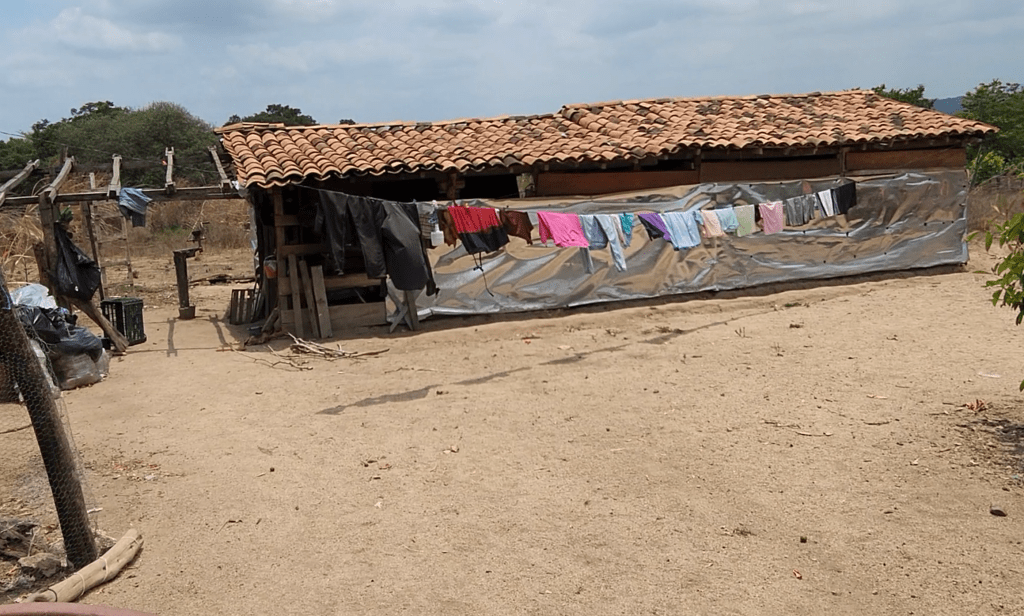
The families’ forced displacement did not mark the end of the problems in Ahucachahue. Today, Protestant-Evangelical meetings are prohibited, and all community members are forced to participate in the activities of the majority religion.
Making matters worse, on 27 June 2022 a decree officially establishing Ñu Sabi, a new municipality comprised of 37 communities, including Ahucachahue, was published. Mixteco and Tlapaneco indigenous leaders have called for the implementation of an even more restrictive system of uses and customs that will likely enable further restrictions on freedom of religion or belief in Ñu Sabi. The objective appears to be to ensure that all existing religious minorities in these communities are either forced to convert to the majority religion, unifying the new region, or are expelled altogether.
An additional complicating factor in the region, where the cultivation of opium poppies and marijuana is widespread, is the emergence of armed community guards. These groups are set up to defend the interests of the communities in the face of violence from organized criminal groups involved in drug trafficking. In many cases, however, these groups have become the armed wing of community leaders, enforcing often arbitrary and illegal orders. For people like Damián, these groups make it that much more dangerous to challenge the unjust decisions imposed on them.
A culture of impunity around FoRB violations has taken root in Guerrero, leaving those who belong to both an indigenous community and a religious minority in a state of extreme vulnerability. Because of their faith, Damián and many others like him are denied the right to live in the place of their birth and the home of their ancestors. Governor Evelyn Salgado Pineda and state public administration officials must make FoRB a priority and take swift and concrete action, in line with protections in Mexico’s constitution, to ensure that the fundamental human rights of all are upheld.
By Pablo Vargas, National Director – Mexico for CSW/Impulso18 AC