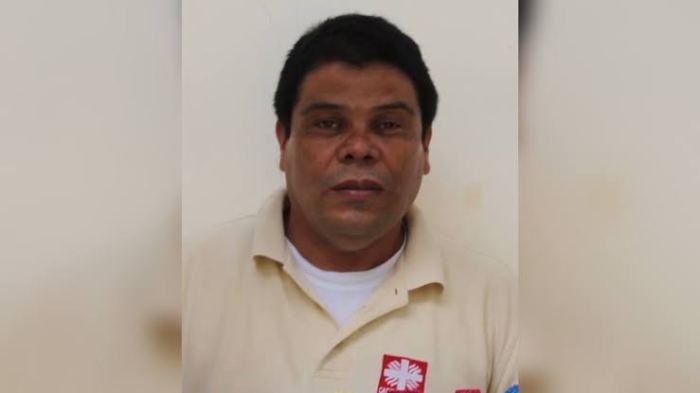
‘I knew I had no choice’: An interview with Nicaraguan exile Santos Julio Sevilla Rivera

‘The guards told us not to pray. We did it in silence because God heard us.’

Santos Julio Sevilla Rivera was born in San Sebastián de Yalí, Jinotega, Nicaragua on 9 January 1969. He was born with an irreversible visual impairment due to severe advanced myopia. His vision was very limited even with corrective lenses, but this did not prevent him from being very active, cheerful and well-known in his community.  

He moved to Estelí in 1983 because of the armed conflict between the government of the Sandinista National Liberation Front (FSLN) and the insurgent groups known as the Contras, In 1998 he was invited to a spiritual retreat by Father Sixto Muñoz Ilario Rodriguez. The experience was very positive and inspired him to become involved in volunteer service to the Catholic Church through music. He volunteered in four parishes, primarily in the Saint Francis of Assisi parish. He formed friendships with the local priests, and he dedicated himself to supporting the choir committedly. 

Continue reading “‘I knew I had no choice’: An interview with Nicaraguan exile Santos Julio Sevilla Rivera”
‘Sabía que no tenía opción’:  Una entrevista con un exiliado nicaragüense, Santos Julio Sevilla Rivera.

‘Los guardias nos dijeron que no rezáramos. Lo hicimos en silencio, porque Dios nos escuchaba.’

Santos Julio Sevilla Rivera nació en San Sebastián de Yalí, Jinotega, Nicaragua, el 9 de enero de 1969. Nació con una discapacidad visual irreversible debido a una miopía grave y avanzada. Su visión era muy limitada incluso con lentes correctivos, pero esto no le impidió ser una persona muy activa, alegre y conocida en su comunidad.

Se trasladó a Estelí en 1983 debido al conflicto armado entre el gobierno del Frente Sandinista de Liberación Nacional (FSLN) y los grupos insurgentes conocidos como la Contra. En 1998, fue invitado a un retiro espiritual por el sacerdote Sixto Muñoz Ilario Rodríguez. La experiencia resultó muy positiva y lo inspiró a participar como voluntario en la Iglesia Católica a través de la música. Prestó servicio voluntario en cuatro parroquias, principalmente en la de San Francisco de Asís. Entabló amistad con los sacerdotes locales y se dedicó con gran compromiso a apoyar al coro.

Continue reading “‘Sabía que no tenía opción’:  Una entrevista con un exiliado nicaragüense, Santos Julio Sevilla Rivera.”

Claims of freedom of religion or belief in Nicaragua are greatly exaggerated

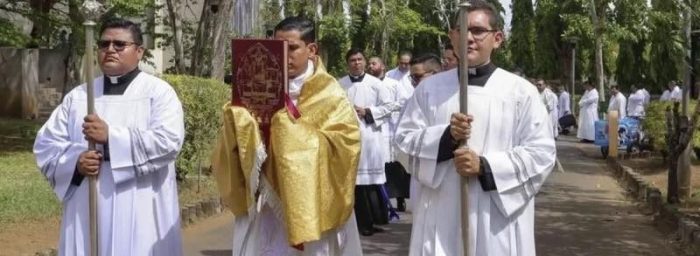
On 2 April, during a Maundy Thursday Chrism Mass, Cardinal Leopoldo Brenes addressed hundreds of Roman Catholic Church leaders who had filled the Metropolitan Cathedral in the Nicaraguan capital of Managua. He delivered a full sermon, but one particular quote of his was seized upon by Sputnik World, a Russian state-owned news agency:

‘People have been able to approach their churches with complete generosity, with complete freedom, and are living their faith. I believe that is the most important thing.’

The next day – Good Friday – the state-controlled media outlet Canal 4 Nicaragua shared a photo of the cardinal leading a procession outside a church on its Facebook page. The post generated 248 comments, among which the following stood out, each receiving dozens of likes:

Continue reading “Claims of freedom of religion or belief in Nicaragua are greatly exaggerated”

Las afirmaciones sobre la libertad de religión o creencias en Nicaragua son muy exageradas

El 2 de abril, durante la Misa Crismal del Jueves Santo, el Cardenal Leopoldo Brenes se dirigió a cientos de líderes de la Iglesia Católica Romana que habían llenado la Catedral Metropolitana en la capital nicaragüense de Managua. Pronunció un sermón completo, pero una cita en particular suya fue aprovechada por Sputnik Mundo, una agencia de noticias estatal rusa:

‘La gente con toda generosidad, con toda libertad, se ha podido acercar a sus templos y están viviendo su fe que, creo, que es lo más importante …’

El día siguiente – Viernes Santo – un medio de comunicación  controlado por el estado, Canal 4 Nicaragua, compartió una foto del cardenal encabezando una procesión frente a una iglesia en su página de Facebook. La publicación generó 248 comentarios, cada uno recibiendo decenas de “me gusta”, entre los que destacaron los siguientes:

Continue reading “Las afirmaciones sobre la libertad de religión o creencias en Nicaragua son muy exageradas”

‘Cuba needs more than words’: Why neutrality is not an option for religious leaders on the island. 

‘It was terrifying for my children… they started crying and screaming.’

On Sunday 22 March, in Guanabacoa, Havana Province, Cuba worshippers, including several minors, at the Christ Center Missionary Alliance were attacked with stones and concrete blocks by a neighbour who reportedly works for the Ministry of the Interior, and who has a history of hostile actions targeting the church. The church’s Pastors Yoennis Cala and Dayana Gómez, along with their young children, experienced moments of panic when a neighbour hurled objects at their home.

The incident marked one of several indicators of a new wave of repression in Cuba – one marked by detentions, acts of violence, and actions targeting individuals linked to religious belief and public expression, and one that reflects a troubling pattern across different regions of the country.

Continue reading “‘Cuba needs more than words’: Why neutrality is not an option for religious leaders on the island. “