‘Cuba needs more than words’: Why neutrality is not an option for religious leaders on the island. 

‘It was terrifying for my children… they started crying and screaming.’

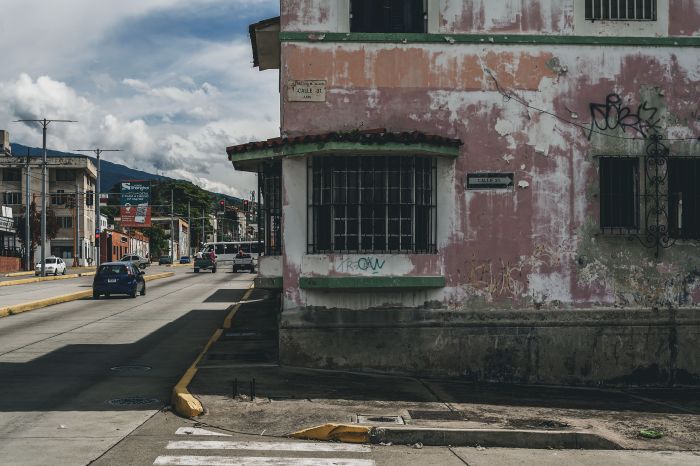
On Sunday 22 March, in Guanabacoa, Havana Province, Cuba worshippers, including several minors, at the Christ Center Missionary Alliance were attacked with stones and concrete blocks by a neighbour who reportedly works for the Ministry of the Interior, and who has a history of hostile actions targeting the church. The church’s Pastors Yoennis Cala and Dayana Gómez, along with their young children, experienced moments of panic when a neighbour hurled objects at their home.

The incident marked one of several indicators of a new wave of repression in Cuba – one marked by detentions, acts of violence, and actions targeting individuals linked to religious belief and public expression, and one that reflects a troubling pattern across different regions of the country.

Continue reading “‘Cuba needs more than words’: Why neutrality is not an option for religious leaders on the island. “

«Cuba necesita más que palabras»: Por qué la neutralidad no es una opción para los líderes religiosos en la isla.

«Fue aterrador para mis hijos… comenzaron a llorar y a gritar».

El domingo 22 de marzo, en Guanabacoa (provincia de La Habana, Cuba), varios fieles —incluyendo a varios menores— de la Alianza Misionera «Cristo Centro» fueron atacados con piedras y bloques de hormigón por un vecino que, según se informa, trabaja para el Ministerio del Interior y que cuenta con un historial de acciones hostiles dirigidas contra la iglesia. Los pastores de la congregación, Yoennis Cala y Dayana Gómez, junto con sus hijos pequeños, vivieron momentos de pánico cuando el vecino arrojó objetos contra su vivienda.

Este incidente constituyó uno de los varios indicios de una nueva ola de represión en Cuba: una ola marcada por detenciones, actos de violencia y acciones dirigidas contra personas vinculadas a la fe religiosa y a la expresión pública; un fenómeno que, además, refleja un patrón inquietante en diversas regiones del país.

Continue reading “«Cuba necesita más que palabras»: Por qué la neutralidad no es una opción para los líderes religiosos en la isla.”

What’s at stake in Nepal’s general election: An interview with a pastor and human rights defender

As Nepal prepares to head to the polls on 5 March, the nation finds itself at a profound crossroads. This general election follows a period of significant political upheaval, including the youth-led protests of 2025 that led to the dissolution of the previous government and the appointment of an interim cabinet. For the approximately 18.9 million registered voters, the stakes extend far beyond economic stability or infrastructure; they touch upon the very identity of the nation.

The following Q&A conducted with Pastor Tanka Subedi, a human rights defender and entrepreneur based in Kathmandu, explores the intricate intersection of religion or belief and politics, examining how the upcoming vote might reshape every Nepali’s right to freedom of religion or belief (FoRB).


For readers outside Nepal, how would you describe the country’s religious mix today?

In general, people in Nepal coexist relatively peacefully with followers of other religions, provided that members of their own family or close community are not perceived to be converting. Tensions may arise when organised groups or individuals mobilise sentiment against another religion. Many Hindus consider Buddhists, Kirat, and Masto traditions as part of the broader Hindu cultural framework, and adherents of these traditions often accept this understanding. Islam is largely tolerated within society. Christianity, however, is frequently perceived as a foreign religion, which contributes to social suspicion and sensitivity around its growth.

Continue reading “What’s at stake in Nepal’s general election: An interview with a pastor and human rights defender”

A police attack on a place of worship is a worrying sign of the erosion of civil and political rights in Kenya

On Sunday 25 January congregants at the Anglican Church of Kenya (ACK) Witima Parish, Nyeri County, heard shots outside of the building. Some church members went outside to investigate and saw what they believed to be the police and masked assailants surrounding the premises. In addition to the firing of live rounds, teargas was thrown into the church, with images shared on social media showing congregants covering their noses and mouths, and several individuals fainting.  

Historically there has been a respect for religious institutions in Kenya, especially for Christian churches and their leadership. Political leaders have often courted the church for political advantage and sway over key voting blocks and communities. This attack contrasts starkly with this backdrop, even within the context of increasing political and security tensions that have seen an increase in police officers unlawfully invading places of worship around the country.

Responding to the 25 January attack in the press, Bishop Gerald Muriithi of the Mount Kenya West Diocese of the Anglican Church of Kenya stated: ‘As a church we feel that our right to worship was violated, little children were traumatised, aged parents were harassed, the clergy were terrified and intimidated and political leaders were harassed.’

Continue reading “A police attack on a place of worship is a worrying sign of the erosion of civil and political rights in Kenya”

Even in death, Christians in India’s tribal communities are denied their rights and dignity

On 5 November the family of Gajendra Sahu, whose name has been changed for security reasons, attempted to bury him in his ancestral village of Kodekhursi, in Kanker District, in India’s Chhattisgarh State.

Gajendra had converted to Christianity three years previously. He had also given up drinking after years of alcohol addiction, but sadly passed away following a prolonged period of ill-health caused by it.

His relatives should have been permitted to lay him to rest in peace, however, because of his conversion to Christianity, residents of Kodekhursi refused to permit his burial within village boundaries, and even on his family’s own plot. Repeated requests for intervention from the authorities proved unsuccessful, and the family was ultimately forced to travel close to 200km – with a police escort – to the state capital Raipur where they were finally able to conduct a dignified funeral service in a Christian cemetery.

Continue reading “Even in death, Christians in India’s tribal communities are denied their rights and dignity”