All posts

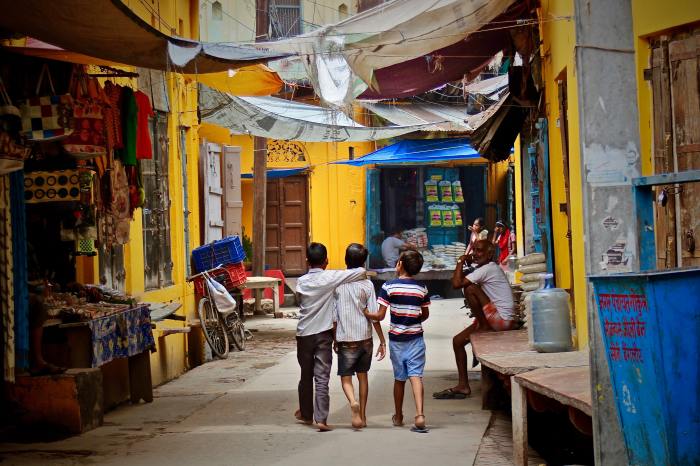
What having an opinion can cost you in India

“Hate has won, the artist has lost…,” Indian stand-up comedian Munawar Faruqui tweeted hours after his Bengaluru show was cancelled. It marked at least the 12th time Mr Faruqui’s show had been cancelled after threats to the venue and the audience. Earlier this year, the 29-year-old Muslim artist spent a month in jail for allegedly joking about Hindu deities, an accusation that the police didn’t have any evidence for. That’s what a ‘joke’ can cost you in India today. 

Or rather, in one of the two Indias that stand-up comedian Vir Das described in his Emmy-winning monologue which exposed the blatant hypocrisy prevalent in the country, including in relation to the plight of religious minorities, farmers, women and Dalits. The video went viral on social media, and immediately received a flurry of reactions, with right-wing activists calling for his arrest. 
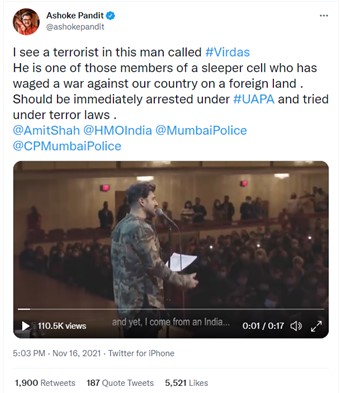
One of the tweets issued in response to Vir Das’ monologue
Continue reading “What having an opinion can cost you in India”

Far-fetched and fantastical? One aspect of Squid Game could be all too real

Netflix’s hit dystopian drama – with deadly playground games, anonymous masked henchmen and a giant murderous doll – is far-fetched to say the least. And yet, arguably, one storyline underplays the grim reality.

In just four weeks, Squid Game, the Korean production where contestants play children’s games and the losing players are killed, became Netflix’s most popular series ever and number one in 90 countries.

In one storyline, guards take the bodies of losing contestants and operate on them, removing vital organs while the subjects are still alive. These organs are then rushed to be sold to Chinese traders.

Continue reading “Far-fetched and fantastical? One aspect of Squid Game could be all too real”

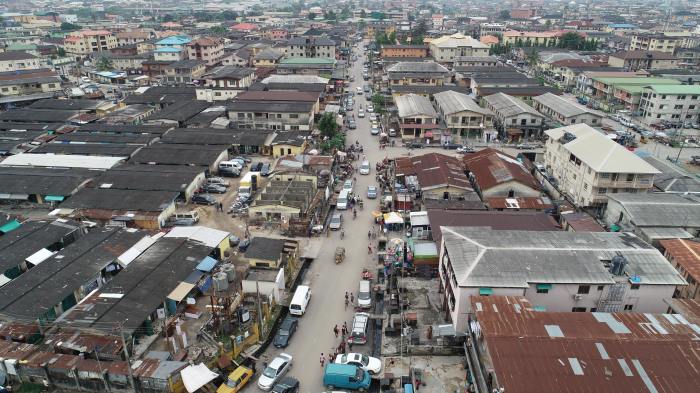
The US no longer considers Nigeria a ‘Country of Particular Concern’, but what has changed?

In December 2020, the United States’ (US) State Department designated Nigeria a Country of Particular Concern (CPC), finding that the government was responsible for engaging in or tolerating “systematic, ongoing, egregious violations of religious freedom.”

The rather belated decision marked the first time Nigeria had been placed on the State Department’s list, despite having been recommended for designation since 2009, and was also the first time a nominally secular democracy had been designated a CPC.

It reflected the severity of an ongoing crisis in the country,  which includes longstanding systemic and systematic violations of the rights of religious minorities in the north and central regions, and violence in which thousands of vulnerable citizens – many of them Christians – have been killed, while hundreds of thousands more have been forcibly displaced by armed non-state actors, including assailants of Fulani origin, and members of the Boko Haram, Islamic State West Africa Province (ISWAP) and Ansaru terrorist organisations.

Continue reading “The US no longer considers Nigeria a ‘Country of Particular Concern’, but what has changed?”

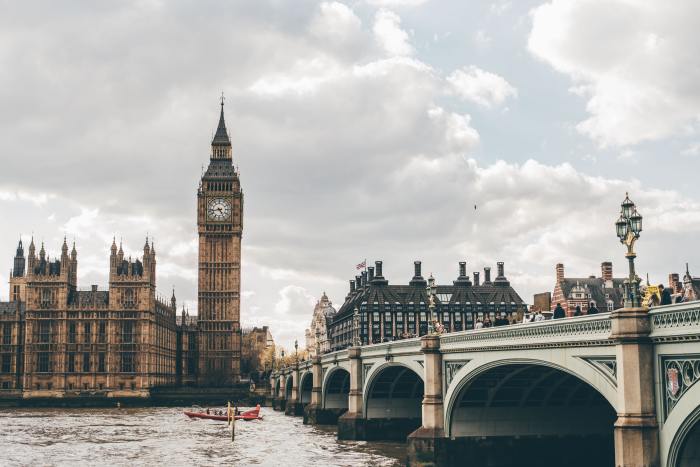
On freedom of religion or belief, the UK government needs to turn its rhetoric to reality

“The fact is that we simply can’t afford to be religiously illiterate in today’s world. To be religiously illiterate in today’s world is simply to fail to understand how and why others act as they do.” – These are the words of Bishop Philip Mounstephen, the Bishop of Truro, speaking at the deferred 175th anniversary celebration of The National Club earlier this month.

Bishop Mounstephen has been a friend of mine, and of CSW, for a number of years now, so it will come as little surprise that we fully support his assertion. As the bishop outlined so eloquently in his speech, freedom of religion or belief (FoRB), cannot be seen as a “side-bar” or “special interest” issue. In fact, it is a fundamental human right, the abuse of which so often leads to wider human rights violations as it intersects with issues such as poverty, race and gender.

Fortunately, the UK government appears to agree. Last year, upon the appointment of Fiona Bruce MP as the Prime Minister’s Special Envoy for FoRB, Boris Johnson said: “The UK is absolutely committed to protecting the inalienable right to freedom of religion and belief, at home and around the world.”

Continue reading “On freedom of religion or belief, the UK government needs to turn its rhetoric to reality”

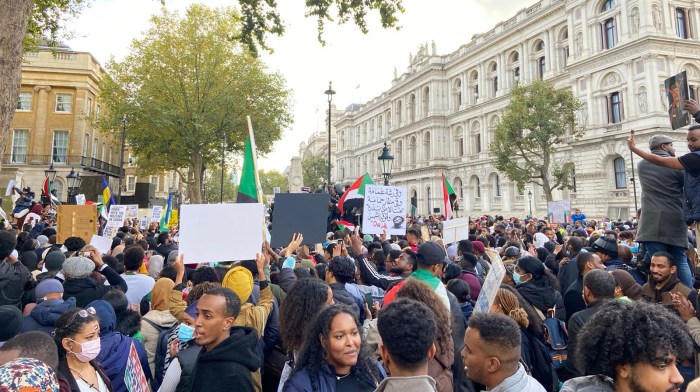
Sudan’s military coup: lessons from Egypt and the wider region

In February 2021, CSW warned that slow progress in ushering a new era for Sudan risked derailing the inclusive national vision that had united so many of its citizens in protest, and which led to the fall of the al-Bashir regime and the creation of a transitional government. Our blog post pointed to the need to learn from neighbouring Egypt’s experiences.

On 25 October 2021, the transitional council was overthrown, and the military seized power in a coup. Once again there are lessons to be drawn from Egypt, and the wider region, in understanding the challenges to democracy in Sudan today.

Both Sudan and Egypt have a complicated history of the involvement of the military in politics. One of the key differences in the two nations’ relationship with the military, however, is one of ideology.

In the immediate post-Mubarak era, the military effectively paved the way for a Muslim Brotherhood electoral victory.  However, when the army intervened in political affairs for the second time, it set out to control the excesses of the Brotherhood’s Freedom and Justice Party, positioning itself as the guardian of the Revolution and assisting in the overthrow of the government following mass protests.  

Continue reading “Sudan’s military coup: lessons from Egypt and the wider region”