What having an opinion can cost you in India

“Hate has won, the artist has lost…,” Indian stand-up comedian Munawar Faruqui tweeted hours after his Bengaluru show was cancelled. It marked at least the 12th time Mr Faruqui’s show had been cancelled after threats to the venue and the audience. Earlier this year, the 29-year-old Muslim artist spent a month in jail for allegedly joking about Hindu deities, an accusation that the police didn’t have any evidence for. That’s what a ‘joke’ can cost you in India today. 

Or rather, in one of the two Indias that stand-up comedian Vir Das described in his Emmy-winning monologue which exposed the blatant hypocrisy prevalent in the country, including in relation to the plight of religious minorities, farmers, women and Dalits. The video went viral on social media, and immediately received a flurry of reactions, with right-wing activists calling for his arrest. 
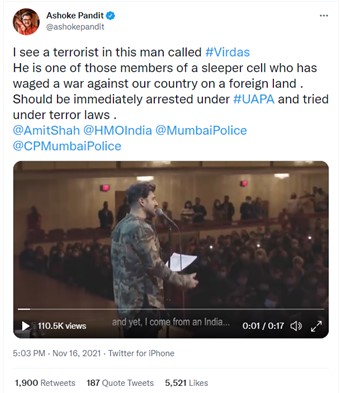
One of the tweets issued in response to Vir Das’ monologue
Continue reading “What having an opinion can cost you in India”

Sudan’s military coup: lessons from Egypt and the wider region

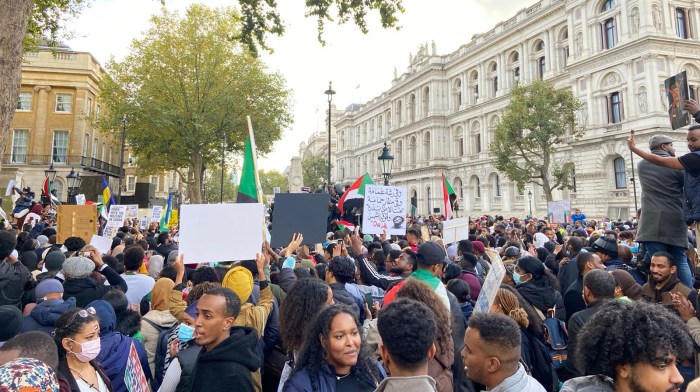
In February 2021, CSW warned that slow progress in ushering a new era for Sudan risked derailing the inclusive national vision that had united so many of its citizens in protest, and which led to the fall of the al-Bashir regime and the creation of a transitional government. Our blog post pointed to the need to learn from neighbouring Egypt’s experiences.

On 25 October 2021, the transitional council was overthrown, and the military seized power in a coup. Once again there are lessons to be drawn from Egypt, and the wider region, in understanding the challenges to democracy in Sudan today.

Both Sudan and Egypt have a complicated history of the involvement of the military in politics. One of the key differences in the two nations’ relationship with the military, however, is one of ideology.

In the immediate post-Mubarak era, the military effectively paved the way for a Muslim Brotherhood electoral victory.  However, when the army intervened in political affairs for the second time, it set out to control the excesses of the Brotherhood’s Freedom and Justice Party, positioning itself as the guardian of the Revolution and assisting in the overthrow of the government following mass protests.  

Continue reading “Sudan’s military coup: lessons from Egypt and the wider region”

Six months after the coup, what are we going to do about Myanmar’s new nightmare?

By Benedict Rogers

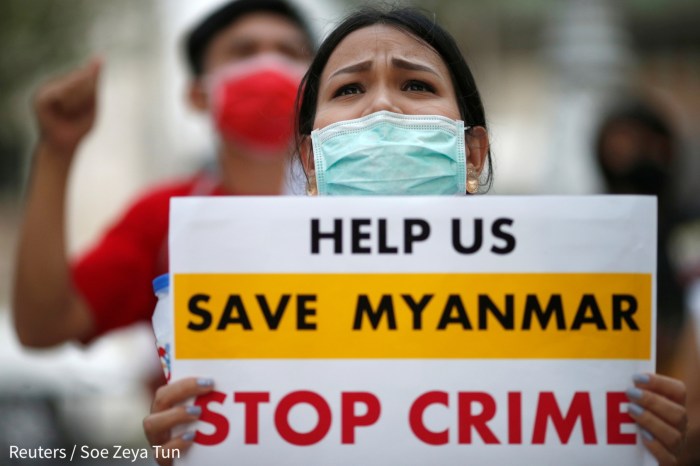
Exactly six months ago yesterday, Myanmar, otherwise known as Burma, was plunged into yet another dark chapter in its history – perhaps one of the darkest yet.

On 1 February the army’s Commander-in-Chief, General Min Aung Hlaing, seized power in a bloody coup that overthrew the democratically elected civilian government, led to the arrest of most pro-democracy leaders, and ushered in a new era of brutal repression which many of us hoped had been consigned to Myanmar’s history.

Relentless repression

In the past six months, according to the Assistance Association for Political Prisoners, the junta has killed 940 civilians, arrested 6,994 and currently holds 5,444 political prisoners in jail. Among them are many of my friends – including the incredible Thin Thin Aung, Myawaddy Sayadaw and others.

Continue reading “Six months after the coup, what are we going to do about Myanmar’s new nightmare?”

Arrests, torture, violence and oppression, and yet there is still hope for Myanmar/Burma

By Benedict Rogers

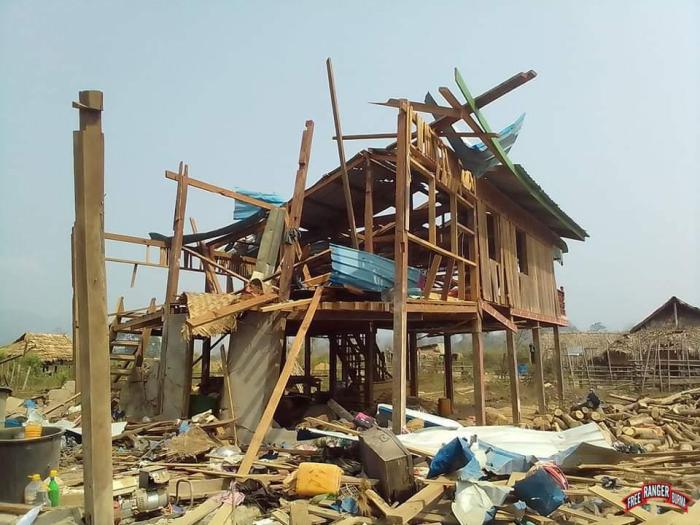
Last week, people in Myanmar/Burma marked 100 days since the military coup with yet more protests. For over three months since General Min Aung Hlaing seized power on 1 February, overthrowing the democratically-elected civilian government, people have courageously taken to the streets throughout the country. Almost 5,000 have been arrested, just under 4,000 are currently in jail, and almost 800 have been killed, yet still the demonstrations continue.

Myanmar now stands on the brink of a humanitarian disaster. The economy has collapsed, and a Civil Disobedience Movement (CDM) by public sector workers has led to thousands losing their homes and salaries. Many are facing extreme poverty and starvation.

For those detained by the military, torture is “almost ‘automatic’” according to survivors and eyewitnesses in evidence documented by the Chin Human Rights Organisation (CHRO). “Systematic torture practices are used by Burmese soldiers to extract information or forced confessions from people arrested for exercising their right to peaceful protest or other anti-junta activities,” CHRO report.

According to one former detainee, “Once inside the interrogation center, we are made to kneel down, hands tied behind our backs, blindfolded and forced to lie on our belly on the ground. That’s when the interrogation and beatings begin. Depending on how quickly the soldiers obtain the information they want, detainees are caned with up to 40 lashes, some detainees are made to dig holes in the ground to make them think that they are about to be killed and they are digging their own grave.”

Continue reading “Arrests, torture, violence and oppression, and yet there is still hope for Myanmar/Burma”

World NGO Day: Standing up for those who stand up for others

27 February marks World NGO Day – a day to celebrate the work of non-governmental organisations (NGOs) around the world. As a key part of civil society, NGOs help to drive positive change, protecting and promoting fundamental human rights, democracy, and rule of law.

CSW networks and collaborates with hundreds of NGOs around the world, empowering communities whose concerns may often be overlooked, amplifying these issues in international advocacy arenas, and whenever possible, providing a platform for them to address policy makers directly.

Even as the world celebrates the invaluable work of civil society, there are many countries, including several on which CSW focuses, where the work of NGOs is not celebrated, but is instead stifled or shut down by state or non-state actors.

India: Civil society suffocated

Perhaps one of the most restrictive environments for NGOs to operate in is in India. In recent years, the country’s ruling Bharatiya Janata Party (BJP) and other Hindu nationalist groups have increasingly attempted to label dissent as damaging to India’s national interests, arguing that those who speak up about human rights are ‘anti-nationals.’

Continue reading “World NGO Day: Standing up for those who stand up for others”