India is currently holding general elections in seven phases which are due to run from 19 April to 1 June 2024. CSW’s India Researcher, whose name has been withheld for security reasons, lives in Tamil Nadu state in the south of the country. Here she offers some reflections on what is at stake for the future of the nation.
A day before my state Tamil Nadu went to elections, I was browsing social media when I noticed an image posted by an old friend of mine who studied with me in a Christian school. The image was of a women dressed in a white sari who represented an Indian Hindu. Around her were four other men – a Christian, a communist, a Muslim and a member of the Dravidian political party – all with weapons in their hand trying to stab a visibly scared Hindu woman. The caption said ‘vote wisely’ – an apparent warning message to all the Hindus in his friend list that they are in danger and they need to vote for the party that claims to protect them.
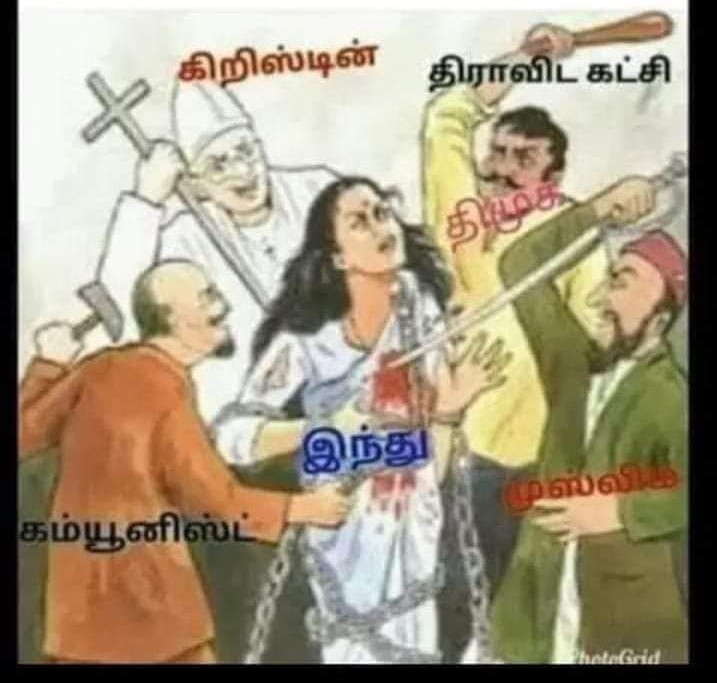
I was quite surprised. Yes, I know thousands of radical Hindus in India genuinely believe that their religion is under threat. But to see someone who I knew, who had his whole education in a Christian school and still remained a Hindu, actually succumb to the false narrative that Hinduism is under threat – that was surprising. In the last few years, I have sadly come across many other Hindu friends and acquaintances who have come to believe that.
A perceived threat
According to a manual prepared by Devendra Agochiya – a trainer and consultant who has worked on numerous conflict resolution and peace-building initiatives in India and across South Asia: ‘Identity is one of the fundamental human issues that underlie many intractable conflicts. Many people find their identity and security in their religious group. When this sense of self is threatened, challenged or ignored, it may infuse fear among members of the community about their existence and survival. There is an aggressive and strong response to this perceived threat, leading to a conflict solution.’
That is what I believe is at the root of all religious conflict we see in India today. Many Hindus view their religion as being closely tied with their nation or land, and any increase in the population of other religious groups is seen as a threat to their existence. Political parties who gain mileage from driving this narrative, like the Bharatiya Janata Party (BJP), have seemingly made it their mission to convince the majority of Hindus that India and Hinduism are one, that to be Indian is to be Hindu and that any change to this structure is a threat to their identity and existence.
In the last few years, we have seen more and more secular Hindus becoming religious fundamentalists or religious nationalists. Most leaders are opposed to the idea of secularism and rationality, spreading false narratives that Muslims and Christians are out to destroy the fabric of India, and convincing their followers that their mission should be to purify their religion by removing the influences of religions they consider to be foreign.
Hatred on the campaign trail
India has completed three phases of its 2024 general assembly elections. So far, the ruling BJP, which is being widely touted to win, has allowed the theme of religion to dominate all of its election rallies. The BJP has posed itself as the guardian of Hinduism and leaders have been trying hard to convince people that if they don’t support them, they will be left to the mercy of Muslims and Christians.
In an election speech on 21 April, Prime Minister Narendra Modi made an obvious reference to Muslims in which he said they were ‘infiltrators’ and that if the opposition comes to power, they will snatch the property of Hindus and give it to Muslims.
The objective of this sort of speech is clearly to create panic and fear in the minds of people. Despite widespread outrage and several complaint letters filed to the Election Commission of India, Modi continued to spread anti-Muslim messages in the rallies that followed in Gujarat and Telangana, and he is of course just one of many BJP leaders who have spread similar messages of hate and fear in the years leading up to this election.
‘The need of the hour is to dispel these lies’
Disinformation, hate speech and panic are dangerous tools that have been used to manipulate and groom the minds of secular Hindus who once believed in unity and tolerance. The need of the hour is to dispel these lies and fear and work on building trust between communities at the ground level, including by creating opportunities for dialogue between leaders of all faiths and educating them on the importance of the values of tolerance and peaceful co-existence on which India was founded.