Pastor Mum and five members of his church – Liang, Pa, Laen, Lan and Khoon – have been prisoners in their own village since 22 June.
The six Christians were arrested by the chief of Tahae village, in Laos’ Khammouane Province, after they held a small church service in Pastor Mum’s home, which was deemed ‘illegal’ as their church is not officially registered.
It has proven challenging to get updates since – perhaps as to be expected of a small remote village in a rural province in central Laos – however when CSW first reported on the arrests five days after they took place, the group had not been formally charged or permitted to see their families or access legal counsel.
This is a common feature of violations of the right to freedom of religion or belief (FoRB) in Laos, where poor enforcement of the country’s limited legal provisions for FoRB and a lack of infrastructure for the authorities to access more rural areas leave village chiefs like that of Tahae to take the law into their own hands and operate with impunity.
A flawed framework
The Lao Constitution guarantees citizens the right to ‘believe or not to believe in religions’ under Article 43, though it limits this to religions which are ‘not contrary to the laws’. In 2016 the government issued Decree 315 which laid out expectations for religious communities and was largely viewed as an improvement on its more restrictive predecessor.
Such a legal framework is noticeably stronger than that of some of Laos’ neighbours – like China, Myanmar or Vietnam – however there are still significant obstacles even in this to the full realisation of the right to FoRB as articulated in Article 18 of the International Covenant on Civil and Political Rights (ICCPR), to which Laos is party.
All religious groups are required to register with the Ministry of Home Affairs (MOHA), which is typically slow to respond to requests and can arbitrarily approve or revoke the registration of any group. Decree 315 also requires religious groups to own at least 5,000 square metres of land to construct a legal place of worship. This is rarely possible for small Christian communities and other religious minority groups that often number scarcely more than ten people and meet in private homes, typically in poorer rural areas where the cost of purchasing such a plot of land is also prohibitive.
Crucially, even where the constitution may grant these groups some protection in theory – and even if registration is eventually granted by the MOHA – it remains far too easy for village leaders and elders to disregard these provisions, particularly in rural villages that can be extremely difficult for official authorities to access and therefore essentially operate as fiefdoms.
This is exactly what has happened in Tahae, where the Human Rights Watcher for Lao Religious Freedom (HRWLRF) – a non-profit advocacy organisation – reports that Christians were previously free to practice their religion without fear of harassment or arrest despite their lack of official recognition, but that they began to face a severe crackdown after a new village chief was appointed in May 2024.
The law had not changed, their activities had not changed, but because a new leader took exception to the free exercise of their religious beliefs, these Christians have found themselves extrajudicially imprisoned, with limited options for recourse.
A parallel across the Pacific Ocean
For CSW, the plight of these Christians in Laos draws interesting parallels with the experiences of religious minorities in rural areas some 9,000 miles away in Mexico.
There, the legal framework is stronger still; the Mexican Constitution guarantees the right to FoRB under Article 24, and specifically states that all citizens shall be entitled to the human rights granted by the international treaties to which Mexico is party, which includes the ICCPR.
In addition, the law grants indigenous communities the right to govern themselves according to their tradition under ‘Uses and Customs’, provided this is exercised in accordance with the human rights guarantees laid out in the constitution. But this is where problems tend to arise.
In practice, the government at the municipal, state and federal levels does little to ensure that Uses and Customs are implemented as they should be, and, much like in Laos, a combination of poor enforcement and challenges around accessibility to the villages in question means that community leaders are free to apply the law as they see fit, often as a means of enforcing religious uniformity in belief and practice.
This is the current experience of Tito Mariano Méndez and Esther Abigail Pérez Ramírez, a married couple in the village of Montenegro in the San Juan Bautista Valle Nacional Municipality of Oaxaca State who were arbitrarily detained by community leaders on 20 July, after they claimed that Mr Mariano Méndez had failed to fulfil his responsibilities in the community.
CSW sources have explained that the allegation against Mr Mariano Méndez is simply untrue, pointing out that he completed his turn on the health clinic committee in November, and that he has fulfilled many similar obligations in the past. In reality, the couple’s detention arose from village leaders learning that they had filed a complaint to the Oaxaca State Ombudsman’s Office regarding their experiences of violations of FoRB as Protestant Christians in a village where the majority religion is Roman Catholic.
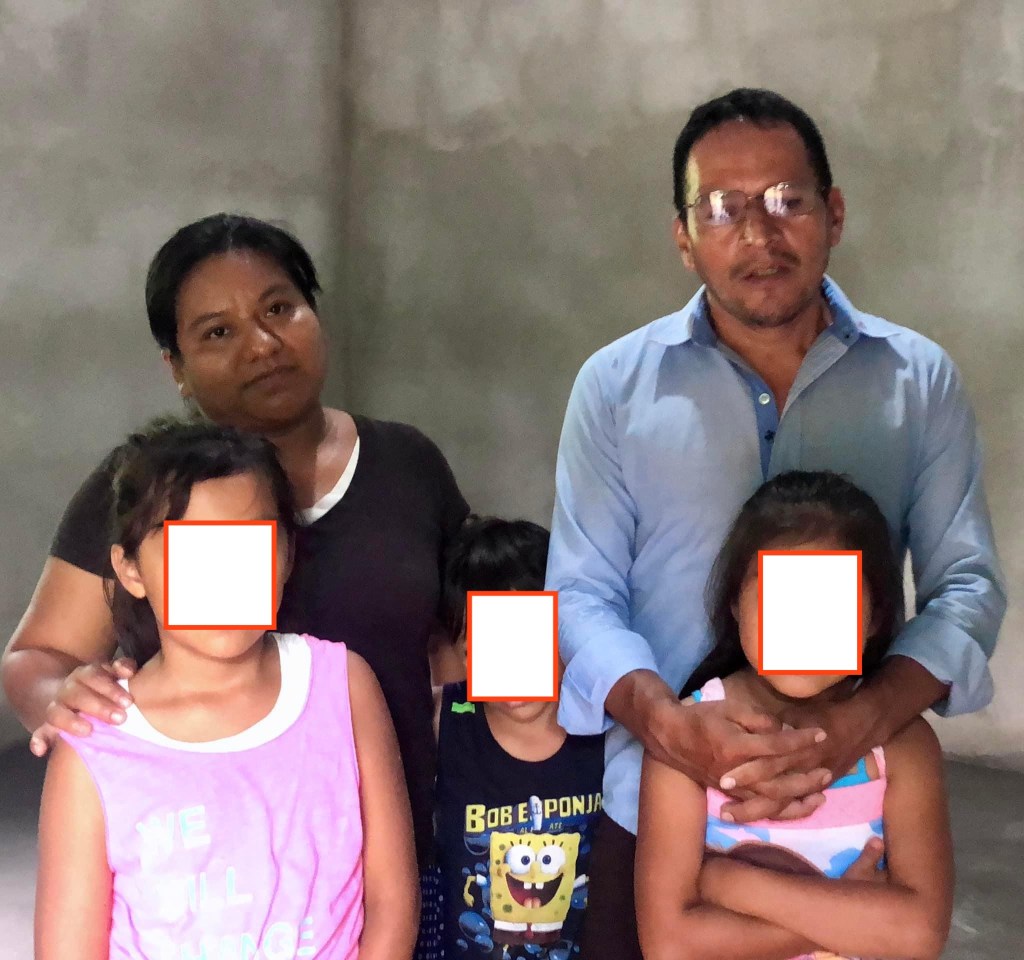
In 2020, the couple’s house was destroyed in an arson attack shortly after they were threatened by community leaders. Last year, they pulled their children out of the local school due to the severe mistreatment and discrimination they were experiencing on account of their faith. And now, at the time of writing, the couple remain imprisoned in a community jail, with ongoing concerns for Mr Mariano Méndez’s health as he is recovering from gallbladder surgery and is still undergoing treatment.
A first step
Neither the experiences of Mr Mariano Méndez and Ms Pérez Ramírez in Mexico, nor those of Pastor Mum and his congregation in Laos, are isolated incidents in their respective countries. There are key differences in both contexts, but there are also some common threads, such as the authorities’ seeming unwillingness and/or inability to intervene, and that they tend to take place in some of the most impoverished and remote areas in the country.
There are other complicating factors too, such as language barriers and illiteracy which make it even more challenging for victims to report violations and seek appropriate redress. In some regions, the presence of violent organised criminal groups compounds the complexity and make members of religious minorities even more vulnerable.
The reality is that the state cannot be present everywhere, but a crucial step towards improving the situation in both countries would involve training local government officials and traditional leaders on human rights, including FoRB, ensuring that they understand what obligations they have and what FoRB is. In some cases, those responsible for breaking the law may be ignorant to the fact that they have done so, because they have never been told otherwise. Education must also extend to laypeople, so that they know what their rights are and how and where they can seek justice when these rights are violated. This would not solve everything, but it would be a much-needed start.
By CSW’s Press and Public Affairs Officer Ellis Heasley