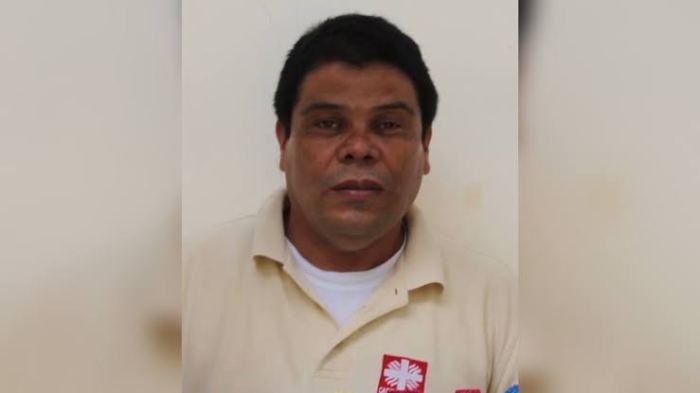
As hard as it may be to hold the Nicaraguan government to account, the world has not forgotten Pastor Efren Antonio Vílchez López

‘They closed the embassy around three or four years ago but didn’t really tell anyone.’

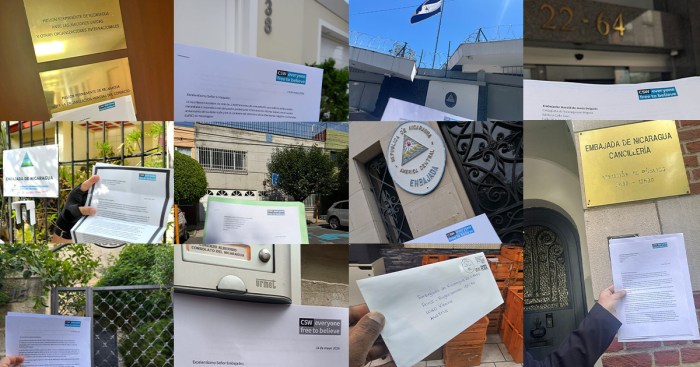
I think I actually laughed when I heard it. I was standing in the reception of a building I was just then discovering was the former site of the Nicaraguan Embassy in London, having made an hour and a half journey to Kensington to deliver a letter calling for the release of Protestant Pastor Efren Antonio Vílchez López.

From the way the receptionist explained it I got the sense that this sort of thing had happened before, which lessened but did not entirely eliminate the embarrassment on my part. Some frantic Googling revealed that while, yes, there were some mentions of the closure online – particularly if you added ‘closed’ to your search terms – most results listed the address as the building I was now standing disgruntledly outside, with the panel that pops up when you search for these things still listing its opening hours as 11am-4pm Monday to Friday.

Continue reading “As hard as it may be to hold the Nicaraguan government to account, the world has not forgotten Pastor Efren Antonio Vílchez López”

Por difícil que sea exigirle responsabilidades al gobierno nicaragüense, el mundo no ha olvidado al pastor Efren Antonio Vílchez López.

‘Cerraron la embajada hace como tres o cuatro años, pero no le dijeron a nadie.’

Creo que me reí cuando lo escuché. Estaba en la recepción de un edificio cuando acababa de descubrir que era la antigua sede de la Embajada de Nicaragua en Londres, justo después de haber viajado una hora y media hasta Kensington para entregar una carta pidiendo la liberación del pastor protestante Efren Antonio Vílchez López.

Por la forma en que la recepcionista lo explicó, tuve la impresión de que algo así ya había sucedido antes, lo cual disminuyó, pero no eliminó por completo, mi vergüenza. Una búsqueda frenética en Google reveló que, si bien, sí, había  algunas menciones del cierre en línea – especialmente si agregabas “cerrado” a tus términos de búsqueda-, la mayoría de los resultados mostraban la dirección del edificio frente al cual me encontraba ahora, visiblemente disgustado, ant el panel que aparece cuando buscas este tipo de cosas aún enlistando las horas en las que abren como 11am-4pm lunes a viernes.

Continue reading “Por difícil que sea exigirle responsabilidades al gobierno nicaragüense, el mundo no ha olvidado al pastor Efren Antonio Vílchez López.”

For authorities in Cuba’s prisons, the right to freedom of religion or belief is a tool to manipulate 

It has been understood for decades that conditions in Cuba’s maximum-security prisons are terrible. They have only grown worse over the past few years as the entire country has experienced an economic and infrastructure crisis, with critical shortages of food and medicine across the country alongside the repeat failure of the island’s entire electrical grid, sometimes for days at a time.  

Since 1989, the Cuban government has refused access to the International Committee of the Red Cross to monitor or assess prison conditions. Prisoners are held in unhygienic, sometimes overcrowded conditions, in cells infested with mosquitoes and bedbugs. The food served to prisoners is unpalatable, riddled with insects and worms, and low in nutrition. Despite rampant disease, including tuberculosis, dengue, and dysentery outbreaks, throughout the prison facilities, medical attention is inadequate, if provided at all.  

During the hot and humid summer months, temperatures inside the cells can rise to dangerous levels. Multiple former political prisoners have told CSW that the only water they had extremely limited access to, both for drinking and personal hygiene, was cloudy or dirty.  

Continue reading “For authorities in Cuba’s prisons, the right to freedom of religion or belief is a tool to manipulate “

Para las autoridades de las cárceles cubanas, el derecho a la libertad de religión o creencias es solo una herramienta de manipulación

Durante décadas es bien sabido que las condiciones en las cárceles de máxima seguridad de Cuba son terribles. Estas condiciones no han hecho más que empeorar en los últimos años, , pues el país entero está hundido en una crisis económica y de infraestructura, agravada por la escasez de alimentos y medicamentos en toda la isla, aunado a los repetidos fallos de la red eléctrica de la  nación, a veces durante días. 
 
Desde 1989, el gobierno cubano ha negado el acceso al Comité Internacional de la Cruz Roja para supervisar o evaluar las condiciones carcelarias. Los presos se encuentran recluidos en condiciones insalubres, a veces de hacinamiento, en celdas infestadas de mosquitos y chinches. La comida que se les sirve es insípida, plagada de insectos y gusanos, y de bajo valor nutritivo. A pesar de la proliferación de enfermedades, como la tuberculosis, el dengue y los brotes de disentería, en las instalaciones penitenciarias, la atención médica es insuficiente, o incluso nula.

Durante los calurosos y húmedos meses de verano, las temperaturas dentro de las celdas pueden alcanzar niveles peligrosos. Numerosos ex presos políticos han declarado a CSW que el agua a la que tenían acceso,  tanto para beber como para su higiene personal, estaba extremadamente limitada, además de turbia o sucia.  

Continue reading “Para las autoridades de las cárceles cubanas, el derecho a la libertad de religión o creencias es solo una herramienta de manipulación”

Bridging the gap: The importance of finding common ground between religious groups and secular human rights organisations 

Oppressive governments depend, in part, on two things: unity among those who support them and divisions within the communities that do not. One of the greatest challenges in addressing freedom of religion or belief (FoRB) in countries where that right is regularly violated is bridging divisions between different groups within the religious sector, as well as the gap that often exists between the religious sector and secular human rights and other independent civil society organisations. 

Religious groups often occupy a unique position within larger independent civil society. They are networked and organised, to different extents, with members who regularly attend and participate in their activities. They often possess a dedicated physical space, where they are able to hold their activities with minimal outside interference. Some religious groups will run outward focused activities, providing social services. In many cases, religious leaders not only hold a significant decree of influence within their respective community – they may also be perceived as moral adjudicators more widely even by people who do not share their religious beliefs.  

Oppressive regimes are sensitive to the danger posed to them by a socially engaged religious sector and outspoken religious leaders who are willing to work hand in hand with larger civil society in defending civil and political rights. Division, therefore, is deliberately encouraged and stoked, often by intelligence and security agencies, with the goal of neutralising or coopting organised independent civil society, including the religious sector.  

Continue reading “Bridging the gap: The importance of finding common ground between religious groups and secular human rights organisations “