On 11 June the families and loved ones of Neelkant and Pushpa Verma gathered for what should have been a day of celebration. The young Christian couple were due to marry in Raipur in India’s Chhattisgarh State, no doubt filled with excitement at what should have been one of the happiest days of their lives, and all the joy to follow in the years to come.
But this excitement was cut short when three villagers in in their early twenties stormed the wedding venue, cutting off the electricity supply and declaring that Christians were not allowed to hold celebrations in the village. When Neelkant’s family attempted to contact the electricity board, over 30 villagers gathered outside of the venue, vandalising guests’ vehicles and setting the building on fire.
The mob proceeded to hurl abuse at the women and tear some of their sarees. When the women’s children tried to defend their mothers, they were pelted with stones and forced to seek refuge in a nearby house. Once the victims were inside, they called the police who arrived quickly and escorted them to safety, managing to disperse the attackers.
There has been no justice for the attack.
One perpetrator who was arrested by the police was released just a day later. The victims filed a First Information Report (FIR), which is required for the police to open an investigation, but the village council head pressured Neelkant’s family to withdraw their FIR and to refrain from holding any further events such as weddings and birthdays, threatening to cut off their water supplies if they refused.
As soon as that meeting finished, a group of villagers attacked Neelkant’s brother, father, and church members, ultimately forcing five families – including Neelkant’s – to flee to a neighbouring village for safety.
At the time of writing, all of the families’ livestock and farmland remains in their home village, but they have yet to return out of fear that they will face further violence and discrimination if they do.
Sadly, Neelkant and Pushpa’s case is not isolated. Attacks on religious minorities – particularly Christians and Muslims – have become all too common in countless rural communities across India.
On 12 April, for example, six Christian families were evicted from their homes in Sukma District, also in Chhattisgarh State, for two days, because they refused to convert back to the community’s indigenous religion. A group of villagers entered the families’ houses, loaded their belongings on a tractor and forced them to leave, claiming that Christianity was a threat to the community’s ancient practices and beliefs.
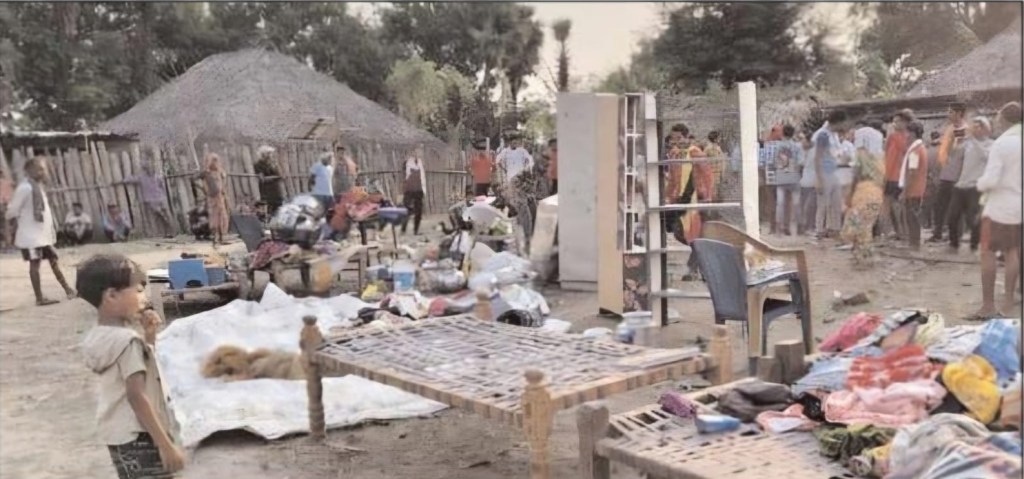
The rise of Hindu nationalism over the past decade under the leadership of the Bharatiya Janata Party (BJP) has led to heightened attacks on religious and ethnic minorities by non-state actors. Prime Minister Narendra Modi has repeatedly failed to denounce attacks on minority groups, contributing to a persistent culture of impunity.
Unless violations are addressed, concerning trends of forced displacement in rural communities are likely to escalate.
The risk of this is clear halfway around the world in Mexico, where the government is often reluctant to protect the rights of displaced minority groups. Violations typically take place in impoverished rural areas where the authorities fear a violent backlash from members of the local villages.
In April last year, for example, over 170 Protestant Christians were forcibly displaced from their homes in the communities of Coamila and Rancho Nuevo in Hidalgo State because of their almost decade long refusal to participate in Roman Catholic activities.
Violations of freedom of religion or belief (FoRB) had been extensively documented in the villages since 2015, with local authorities repeatedly attempting to force the religious minority to participate in and contribute financially to Roman Catholic festivals and acts of worship, but the government made no effort to de-escalate the tensions.
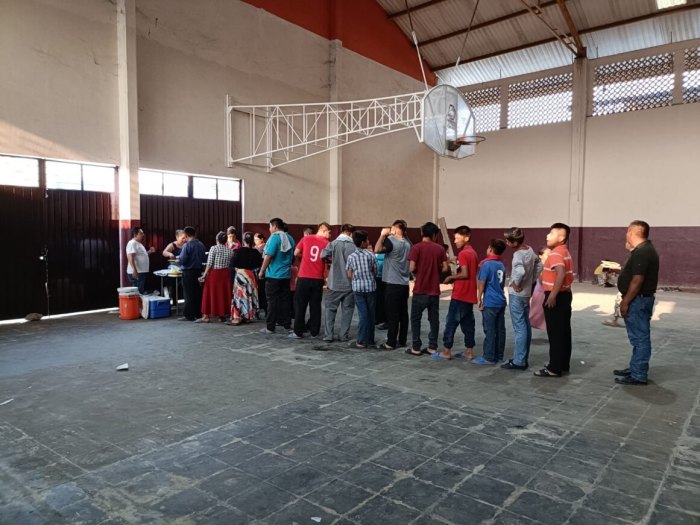
In September the state and local authorities reached an agreement for the families to return to the village. But it wasn’t long before amendments were made requiring the religious minority group to financially contribute to the Roman Catholic Church. The group would also be denied access to health and education for another year, and when they returned to the village they found that the villagers had destroyed several houses and vital water resources. It was at this point that they decided to move to Veracruz State where they were forced to rebuild their lives.
There are countless families like them across Mexico, living in hope that one day they will be able to return to their homes and live free from the fear of violence, harassment and the destruction of their property and livelihoods.
The trend of forced displacement in Mexico should be a clear warning to other governments, particularly in the context of India where similar cases have started to rise. No-one should be expelled from their community due to their religion or belief. A greater emphasis on accountability and justice must be implemented at a government level if the practice of forced displacement is to be properly addressed.
It is therefore essential that the governments of India and Mexico strengthen efforts to ensure that protections for freedom of religion or belief are fully upheld even in the most remote parts of the countries. Ignoring small scale attacks will allow larger and more dangerous patterns to take root, and silence on such issues will only breed further violence, leading to the fracture of communities and ultimately to long term division and hatred.
Crucially, both governments must ensure oversight of local authorities that act with impunity, that perpetrators of violence and other attempts to punish or pressure religious minority communities are held to account, and that those who have already lost their livelihoods due to forced displacement are provided with adequate resources and compensation for the ordeals to which they have been subjected.
By CSW’s Advocacy Intern Anna Shannon