Oppressive governments depend, in part, on two things: unity among those who support them and divisions within the communities that do not. One of the greatest challenges in addressing freedom of religion or belief (FoRB) in countries where that right is regularly violated is bridging divisions between different groups within the religious sector, as well as the gap that often exists between the religious sector and secular human rights and other independent civil society organisations.
Religious groups often occupy a unique position within larger independent civil society. They are networked and organised, to different extents, with members who regularly attend and participate in their activities. They often possess a dedicated physical space, where they are able to hold their activities with minimal outside interference. Some religious groups will run outward focused activities, providing social services. In many cases, religious leaders not only hold a significant decree of influence within their respective community – they may also be perceived as moral adjudicators more widely even by people who do not share their religious beliefs.
Oppressive regimes are sensitive to the danger posed to them by a socially engaged religious sector and outspoken religious leaders who are willing to work hand in hand with larger civil society in defending civil and political rights. Division, therefore, is deliberately encouraged and stoked, often by intelligence and security agencies, with the goal of neutralising or coopting organised independent civil society, including the religious sector.
Religious groups, and especially their leaders, are encouraged, using both carrot and stick, to isolate themselves from one another and wider independent civil society groups and movements advocating for civil and political rights. Many oppressive regimes simultaneously seek to manufacture an image of legitimacy, domestically and internationally, by offering preferential treatment to select religious leaders or groups in return for active public support while simultaneously cracking down on all other religious groups.
Examples of this can be found all over the world. Cuba shows us a clear picture of what this looks like in practice. In the 1960s, as the Castro brothers consolidated control, properties belonging to religious groups were confiscated by the state and religious leaders were overtly persecuted – sentenced to lengthy terms of imprisonment, thrown into labour camps, forced into exile, and in some cases, executed. Voices of dissent were met with brutal repression. By the 1970s and 1980s, a climate of fear and distrust was firmly established across society. This took root within the religious sector, where individual groups became isolated from one another, with little to no communication or awareness of the experiences of their counterparts.
The exception was the Cuban Council of Churches (CCC) – an organisation initially made up of a selection of Christian denominations which represented only a small minority of Protestants – and which developed a mutually supportive relationship with the Castro regime and the Cuban Communist Party. While the leaders of other religious groups were largely barred from leaving the island and began to practice a severe form of self-censorship in their discourse, going to great lengths not to say anything that could be perceived as ‘political’, CCC leaders were not only regularly granted exit visas by the government, but were and are encouraged to travel and to engage with their international counterparts, including on political matters, as long as they promote the line that there are no FoRB issues, and indeed, no human rights violations in Cuba.
With the political transition to President Miguel Diaz Canel, and unity initiatives between different religious groups and with human rights groups, alongside growing social and political unrest, the government has again identified the religious sector as a particular area of concern and reports of violations of FoRB, many involving harassment and threats against religious leaders have spiked in recent years.
Similar strategies to neutralise or coopt the religious sector have been used successfully by dictators, authoritarian governments, and in some cases, non-state entities, around the world. Cuba’s intelligence apparatus applied lessons received directly from their counterparts in the German Democratic Republic’s Stasi. Today, in the same hemisphere, we see Nicaragua, under co-presidents Daniel Ortega and Rosario Murillo, following the trajectory laid out by Cuba decades earlier.
Nicaragua is in the period of open persecution. The government is attempting to rapidly eliminate independent civil society – in part by stripping thousands of civil society organisations of their legal status. Religious leaders, who have spoken out from a perspective of faith on acts of injustice committed by the government, have been aggressively targeted. Bishop Rolando José Álvarez Lagos, who spent a year and a half in detention and was subsequently forced into exile, is perhaps the most well-known of these – but since 2018 over 100 other religious leaders, including Roman Catholic priests, bishops, nuns, seminarians and lay leaders, and Protestant pastors have been forced out of the country, sometimes after being held in maximum security prisons.
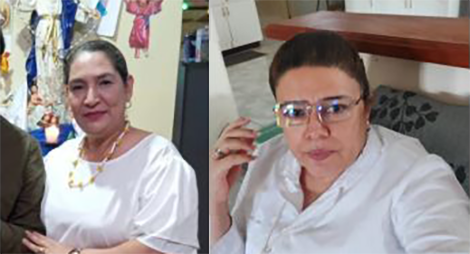
Today, two lay leaders associated with Bishop Alvarez’s diocese – Carmen María Sáenz Martínez and Lesbia del Socorro Gutiérrez Poveda, arrested and imprisoned a year ago – are believed to be being held in solitary confinement in inhumane conditions, however, no proof of life has been provided by the government since their detention.
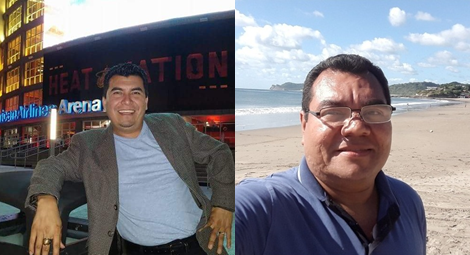
Last month, Pastor Rudy Palacios Vargas, the founder of La Roca de Nicaragua Church Association, and who has a history, of speaking out about abuses by the government, was detained along with his sisters, brothers-in-law, and three family friends. All were charged with treason and conspiracy and have essentially disappeared into Nicaragua’s maximum security prison system. One of the family friends died while in custody. His body was returned to his family with no explanation.
Pastor Palacios Vargas and those detained in connection with him join Pastor Efrén Antonio Vílchez López, another Protestant Evangelical religious leader, detained in 2022 and sentenced to 23 years in prison on trumped up charges, who is reportedly being held in isolation in a wing of La Modelo Prison used to house political prisoners. Alongside this crackdown, however, and even as they strip historic denominations of legal status and tighten restrictions on their activities, the Ortega-Murillo regime is seeking to manufacture an image of religious freedom by privileging a few, select Protestant groups – even allowing some to hold large scale evangelistic events.
So, in this context and contexts like it, in what ways can the international community support human rights defenders working to protect individuals and communities from religious discrimination or persecution?
First, there must be a recognition that from a religious perspective there is not necessarily a clear line separating religiosity from human rights. Many may see commenting on the reality in which they live to be a core part of their role as a religious leader. In many cases the human rights defender and the religious leader are one and the same.
We see this in cases like that of Bishop Álvarez and Pastors Palacios and Vílchez who, from a faith perspective and as part of their role as religious leaders, have felt compelled to speak – they might say prophetically – about abuses committed by those in power.
We see it in the sadly numerous cases of Catholic and Protestant religious leaders assassinated in Colombia and Mexico because they promoted from the pulpit an alternative to the culture established by illegal armed and criminal groups and spoke out against corruption and impunity.
We also see it in the case of Pastor Jose Ángel Pérez, a Protestant Evangelical pastor in El Salvador, now sitting in prison charged with public disorder and resisting arrest, after standing with members of his church and community in peacefully calling for government intervention to stop unjust eviction from their land.
There must be a recognition of such religious leaders as human rights defenders. They should be included in dialogues, roundtables, conferences and briefings alongside human rights groups and other organisations promoting civil and political rights.
To get a more accurate picture of the state of FoRB, those looking to support initiatives to promote and defend this freedom in difficult countries must, without discounting them, look beyond ‘official’ and/or majority religious groups, seeking ways to engage with as wide as possible a spectrum of religious groups, including unrecognised groups. Opportunities to incorporate not just top religious leaders – but regional or local leaders, and indigenous or non-majority ethnic groups, who may have distinct experiences in terms of FoRB, should also be pursued.
Initiatives that bridge the gaps and open lines of communication between diverse religious groups and between the religious and human rights sectors should be prioritised, emphasising areas of common ground that are important to both – like freedoms of assembly, expression, and conscience. FoRB should never be approached as a right existing in isolation but in its deep overlap with those rights and others including gender, cultural and indigenous rights.
The challenges are many, but they are not insurmountable. Over history, when independent civil society and the religious sector have managed to overcome internal divisions and to build cooperative relationships with one another, we see multiple examples of not just successful resistance, but the overthrow of and transition from repressive systems.
By CSW’s Director of Advocacy Anna Lee Stangl