What having an opinion can cost you in India

“Hate has won, the artist has lost…,” Indian stand-up comedian Munawar Faruqui tweeted hours after his Bengaluru show was cancelled. It marked at least the 12th time Mr Faruqui’s show had been cancelled after threats to the venue and the audience. Earlier this year, the 29-year-old Muslim artist spent a month in jail for allegedly joking about Hindu deities, an accusation that the police didn’t have any evidence for. That’s what a ‘joke’ can cost you in India today. 

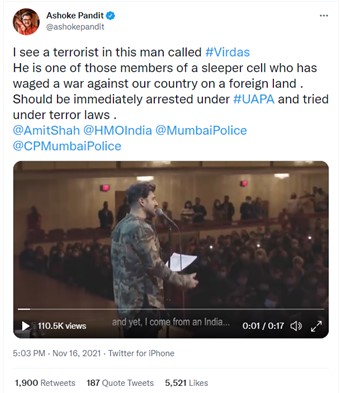
Or rather, in one of the two Indias that stand-up comedian Vir Das described in his Emmy-winning monologue which exposed the blatant hypocrisy prevalent in the country, including in relation to the plight of religious minorities, farmers, women and Dalits. The video went viral on social media, and immediately received a flurry of reactions, with right-wing activists calling for his arrest. 

One of the tweets issued in response to Vir Das’ monologue
Continue reading “What having an opinion can cost you in India”

Far-fetched and fantastical? One aspect of Squid Game could be all too real

Netflix’s hit dystopian drama – with deadly playground games, anonymous masked henchmen and a giant murderous doll – is far-fetched to say the least. And yet, arguably, one storyline underplays the grim reality.

In just four weeks, Squid Game, the Korean production where contestants play children’s games and the losing players are killed, became Netflix’s most popular series ever and number one in 90 countries.

In one storyline, guards take the bodies of losing contestants and operate on them, removing vital organs while the subjects are still alive. These organs are then rushed to be sold to Chinese traders.

Continue reading “Far-fetched and fantastical? One aspect of Squid Game could be all too real”

Imran Khan: Defender of Islam or political opportunist?

On 17 September 2021, less than a month after seizing control of the country, the Taliban effectively banned girls from secondary schools in Afghanistan after they ordered schools to resume classes for boys only.

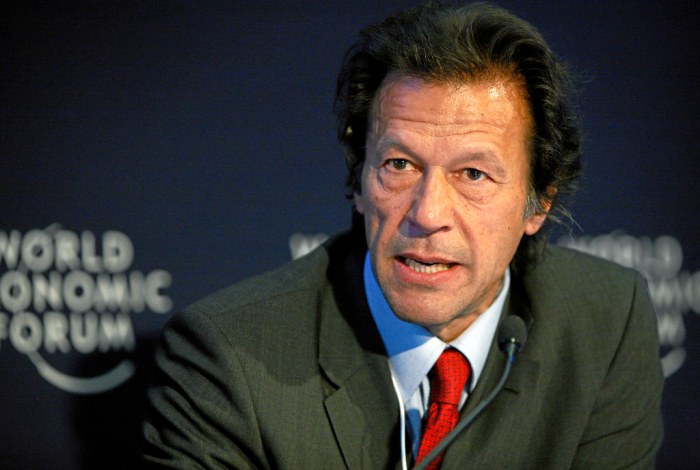
The move marked a realisation of fears that had been raised ever since the Taliban regained power, and was met with widespread and routine international condemnation from countries and human rights organisations alike. One of the more surprising critics however was Pakistani Prime Minister Imran Khan, who told the BBC that preventing women from accessing education would be ‘un-Islamic’.

The reason for such surprise is that while Prime Minister Khan has expressed somewhat mixed feelings regarding the Taliban’s takeover of Afghanistan, he has encouraged the international community, and particularly the United States, to recognise their authority. In addition, his own government has entered into talks with the organisation, and Khan himself has pledged to ‘forgive’ members of the group if reconciliation is achieved.

Developments such as these already start to make Khan’s criticisms of the Taliban ring hollow, but they are made even more interesting when considered in conjunction with his own rhetoric regarding what is and isn’t un-Islamic in his own country.

Continue reading “Imran Khan: Defender of Islam or political opportunist?”

Red tape and restrictions: India’s Foreign Contribution Regulation Act is preventing NGOs from doing their vital work

Home of Hope, Chennai, is a church-based non-governmental organisation (NGO) that helps underprivileged children and orphans with monthly sponsorship feeding programs, and helps women with microloans. Like many NGOs, Home of Hope relies on funds from generous donors across the globe to sustain their work, but the Indian government is making life increasingly difficult for this and many organisations like it.

Since amendments to the Foreign Contribution (Regulation) Act (FCRA) came into effect in September 2020, things have been different. Two boys receiving support from Home of Hope were prevented from sitting their final examinations in September as they were unable to receive the funds that helped pay their fees on time. Several other critical needs, such as healthcare for COVID-19 patients, were also left unmet due to the delay in funds. 

Of course, Home of Hope is not the only organisation affected by the new regulations. A majority of Christian charities, organisations and even educational institutions in India are funded by international donors, relying on them to survive. The FCRA amendments have made it almost impossible for them to function. 

Continue reading “Red tape and restrictions: India’s Foreign Contribution Regulation Act is preventing NGOs from doing their vital work”

India’s reservation policy is meant to help Dalits, as long as they don’t convert to Christianity or Islam

In June, we published a blog post detailing the history of Dalit conversion in India and how this can often be an act of self-liberation for members of this historically underprivileged community. This continues to this day, however there are those in the community, particularly those who convert to Christianity or Islam, who can continue to face discrimination and hardship even after conversion.

For this blog, we spoke to a Christian who works on Dalit and other human rights issues in the country, who shared some of her own experiences and shed light on the issues that persist for Dalits in India today.

“Growing up as a Christian in India, there were some decisions that you had to make early on in life. One such decision was what I would put my caste down as in my school’s admission form. I was taught that we are all God’s children and we are all equal, but why was I being asked to classify myself? I was a Christian, so I ticked the box that said OC (Other Caste) because we were taught that Christians don’t have castes and that was the only sensible option available. Also, because I was privileged to not know what caste I belong to. 

Continue reading “India’s reservation policy is meant to help Dalits, as long as they don’t convert to Christianity or Islam”