Cuban pastor Enrique de Jesús Fundora and his wife.

Into Exile: Enrique de Jesús Fundora

It is believed that more than 300,000 people have fled Cuba since nationwide protests swept the country on 11 July 2021. Many of them are religious leaders, journalists, human rights defenders and others who were given no choice but to leave the island under intense pressure from the government. CSW’s Into Exile series tells some of their stories.

In 2017, 26-year-old Pastor Enrique de Jesús Fundora and his wife established a ministry they named God Shakes Cuba and the Nations a part of the Apostolic and Prophetic Movement. This immediately made them a target of the government and cost Pastor Fundora his job as a chef in a private restaurant.

In July 2021 Pastor Fundora began to open ‘houses of prayer’ where he met with the relatives of people imprisoned because of their involvement in the 11 July protests, to pray for them and comfort them. In January 2022 Fundora was summoned by State Security, Cuba’s intelligence agency. He was interrogated and accused of holding conspiratorial meetings and of buying water and distributing it to those who had participated in the protests.

Continue reading “Into Exile: Enrique de Jesús Fundora”
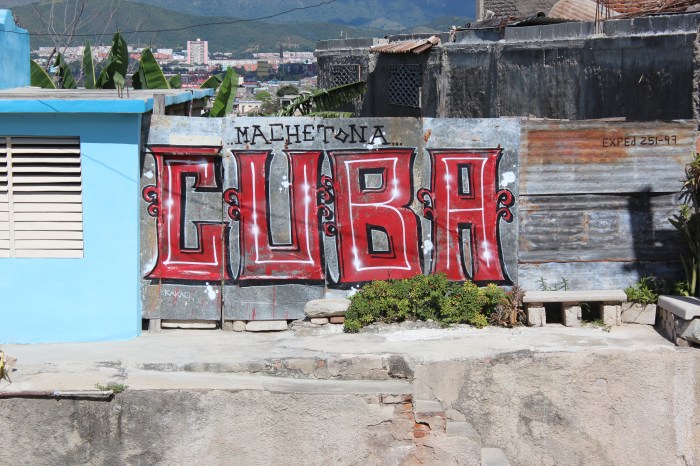
Graffiti in Cuba.

Why are Cuba’s religious leaders going into exile?

Following the peaceful protests of 11 July 2021, many Cuban religious leaders and members of communities of faith have joined the largest ongoing wave of emigration since the start of the Cuban Revolution in 1959.

The Cuban government requires that all religious groups and associations obtain legal registration from the Ministry of Justice, but make it almost impossible for them to do so. Since the Revolution, the government has granted legal status to only a handful of groups, and has stripped some, which had a legally recognised presence on the island prior to 1959 of their legal status. As a result, the vast majority of religious groups that did not have a legal presence on the island before 1959 exist outside the law, automatically making them targets of discrimination and harassment.

Over the past two years, Cuba has sent hundreds of dissidents to prison, where for those who hold religious beliefs, their faith often is used by prison guards as a pressure point. The government regularly violates the Nelson Mandela Rules, refusing to allow political prisoners to received religious visits, possess religious materials or participate in religious services inside the prisons. Political prisoners’ religious faith is regularly, publicly ridiculed. Among the growing number of political prisoners are leaders of unregistered religious groups.

Continue reading “Why are Cuba’s religious leaders going into exile?”
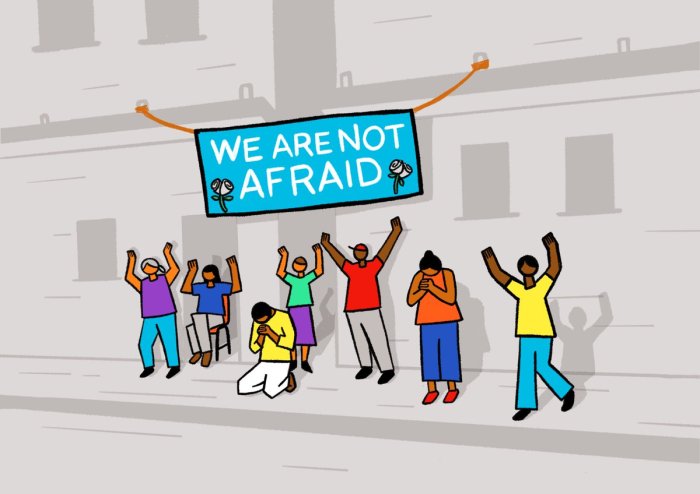
Cartoon depiction of protests in Cuba.

The international community must support the bravery of the Cuban people

‘I don’t think that any man can get used to this place, and even more so when one knows that one is here unjustly.’

– Pastor Lorenzo Rosales Fajardo

Pastor Lorenzo Rosales Fajardo has been a prisoner of the Cuban government for over 18 months. He was arrested, among many others, on 11 July 2021 in the midst of unprecedented nationwide protests in Cuba, and he is currently serving a seven-year prison sentence on completely fabricated charges of ‘disrespect’, ‘assault’, ‘criminal incitement’ and ‘public disorder’.

He is one of many political prisoners on the island, his continuing detention just one reminder of the Cuban authorities’ relentless hostility towards religious groups it views with suspicion and fear.

Continue reading “The international community must support the bravery of the Cuban people”

‘I will not beat other people; I am a Christian’ – Cuba’s new criminal code outlaws freedom of conscience 

Faced with a growing number of protests in Cuba on the part of its citizenry, the Cuban regime has needed to forcibly recruit men1 into the ranks of its military. They are not being brought in to bring peace or mediate in the middle of the protests, exactly, but rather to violently repress and neutralize the protests, of which 5,164 separate incidents have been recorded since demonstrations broke out on 11 July 2021, also known as 11J. The new recruits have also been made to participate in the creation of false evidence, which has been used to lock up more than 1,000 political prisoners since 11J.  

The Cuban Conflict Observatory reports that 589 protests took place in October 2022; this was the month with the highest number incidents since demonstrations first broke out on 11J. The regime has had to resort to raids, using various means of deception and often  force, to increase the numbers of enlisted young people.  

‘Do you know what they did to a group of young people?’ a pastor asked CSW. ‘They phoned them to arrange the handover of their degrees and grades, [but really] the people from the military committee were waiting for them to enlist them.’ 

Continue reading “‘I will not beat other people; I am a Christian’ – Cuba’s new criminal code outlaws freedom of conscience “
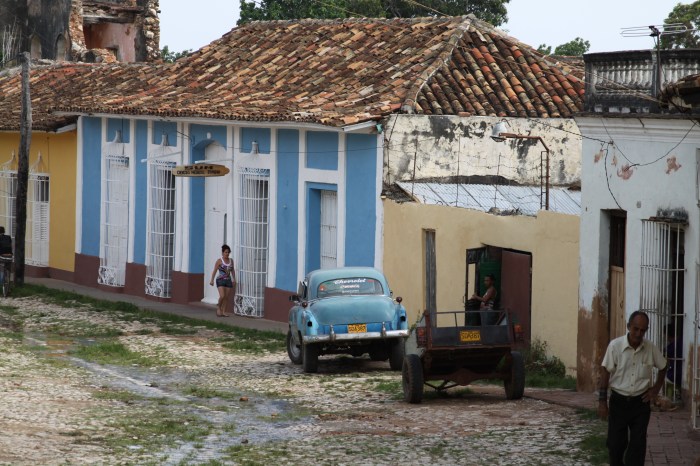
A street in Trinidad, Cuba.

Cuba’s referendum on 25 September is about far more than gay marriage

On 25 September Cubans will go to the polls to vote in a popular referendum on a new Family Code, which, if approved, will become law. Media coverage, in and outside of Cuba, including in the UK and US press, has presented the referendum as a vote on gay marriage. The truth is that the proposed family code runs over 100 pages; only a handful of the 474 articles are relevant to LGBTQ+ rights.

Presenting it as a referendum on gay rights is not only incorrect but also dangerous. It allows the Cuban government to obscure some of the highly problematic aspects of the code, which have the potential to violate the fundamental rights of all Cubans and would give the authorities another, and very effective, way of silencing independent or critical voices.   

Most worrying is Article 191 which would allow for the removal of children if their parents fail to fulfil a list of responsibilities detailed in Article 138. These include the duties to instill in their children love for the homeland, respect of its symbols, and respect for the authorities (Article 138 (ñ)).

Continue reading Cuba’s referendum on 25 September is about far more than gay marriage