Elections in Mexico: Freedom of religion or belief remains an unaddressed issue 

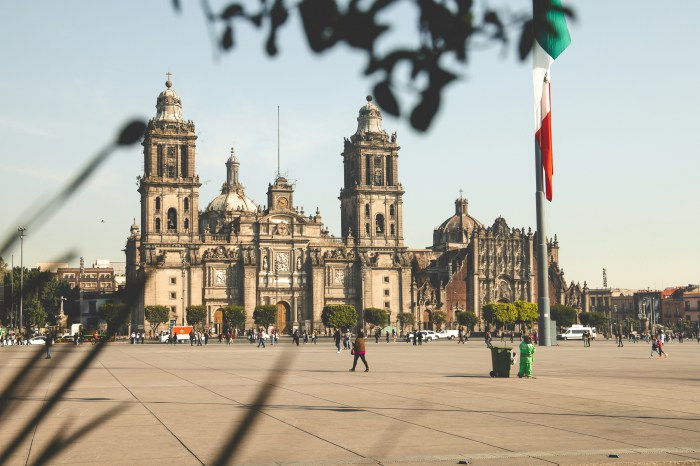
This weekend Mexico will elect 20,286 representatives, including a new president, 128 new senators, 500 federal deputies, governors, municipal presidents and members of state legislatures.  

Although several challenges have been addressed during the electoral campaigns, one topic that has hardly been talked about is human rights, despite the continued calls by civil society organisations for this to change.  

In 2022, Mexico’s National Institute of Statistics and Geography (INEGI) recorded 156,743 human rights violations. The most frequently occurring types of violations were arbitrary detention, acts of discrimination carried out by public officials, and the denial or inadequate provision of public services like water and electricity.  

Continue reading “Elections in Mexico: Freedom of religion or belief remains an unaddressed issue “

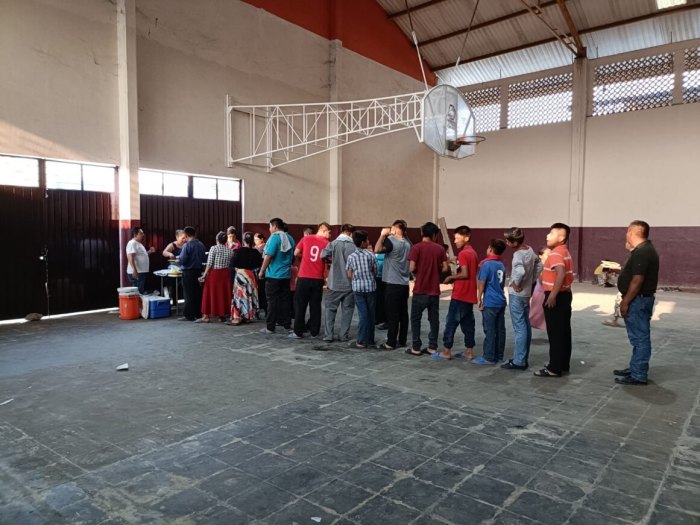
139 Protestant Christians are now living in an auditorium because the Mexican government has not done its job

In 2015, members of a religious minority living in neighbouring villages in the Huasteca region of Hidalgo State, Mexico were informed by their village leaders that they would no longer be permitted to perform their assigned acts of community service.  

To outsiders, this might seem insignificant, especially when compared to violations of freedom of religion or belief (FoRB) elsewhere in Mexico and the world. Being told to do less work might even seem like a positive development. Those in the villages of Rancho Nuevo and Coamila, both located in the municipality of Huejutla de los Reyes, however, understood that the non-completion of this work would mean the loss of recognition as members of the community. And, associated with that recognition are rights, including access to health care, government benefit programmes and education.  

The situation grew worse in 2016, as members of the religious minority were warned against accessing or using their land for cultivating crops, their main source of sustenance and income. Individuals who helped the group, who all belong to the Great Commission Baptist Church, to build a place of worship on privately owned land were threatened and violently assaulted. The Baptists were repeatedly forced to attend community meetings where local leaders demanded that they take part in Roman Catholic festivals including by making financial contributions and actively participating in acts of worship. The leaders warned them that more severe punishment, including permanent removal from the community membership rolls, would follow if they did not comply. 

Continue reading “139 Protestant Christians are now living in an auditorium because the Mexican government has not done its job”

From faith to exile in Guerrero, Mexico 

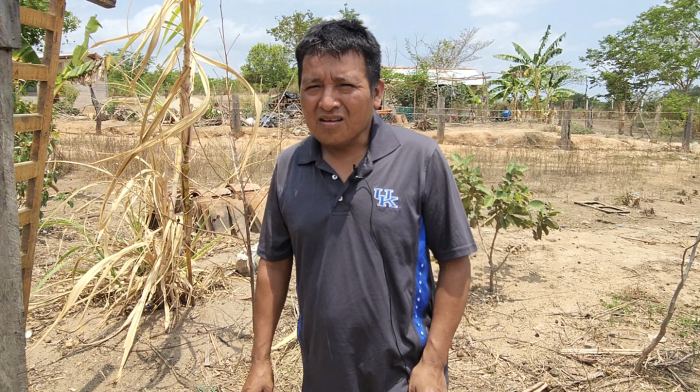
Damián and his family live on the outskirts of the centre of Ayutla de los Libres1 in south-western Mexico. In May 2022, they and two other families bought the land after they were expelled from their village because they belong to a religious minority.  

On 25 March 2021, Damián, age 38 at the time, was called before the Ahucachahue community assembly in Ayutla de los Libres Municipality, located in the Costa Chica region of Guerrero. The people of Ahucachahue are Mixteco, and the majority practice Roman Catholicism. At the meeting, community leaders informed him that he had been appointed to lead the festivals in honor of San Isidro Labrador,2 their patron saint. Damián would be responsible for contracting musical groups and suppliers of alcohol and food, in addition to the administrative tasks that accompany the rituals specific to the Roman Catholic saint.  

However, Damián had converted to Protestant-Evangelical Christianity four years earlier, in 2017, as had many others. He refused the position.  

Continue reading “From faith to exile in Guerrero, Mexico “
A street with flags flying in Michoacán, Mexico.

Religious minorities in Michoacán, Mexico just wanted to be treated equally

Michoacán is a state located in central Mexico. This region of mountains and forests is inhabited by the P’urhépecha indigenous populations, whose language P’urhe is still spoken today and who are renowned for their fine work with the different types of wood found in the area. The P’urhépecha are concentrated in 22 municipalities across the breadth of the state.

Michoacán is also known for its natural beauty and the richness of its land and climate, making it a favourable place for the cultivation of different fruits exported internationally, including the avocado. Mexico is the largest producer worldwide of this precious product which has an annual economic impact of billions of dollars.

The P’urhépecha Plateau is home to around 70% of Mexico’s national avocado production. This has given rise to clashes in Michoacán between organized crime groups as they vie for control of the territory and avocado market. The situation has led, in turn, to the formation of community militias and self-defence groups who, fed up with the extortion and the abuses committed by the organized crime groups, have taken up arms to protect their lands. In some cases, however, these community militias and self-defence groups have also been involved in the violation of human rights.

Continue reading “Religious minorities in Michoacán, Mexico just wanted to be treated equally”
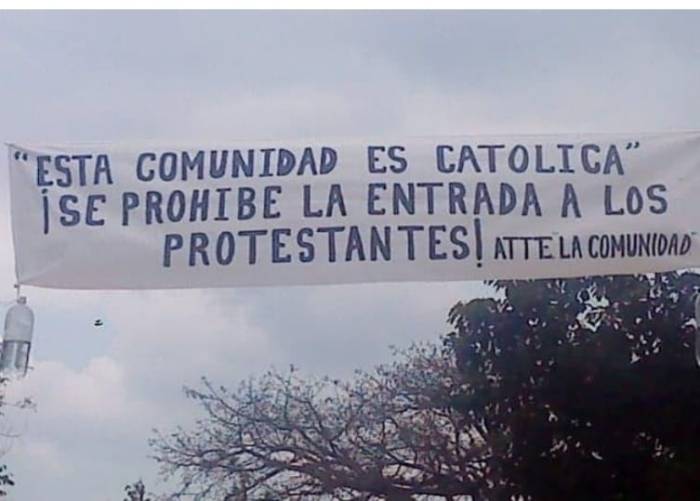
A sign prohibiting the entry of Protestants into the community of Cuamontax in Huazalingo Municipality of Hidalgo State, Mexico.

Revictimization in the search for a solution to conflicts related to religious freedom

Uriel Badillo is a father of a family who has been affected by the lack of religious freedom in the community of Cuamontax in Huazalingo Municipality of Mexico’s Hidalgo State. His father Gilberto Badillo, a native of the community, converted to Christianity in 2009, and in 2010 he went public with his new faith before his community as he began to conduct Bible studies and invite people to his house.

The community prohibited these activities and placed a banner at the entrance to the village that explicitly said, ‘No entry to Evangelicals’, which remained until 2021. I had the opportunity to see it on a visit to the state of Hidalgo in 2020.

The majority religion in Cuamontax is Roman Catholic; they hold parties and celebrations for various saints during the year but the most important party in the area that lasts a week is “Xantolo”1 (Day of the Dead) and all members of the community are required to participate physically and financially.

Continue reading “Revictimization in the search for a solution to conflicts related to religious freedom”