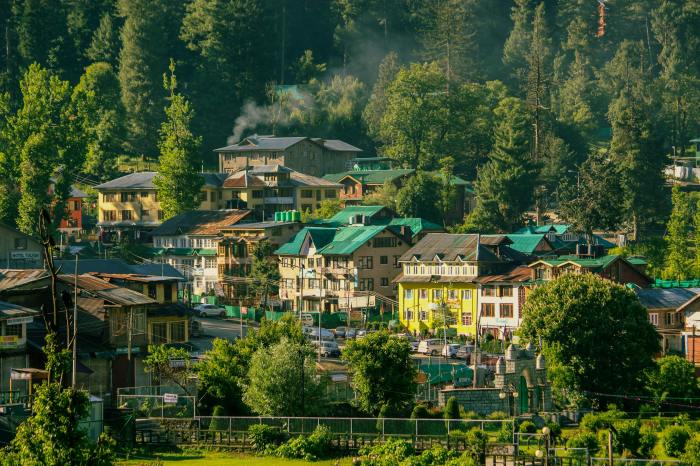
For religious minorities in India, even tragedies turn into trials

Once again a terror attack has left Muslims across India not just shaken like all other Indians, but also defending their very existence. Someone, somewhere, with a gun and an agenda, committed a horrific act — but it was their name, their identity and their faith that suddenly became suspect.

Twenty-six people were killed when terrorists attacked tourists in Pahalgam in Jammu and Kashmir on 22 April. The attackers reportedly singled out non-Muslims, even asking some to recite the Islamic Kalima (Islamic prayers derived from hadiths that are often used to aid South Asia Muslim children to memorise key beliefs) to prove their faith.

It was horrifying. And yet, in the midst of the horror, ordinary Kashmiris—Muslim men and women—risked their lives to save strangers. People like Nazakat Ahmad Shah, a tour guide, and Rayees Ahmad Bhatt, President of the Pony Owners’ Association, pulled survivors from danger. A local pony guide Syed Adil Hussain Shah gave his life while trying to protect a little girl. But instead of being praised for their efforts, the Muslim community, especially the Kashmiri Muslim community, was vilified. Their bravery was quickly forgotten, the national mood shifted from mourning to suspicion—and the blame – as it so often does in India – landed on an entire community.

Continue reading “For religious minorities in India, even tragedies turn into trials”
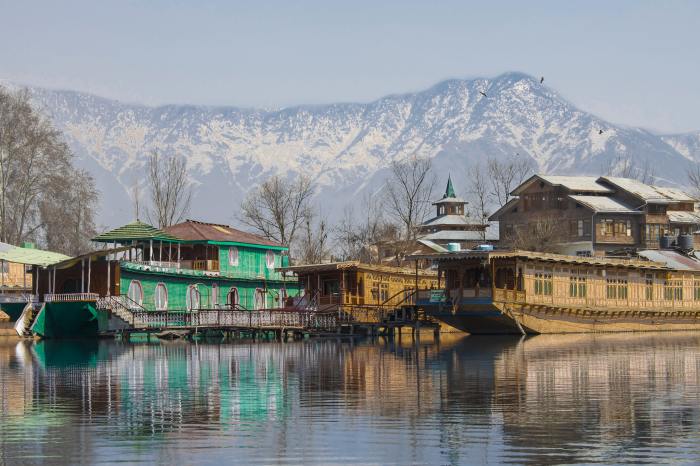
‘Kashmir Files’ – A film used to fuel religious intolerance in India

The Indian film Kashmir Files has been mired in controversy since its release on 11 March. The 270-minute-long film, directed by Vivek Agnihotri, an open supporter of India’s ruling Bharatiya Janata Party (BJP), focuses on the brutal killings of estimates of between 30 and 80 Kashmiri Pandits or Kashmiri Hindus from 1988-1990 and their exodus from Indian Administered Kashmir.

The film revolves around a young student who finally discovers that his parents were killed by Muslim militants and not by accident, as his grandfather had told him. The student is caught between two conflicting narratives, that of his grandfather who is seeking justice for the exodus, and that of his mentor – a Jawaharlal Nehru University (JNU) professor who tells him no such appeasement is necessary.

The historical events on which the film is based occurred in the 1990s, amidst a rising insurgency in Kashmir, when the Jammu Kashmir Liberation Front (JKLF), a militant separatist organisation comprising Muslims, targeted the state’s minority Hindus – Kashmiri Pandits – forcing an estimated 75% of the Hindu population to leave the state and seek refuge in other parts of India. Governments in power since then, including the BJP, have done little for their resettlement.

Continue reading “‘Kashmir Files’ – A film used to fuel religious intolerance in India”