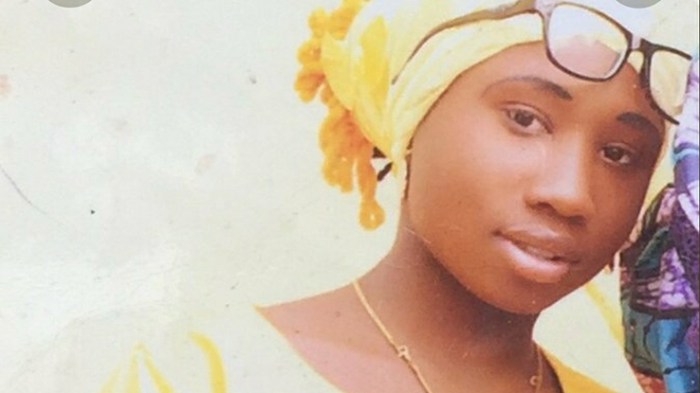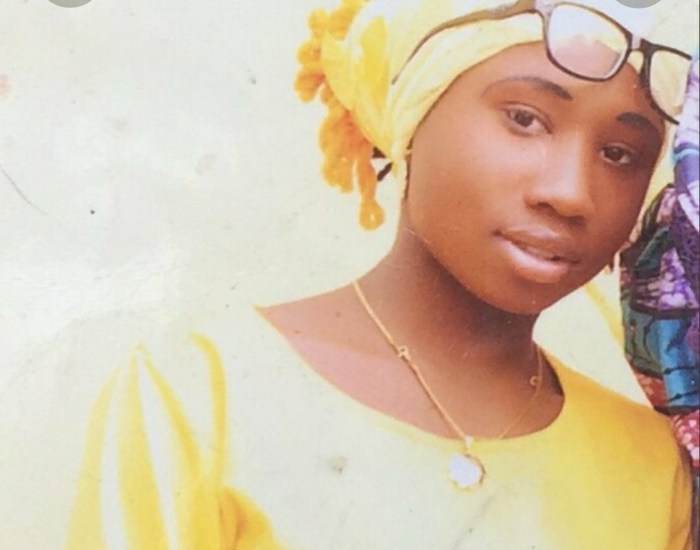
International Day for the Elimination of Sexual Violence in Conflict: Statement by the Parents of Leah Sharibu

We are Nathan and Rebecca Sharibu, the parents of Leah Sharibu. Today, as organizations within the Religious Liberty Partnership gather under the powerful banner of “Voices for Justice” to mark the International Day for the Elimination of Sexual Violence in Conflict, we speak with heavy hearts but unwavering hope.

Our daughter Leah, abducted as a 14-year-old Christian schoolgirl from the Government Girls Science and Technical College in Dapchi, Yobe State, on February 19, 2018, remains in the captivity of Boko Haram/ISWAP terrorists for more than eight long years.

Leah was taken alongside 109 other girls. Most were eventually released, but our daughter was held back solely because she refused to renounce her Christian faith and convert to Islam. She stood firm in her belief, choosing to remain true to Christ even at the cost of her freedom.
Continue reading “International Day for the Elimination of Sexual Violence in Conflict: Statement by the Parents of Leah Sharibu”

Nigeria Does Not Have a Kidnapping Problem. It Has a Protection Accountability Problem.

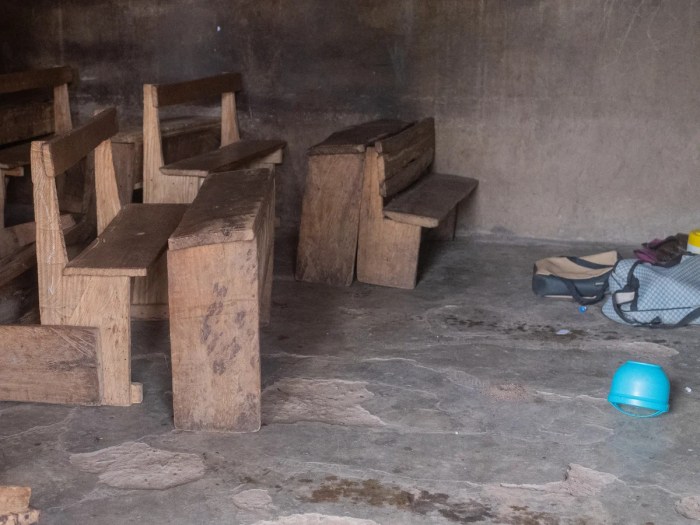
On 15 May 2026 armed men attacked three schools in Oriire Local Government Area, Oyo State. Forty-six pupils and teachers were taken. On the same day — the same day — forty-two children were abducted from Mussa Primary and Junior Secondary School in Askira-Uba, Borno State. A mathematics teacher, Michael Oyedokun, was killed. His students watched. Three weeks have passed. Most of those children are still missing.

Nigeria does not have a kidnapping problem. Nigeria has a protection accountability problem. The kidnapping is the outcome. The accountability failure is the system.

The Record on Paper

Nigeria endorsed the Safe Schools Declaration in 2015. It launched a National Policy on Safety, Security and Violence-Free Schools in 2021. In December 2022 the government committed ₦144.8 billion to a Safe Schools financing plan running through 2026. A National Safe Schools Response Coordination Centre was established. Security personnel were trained across all 36 states.

Continue reading “Nigeria Does Not Have a Kidnapping Problem. It Has a Protection Accountability Problem.”

Small steps to justice: Why recent assessments of Sudan’s warring parties are significant, and how the international community must respond

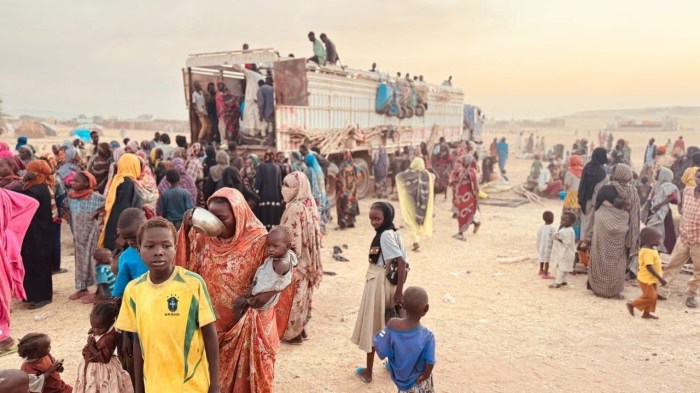
On 19 February the United Nations Independent Fact-Finding Mission (FFM) on the Sudan published a report that found that the Rapid Support Forces (RSF)’s siege and actions in the aftermath of the capture of the city of El Fasher in October 2025 bore the ‘hallmarks of genocide’.

Highlighting the militia’s systematic targeting of the non-Arab Darfuri Fur and Zaghawa communities the Chair of the FFM, Mohamed Chande Othman, said: ‘The scale, coordination, and public endorsement of the operation by senior RSF leadership demonstrate that the crimes committed in and around El-Fasher were not random excesses of war. They formed part of a planned and organised operation that bears the defining characteristics of genocide.’

Two weeks later the United States Commission for International Religious Freedom (USCIRF) recommended that the US State Department designate the RSF as an Entity of Particular Concern (EPC) in light of the ‘harmful effects to religious freedom and Sudan’s diverse religious and ethnic communities’ caused by the RSF’s campaign of mass atrocities and widespread human rights violations.

Continue reading “Small steps to justice: Why recent assessments of Sudan’s warring parties are significant, and how the international community must respond”

For religious minorities in India, even tragedies turn into trials

Once again a terror attack has left Muslims across India not just shaken like all other Indians, but also defending their very existence. Someone, somewhere, with a gun and an agenda, committed a horrific act — but it was their name, their identity and their faith that suddenly became suspect.

Twenty-six people were killed when terrorists attacked tourists in Pahalgam in Jammu and Kashmir on 22 April. The attackers reportedly singled out non-Muslims, even asking some to recite the Islamic Kalima (Islamic prayers derived from hadiths that are often used to aid South Asia Muslim children to memorise key beliefs) to prove their faith.

It was horrifying. And yet, in the midst of the horror, ordinary Kashmiris—Muslim men and women—risked their lives to save strangers. People like Nazakat Ahmad Shah, a tour guide, and Rayees Ahmad Bhatt, President of the Pony Owners’ Association, pulled survivors from danger. A local pony guide Syed Adil Hussain Shah gave his life while trying to protect a little girl. But instead of being praised for their efforts, the Muslim community, especially the Kashmiri Muslim community, was vilified. Their bravery was quickly forgotten, the national mood shifted from mourning to suspicion—and the blame – as it so often does in India – landed on an entire community.

Continue reading “For religious minorities in India, even tragedies turn into trials”

The international community must not allow the Nigerian government to fail Leah Sharibu any longer

Today is Leah Sharibu’s 22nd birthday. 

Anyone who has been following the work of CSW for some time will likely be familiar with some of the details surrounding her case: the fact that this is the eighth consecutive birthday that she has marked as a prisoner of the Islamic State West Africa Province (ISWAP); the fact that she was one of 110 girls abducted from the Government Girls Science and Technical College in Dapchi in Nigeria’s Yobe State on 19 February 2018; the fact that she was the sole Christian among them and was therefore denied her freedom because she refused to convert to Islam as a pre-condition for release – even as government negotiations saw all of her surviving classmates returned to their families in March 2018. 

Over the past seven years, successive administrations have failed to deliver on official promises to secure Leah’s release, including a personal pledge by former President Muhammadu Buhari made directly to Leah’s mother Rebecca. In January 2022 – over three years ago – Nigeria’s then Chief of Defence Staff General Lucky Irabor assured Nigerian media that there were plans and processes in place ‘to ensure that not just Leah Sharibu but every other person held captive is released.’  

And yet she remains in captivity, having been declared a ‘slave for life’, renamed, forcibly ‘married’ to ISWAP fighters, and given birth to three children. 

Continue reading “The international community must not allow the Nigerian government to fail Leah Sharibu any longer”