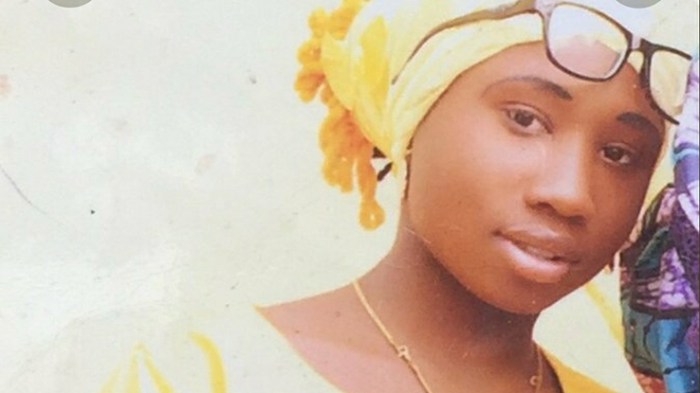
The international community must not allow the Nigerian government to fail Leah Sharibu any longer

Today is Leah Sharibu’s 22nd birthday. 

Anyone who has been following the work of CSW for some time will likely be familiar with some of the details surrounding her case: the fact that this is the eighth consecutive birthday that she has marked as a prisoner of the Islamic State West Africa Province (ISWAP); the fact that she was one of 110 girls abducted from the Government Girls Science and Technical College in Dapchi in Nigeria’s Yobe State on 19 February 2018; the fact that she was the sole Christian among them and was therefore denied her freedom because she refused to convert to Islam as a pre-condition for release – even as government negotiations saw all of her surviving classmates returned to their families in March 2018. 

Over the past seven years, successive administrations have failed to deliver on official promises to secure Leah’s release, including a personal pledge by former President Muhammadu Buhari made directly to Leah’s mother Rebecca. In January 2022 – over three years ago – Nigeria’s then Chief of Defence Staff General Lucky Irabor assured Nigerian media that there were plans and processes in place ‘to ensure that not just Leah Sharibu but every other person held captive is released.’  

And yet she remains in captivity, having been declared a ‘slave for life’, renamed, forcibly ‘married’ to ISWAP fighters, and given birth to three children. 

Continue reading “The international community must not allow the Nigerian government to fail Leah Sharibu any longer”
Five years is too long: the Nigerian government must deliver on its promises to secure the release of Leah Sharibu

Leah Sharibu has been the hostage of terrorists for five years now.

She was just 14 years old when she was taken – the sole Christian among a group of 110 schoolgirls abducted from their school in Dapchi, Nigeria, by members of the Islamic State West Africa Province in February 2018.

Those familiar with her case will recall that just one month later all of Leah’s surviving classmates – five died in transit – were loaded onto trucks and returned to their families following negotiations by the government. But Leah was not among them.

The terrorists told her they would only release her if she renounced her faith and converted to Islam in exchange for her freedom. At just 14 years of age, Leah refused to give in to their pressure.

Continue reading “Five years is too long: the Nigerian government must deliver on its promises to secure the release of Leah Sharibu”

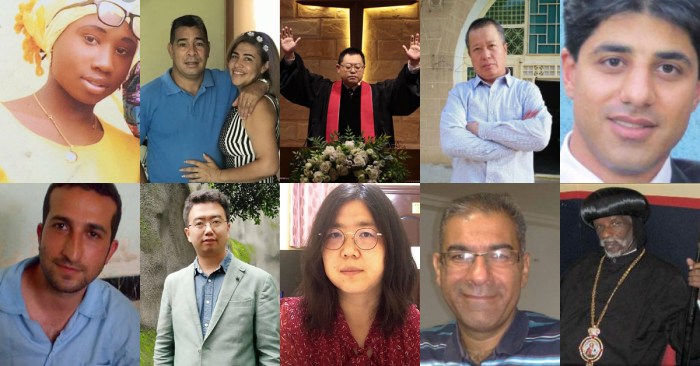
Human Rights Day: Standing up and speaking out until everyone is free to believe

Today is Human Rights Day. It marks the 73rd anniversary of the United Nations (UN) General Assembly’s adoption of the Universal Declaration of Human Rights (UDHR), a milestone document which proclaims the inalienable rights that everyone is entitled to as a human being.

Article 18 of the UDHR declares “Everyone has the right to freedom of thought, conscience and religion; this right includes freedom to change his religion or belief, and freedom, either alone or in community with others and in public or private, to manifest his religion or belief in teaching, practice, worship and observance.”

It conveys the principle that everyone should be free to believe whatever they choose to believe; however, in many countries around the world, individuals have not only been denied this freedom, but their physical freedom also on account of their religion or belief.

Continue reading “Human Rights Day: Standing up and speaking out until everyone is free to believe”

The US no longer considers Nigeria a ‘Country of Particular Concern’, but what has changed?

In December 2020, the United States’ (US) State Department designated Nigeria a Country of Particular Concern (CPC), finding that the government was responsible for engaging in or tolerating “systematic, ongoing, egregious violations of religious freedom.”

The rather belated decision marked the first time Nigeria had been placed on the State Department’s list, despite having been recommended for designation since 2009, and was also the first time a nominally secular democracy had been designated a CPC.

It reflected the severity of an ongoing crisis in the country,  which includes longstanding systemic and systematic violations of the rights of religious minorities in the north and central regions, and violence in which thousands of vulnerable citizens – many of them Christians – have been killed, while hundreds of thousands more have been forcibly displaced by armed non-state actors, including assailants of Fulani origin, and members of the Boko Haram, Islamic State West Africa Province (ISWAP) and Ansaru terrorist organisations.

Continue reading “The US no longer considers Nigeria a ‘Country of Particular Concern’, but what has changed?”