One year on from the coup in Myanmar, today must be a turning point

By Benedict Rogers

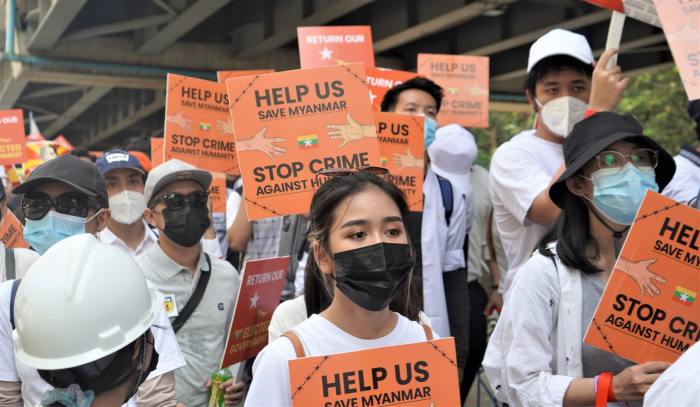
A year ago today, Senior General Min Aung Hlaing, Commander-in-Chief of Myanmar/Burma’s military, ordered his troops to take over government buildings, raid the offices of the governing party, arrest members of Myanmar’s democratically elected government and Parliament, shut down independent media, take control of the state media and seize power in a brutal coup d’etat. His decision turned the clock back by more than a decade, reversing ten years of fragile democratisation in which the country had seen credible elections, an independent media, the release of political prisoners, a vibrant civil society and opening up to the international community.

Of course, that decade of reform was far from perfect – not least because it included the genocide of the Rohingyas, continued conflict in ethnic states, particularly Kachin, Shan and Rakhine, and the rise of extreme religious nationalism leading to increased religious discrimination and persecution. But nevertheless, it allowed some seeds of political liberalisation to grow, and enabled the people of Myanmar to vote freely.

Twice – in 2015 and 2020 – Aung San Suu Kyi and her National League for Democracy (NLD) won an overwhelming mandate to govern. After years under house arrest, prison, hiding or exile, the NLD – whose mandate from the 1990 elections was never accepted by the military – was now in government.

Continue reading “One year on from the coup in Myanmar, today must be a turning point”

A mockery of democracy: The international community must maintain firm pressure on Nicaragua

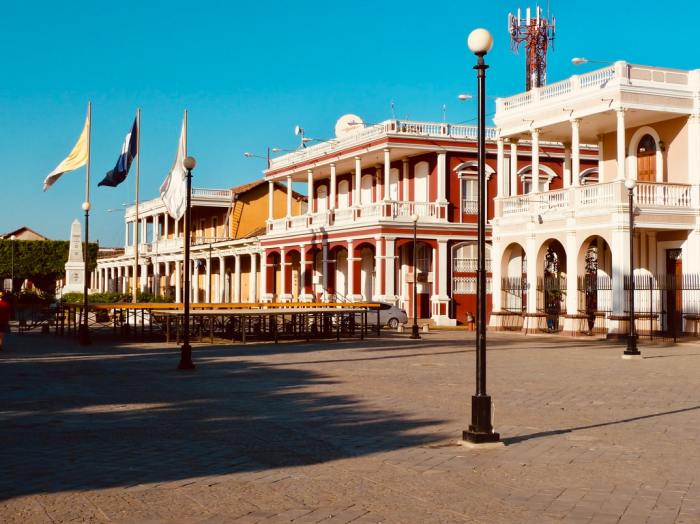
On 7 November 2021, Daniel Ortega was re-elected President of Nicaragua after months of government repression and violence against protesters. On 10 January 2022 he was inaugurated. This long read on the government’s history of repression against the citizens of Nicaragua was informed by testimonies from several individuals whose names have been withheld for security reasons.

In the first week of June 2021, the political landscape of Nicaragua transformed overnight when police arrested five opposition candidates who were on the ballot for the country’s November 2021 elections. What began as covert government repression of opposition candidates in the election burst into the open as many of them were suddenly detained.

In Nicaragua, the will of a repressive leader is above the law.

The most flawed election in Nicaragua’s history

Since the re-election of Daniel Ortega on 7 November 2021, analysts have contended that the electoral process was one of the most flawed in the country’s history as a democracy, as it was characterised by the arrests of numerous opposition candidates. To many, the scenario for Nicaragua seems hopeless.

Continue reading “A mockery of democracy: The international community must maintain firm pressure on Nicaragua”

Sudan’s military coup: lessons from Egypt and the wider region

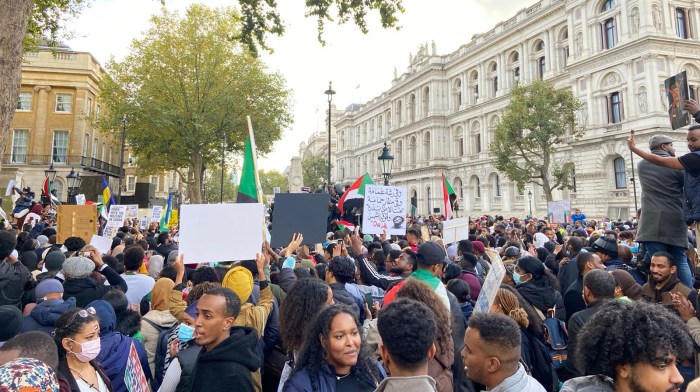
In February 2021, CSW warned that slow progress in ushering a new era for Sudan risked derailing the inclusive national vision that had united so many of its citizens in protest, and which led to the fall of the al-Bashir regime and the creation of a transitional government. Our blog post pointed to the need to learn from neighbouring Egypt’s experiences.

On 25 October 2021, the transitional council was overthrown, and the military seized power in a coup. Once again there are lessons to be drawn from Egypt, and the wider region, in understanding the challenges to democracy in Sudan today.

Both Sudan and Egypt have a complicated history of the involvement of the military in politics. One of the key differences in the two nations’ relationship with the military, however, is one of ideology.

In the immediate post-Mubarak era, the military effectively paved the way for a Muslim Brotherhood electoral victory.  However, when the army intervened in political affairs for the second time, it set out to control the excesses of the Brotherhood’s Freedom and Justice Party, positioning itself as the guardian of the Revolution and assisting in the overthrow of the government following mass protests.  

Continue reading “Sudan’s military coup: lessons from Egypt and the wider region”

Long Read: One year since the Lekki Toll Gate massacre, Nigeria continues its slide into failed statehood

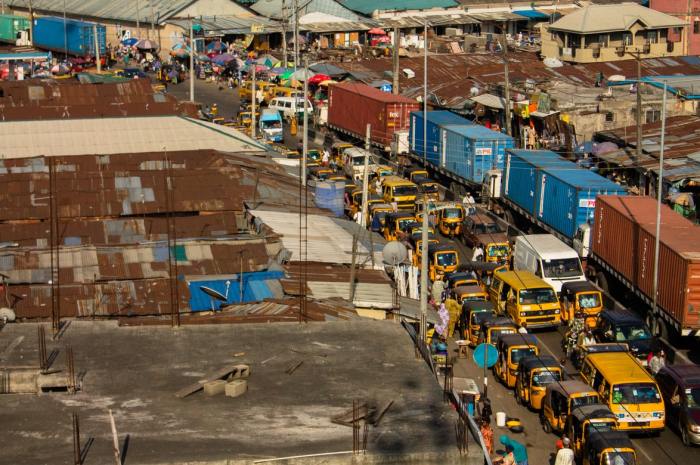
On 20 October 2020 Nigerian security forces at the Lekki Toll Gate in Lagos opened fire on unarmed and peaceful demonstrators who had gathered to protest the notorious police unit, the Special Armed Robbery Squad (SARS) and call for good governance. The soldiers opened fire just as the protestors finished singing the national anthem.  When they withdrew, the police arrived and also opened fire.

Estimates of those killed are variable, ranging from nine to over 70. The real number could be higher still, with video footage subsequently emerging which appeared to confirm allegations by survivors that the military had evacuated bodies from the scene in armoured vehicles, as had occurred in 2015 when soldiers attacked Islamic Movement of Nigeria (IMN) facilities in Zaria, Kaduna state, and more recently, during an armed raid on the home of a Yoruba activist in Ibadan.  

Prior to attacking, engineers had arrived at the toll gate earlier that afternoon and removed and disabled the CCTV. Just before the attack began, the lights in the area were switched off. 

The Nigerian army, which was ostensibly enforcing a curfew announced by the Lagos state government just hours before the attack, initially attempted to deny responsibility, and even claimed soldiers were not in the area, despite footage from mobile phones proving otherwise.  The Governor of Lagos also attempted to distance himself from responsibility for the incident, visiting some of the wounded in hospital. However, he later claimed in a television address that there had been no casualties, enraging survivors, families of victims, and all who had followed livestreaming of the massacre on social media. Regardless of the number of casualties, these deaths amount to cynically executed extrajudicial killings of young people merely for demanding good governance and rule of law.

Continue reading “Long Read: One year since the Lekki Toll Gate massacre, Nigeria continues its slide into failed statehood”