On 19 February the United Nations Independent Fact-Finding Mission (FFM) on the Sudan published a report that found that the Rapid Support Forces (RSF)’s siege and actions in the aftermath of the capture of the city of El Fasher in October 2025 bore the ‘hallmarks of genocide’.
Highlighting the militia’s systematic targeting of the non-Arab Darfuri Fur and Zaghawa communities the Chair of the FFM, Mohamed Chande Othman, said: ‘The scale, coordination, and public endorsement of the operation by senior RSF leadership demonstrate that the crimes committed in and around El-Fasher were not random excesses of war. They formed part of a planned and organised operation that bears the defining characteristics of genocide.’
Two weeks later the United States Commission for International Religious Freedom (USCIRF) recommended that the US State Department designate the RSF as an Entity of Particular Concern (EPC) in light of the ‘harmful effects to religious freedom and Sudan’s diverse religious and ethnic communities’ caused by the RSF’s campaign of mass atrocities and widespread human rights violations.
Days after that, on 9 March, the State Department designated the Sudanese Islamic Movement and the al-Baraa Bin Malik Brigade (BBMB) – the political and armed wings respectively of the Sudanese Muslim Brotherhood (SMB)– as terrorist organisations, accusing them of using ‘unrestrained violence against civilians’ to undermine attempts to resolve the conflict in Sudan, and advancing a ‘violent Islamist ideology’.
All marked key developments in the pursuit of accountability for atrocities and violations committed throughout the near three-year conflict in Sudan – and in many cases the decades before that – while also highlighting crucial ethnoreligious elements to the war that can sometimes be overlooked in favour of the more salient economic interests that drive it.
The RSF: A genocidal paramilitary group
There is no question that the RSF merits EPC designation. During its 18-month siege of El Fasher the militia repeatedly attacked places of worship – as it has done across the country throughout the conflict.
Between May and September 2025 the RSF shelled the Sudan Episcopal Church on at least six separate occasions, including on 5 September, when two people were killed whilst sheltering in the building. On 11 June – two days after one such attack on the Episcopal Church – the RSF bombed the African Inland Church and Roman Catholic Church, killing at least five people and leaving dozens more injured. Among the casualties was Father Luka Jomo, the parish priest of the Roman Catholic Church, who was critically wounded and died on 12 June.
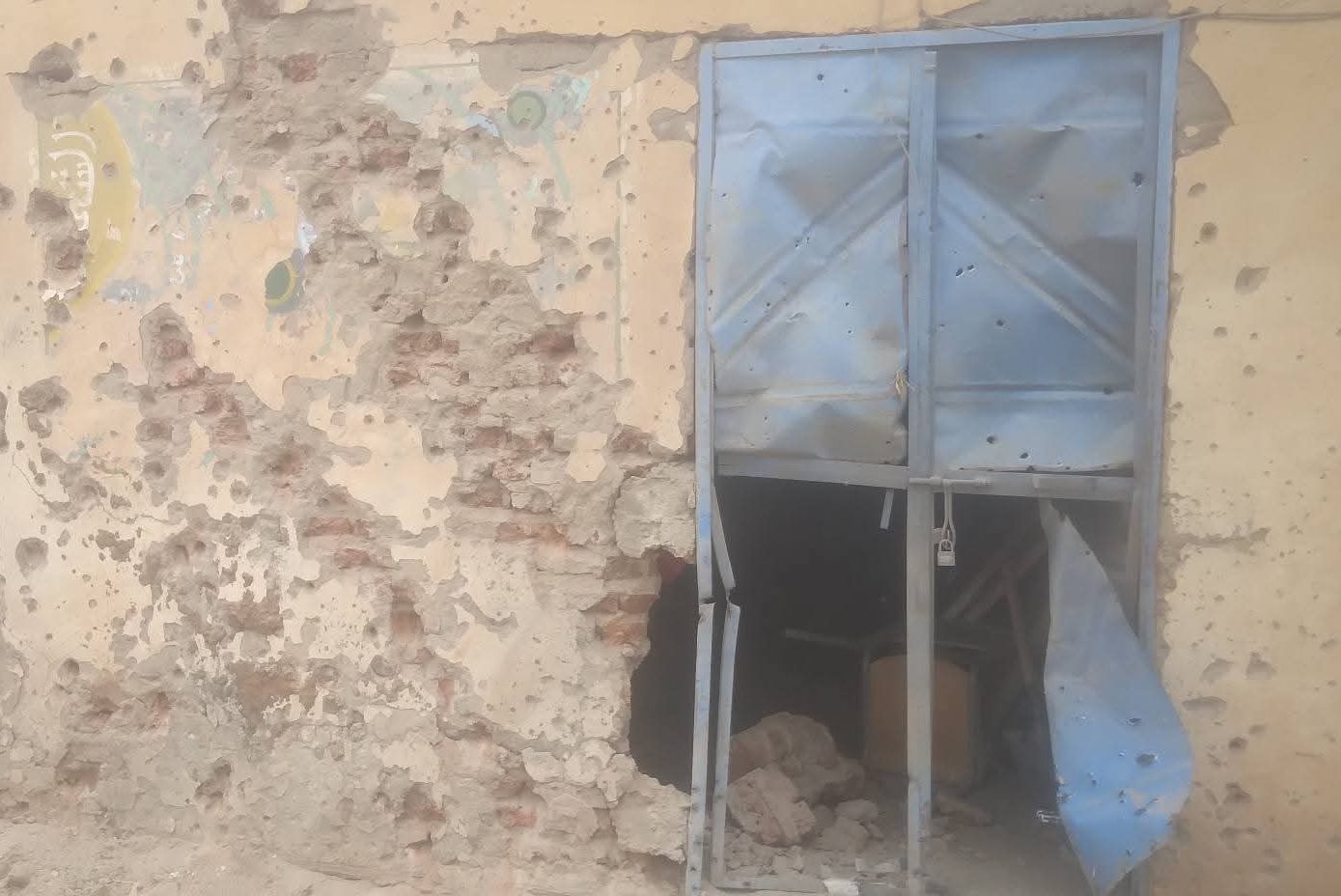
On 19 September the RSF reduced a mosque near the Abu Souk Camp for internally displaced persons (IDPs) to rubble, killing at least 70 people in an attack which took place just as worshipers were gathering for Fajir prayers at approximately 6am.
The decision on whether to follow through with the EPC designation now rests with the US State Department, and specifically the Secretary of State to whom the president has delegated the authority under the Frank R. Wolf International Religious Freedom Act of 2016. Not only should this be acted upon as a matter of urgency, but CSW has also urged the department to designate the RSF a terrorist group in recognition of the fact that many of their actions fall within that definition.
The SMB: A dangerous political and military force
Similarly, there is no doubt that the SMB has been correctly identified as a terrorist organisation. While it has not officially held power since the removal of the former president, Omar al Bashir, in April 2019, its influence has been resurgent ever since the October 2021 coup by the leaders of the RSF and the Sudanese Armed Forces (SAF), with whom the RSF is now in conflict, brought an end to Sudan’s fragile democratic transition.
Numerous members of al Bashir’s National Congress Party (NCP) – which grew out of and remains affiliated with the Brotherhood – have been appointed to political office by SAF leadership, while the BBMB in particular has committed widespread and egregious violations whilst fighting alongside the SAF.
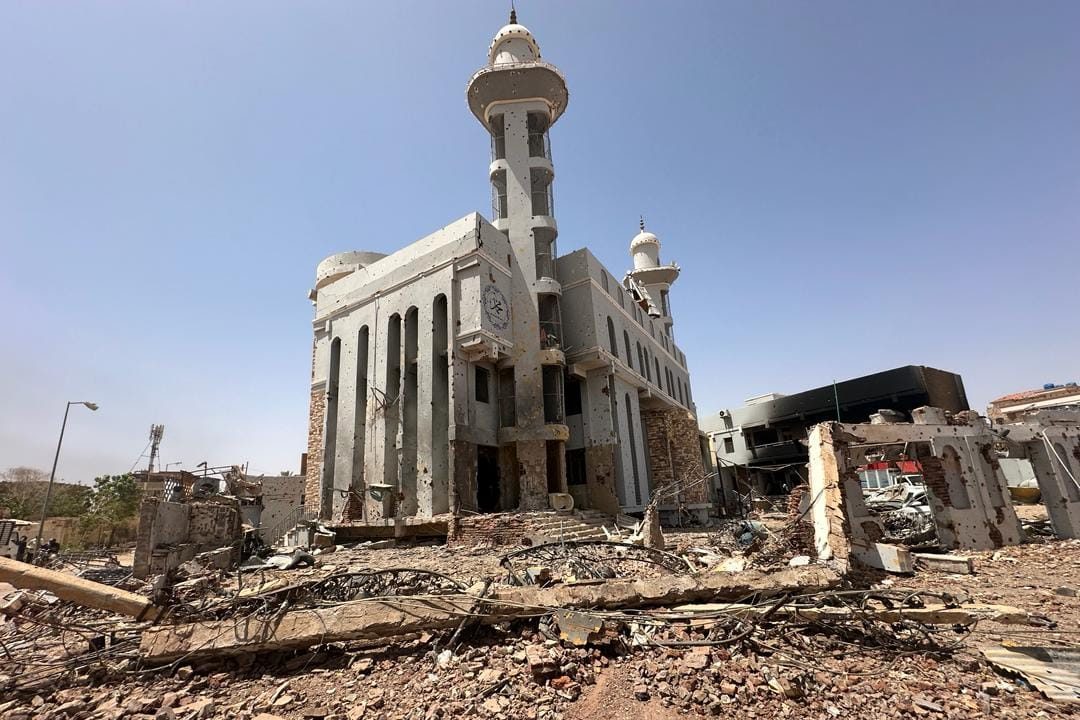
In March 2024 the brigade vandalised and detonated explosives inside the Sheikh Qarib Allah mosque in an SAF-controlled area in Omdurman, while in January 2025 it carried out ethnically motivated attacks against South Sudanese nationals and the Kanabi community, who are predominantly from Darfur, the Nuba Mountains, Blue Nile State and South Sudan, following the SAF takeover of Gezira State.
The BBMB is also among a range of SAF-affiliated extremist militias responsible for extrajudicial killings of suspected RSF fighters or civilians accused of being affiliated with them. In many cases, these attacks and killings are incited by Islamist extremist preachers, who encourage the SAF to leave no captives alive.
In the context of the current conflict, the designation of these groups and specifically the BBMB signals a restriction on the influence of a powerful military and political force. The SAF may even be compelled to disband the brigade in the interest of presenting themselves credible and capable of rebuilding the Sudanese state. Countries which support the SAF might also be reluctant to continue to do so unconditionally – for example Saudi Arabia, one the army’s strongest backers, has already welcomed the designation.
Humanitarian ceasefire
It is essential that these developments advance a humanitarian ceasefire. The conflict has been described as less of a war between the RSF and the SAF – who were allies for decades before it broke out – and more of a war on civilians.
Labelling groups EPCs or terrorist organisations or credibly accusing them of genocide will count for nothing if the international community does not in turn act accordingly.
Bodies such as the recently announced International Coalition to Prevent Further Atrocities in Sudan must make clear to the warring parties that they will face swift and meaningful consequences for a failure to end ongoing atrocities; states that are supporting or aligned with them – like Egypt, Saudi Arabia and the United Arab Emirates (UAE) – must be held to account; and mechanisms aimed at atrocity prevention and justice must be strongly supported both in terms of resources and political will.
With the third anniversary of the outbreak of the conflict fast approaching, efforts are being made to bring the conflict to an end. However, justice and accountability must remain a part of this work in order to protect civilians and ensure that any agreements are enduring. As one of our Sudanese allies stated, ‘It won’t bring back those we’ve lost but the international momentum is so critical right now.’
By CSW’s Sudan Desk
CSW’s Eyes on Sudan campaign calls on the English Premier League to raise the UAE’s support the RSF with Manchester City owner – and UAE vice-president and deputy prime minister – Sheikh Mansour as a matter of urgency. You can sign the petition here.