There are many laws in India that appear reasonable, fair and neutral on paper. They are framed as safeguards meant to prevent fraud, protect national interests, and ensure transparency. In principle, those are valid goals. But the real test of a law is not how it is written, but how it is implemented in practice.
In India today there is an increasingly troubling pattern of laws that claim to be neutral being used in ways that disproportionately affect certain groups, especially religious minorities.
What begins as regulation slowly becomes repression. What is presented as accountability begins to look like control.
The Foreign Contribution (Regulation) Act (FCRA) is one of the clearest examples of this, and it has come into focus once again as the government has made further attempts to to amend it. While at the time of writing the bill has been put on hold, there is still widespread worry within India’s Christian community about the effects of this bill if it were to be reintroduced.
At the heart of the proposed amendment is a deeply concerning provision – the possibility that the government may take control of the assets of organisations whose FCRA registration is cancelled.
That would include schools, hospitals, offices, community centres, built over decades. Crucially, such action would not necessarily follow after a criminal conviction or a full judicial process, but could occur through administrative decisions. When the state can shut down an organisation and assume control of its assets, the line between regulation and overreach becomes dangerously blurred.
To understand the potential future impact, it is necessary to examine current trends. Over the past decade, FCRA enforcement has quietly reshaped India’s civil society landscape.
As of March 2026, 21,933 organisations had lost their FCRA licences, according to official data. Between 2015 and 2024 alone, more than 16,000 NGOs lost their licences, leaving only around 16,000 organisations currently active under the FCRA.
Even more concerning is how these cancellations occur. Licences can be revoked for relatively minor issues, including delays in filing annual returns, administrative lapses, or vague ‘adverse inputs’ without full transparency.
In many cases, organisations have lost their licences not due to criminal wrongdoing, but because of technical non-compliance. Yet the consequences are severe – once a licence is cancelled, an organisation’s ability to function can collapse almost immediately.
Take World Vision India for example. For decades it has worked in some of the most vulnerable communities across the country, supporting children, strengthening livelihoods, and responding to disasters. After its FCRA licence was suspended in 2022 and cancelled in 2024, its operations were severely impacted. Reports show that nearly 80% of its programmes had to shut down, affecting child protection systems, anti-trafficking initiatives and community development work. Entire communities lost support overnight.
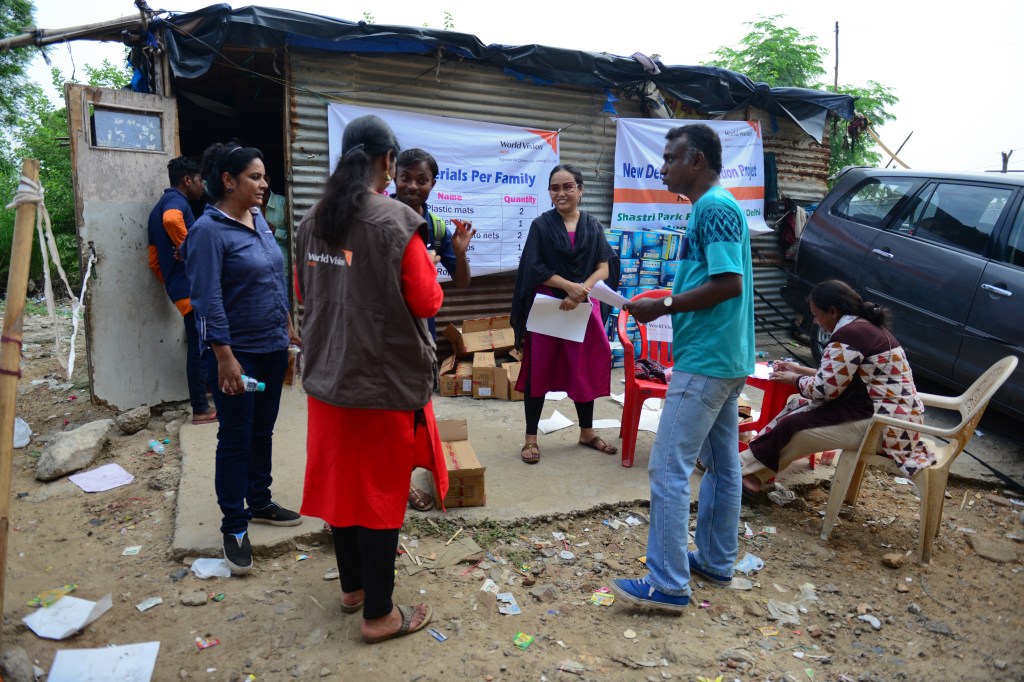
Similarly, millions of other vulnerable people have been affected as thousands of NGOs lost the ability to operate, cutting off access to essential services such as education, healthcare, and disaster relief.
Considering the proposed amendment in this context, if losing funding alone can reduce 80% of an organisation’s work, the addition of state control over assets would not merely weaken organisations, it could erase them entirely, along with the services they provide.
There is also the question that rarely enters formal policy debates, but is being quietly asked within communities across the country: What does this mean for us?
I come from a Syrian Christian Church tradition, one with deep roots in India and a wide global presence. Across the world, many diaspora communities remain connected to their home churches. Their contributions are not political interventions, but familial and community support.
These funds sustain churches, support ministries, sustain priests, and enable community services. However, there is growing uncertainty: what happens if an FCRA licence is cancelled? Do these communities lose the ability to support their own institutions? Do ministries gradually decline? Do communities risk losing ownership over assets they have collectively built over many decades?
There is also a broader ethical question. Foreign funding is intentional. Individuals, churches, foundations, and organisations across the world contribute to support specific causes such as education, healthcare, disaster relief, and social justice.
Does the state have the moral authority to assume control over property built through voluntary global contributions? In most democratic frameworks, such a proposition would raise serious legal and ethical concerns.
Finally, Christian institutions in India represent one of the largest networks of non-state service providers in the country. They operate thousands of schools and colleges, hundreds of hospitals, healthcare centres, and rural infrastructure.
If the proposed amendment were enacted into law, the implications would extend far beyond individual organisations, an entire service ecosystem could be disrupted or absorbed.
While the bill has been put on hold, it represents not an end, but a pause in a larger trajectory. The central question is no longer just about regulatory compliance, it is about the balance of power between the state and civil society
A democracy is defined noy only by its laws, but by the limits in places on state authority. When regulatory mechanisms allow the state to determine which institutions can operate, which can receive support and ultimately which can be taken over, the space for independent civil society begins to shrink.
This is not solely a legal issue, not only a religious one. It is a structural question about the future of pluralism, institutional autonomy, and democratic accountability in India.
By CSW’s India Researcher