‘They closed the embassy around three or four years ago but didn’t really tell anyone.’
I think I actually laughed when I heard it. I was standing in the reception of a building I was just then discovering was the former site of the Nicaraguan Embassy in London, having made an hour and a half journey to Kensington to deliver a letter calling for the release of Protestant Pastor Efren Antonio Vílchez López.
From the way the receptionist explained it I got the sense that this sort of thing had happened before, which lessened but did not entirely eliminate the embarrassment on my part. Some frantic Googling revealed that while, yes, there were some mentions of the closure online – particularly if you added ‘closed’ to your search terms – most results listed the address as the building I was now standing disgruntledly outside, with the panel that pops up when you search for these things still listing its opening hours as 11am-4pm Monday to Friday.
Fortunately I was not the only one trying to get the Nicaraguan government’s attention. Others were able to deliver the same petition – signed by over 1,000 people – to Nicaraguan embassies and consulates in 11 countries around the world, albeit with limited opening hours in some requiring us to post them through letterboxes and under doors rather than placing them directly in the hands of officials – not that we were expecting a warm welcome anyway.
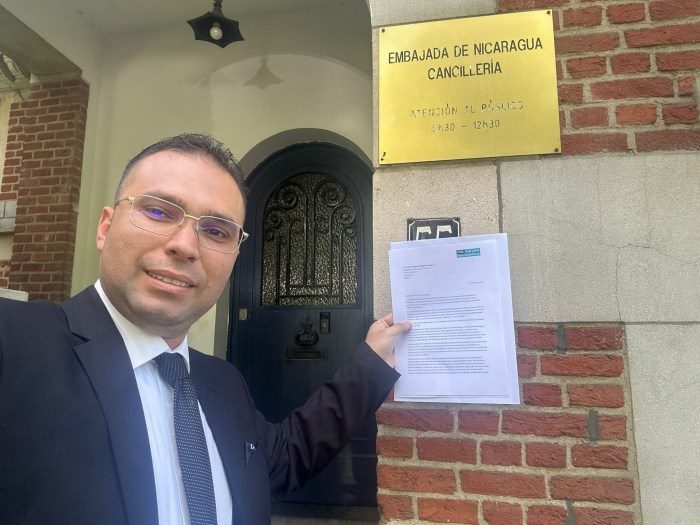
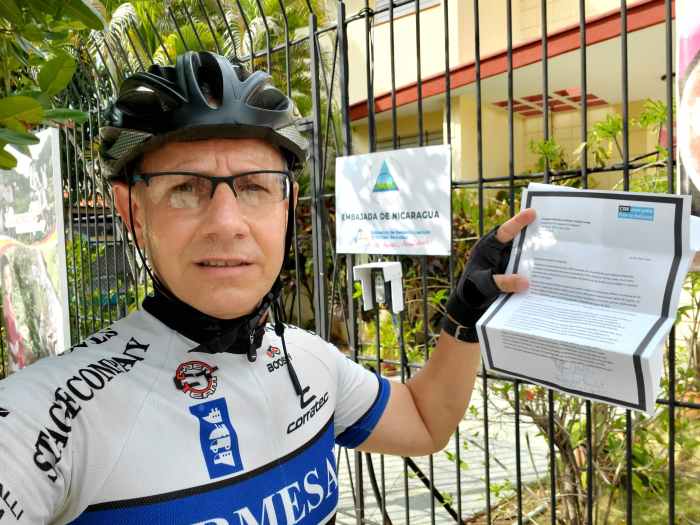
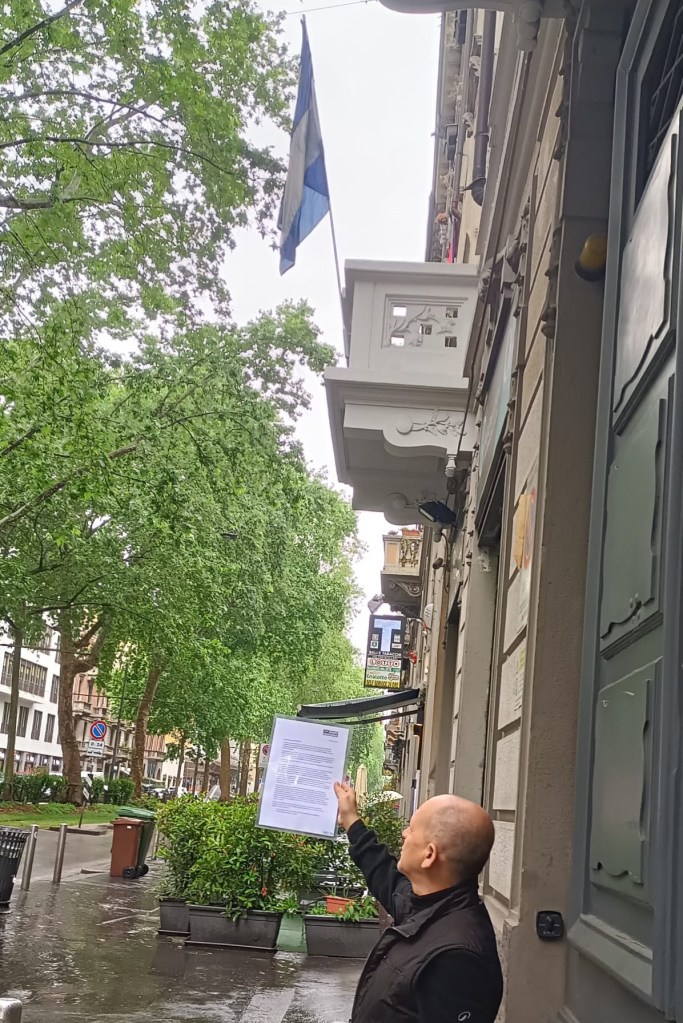
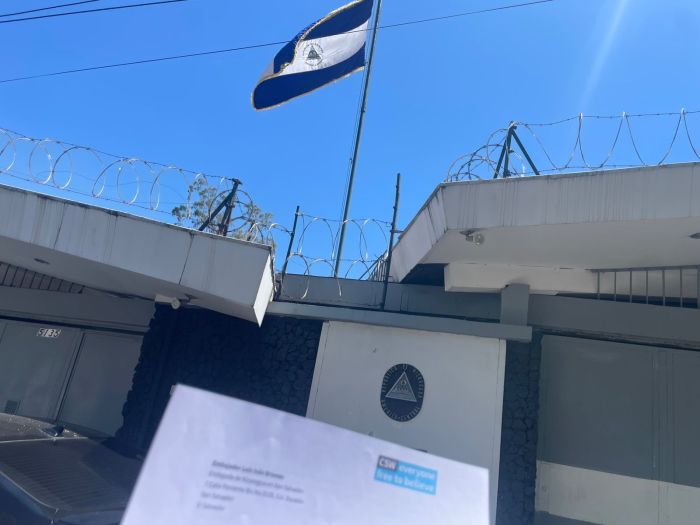
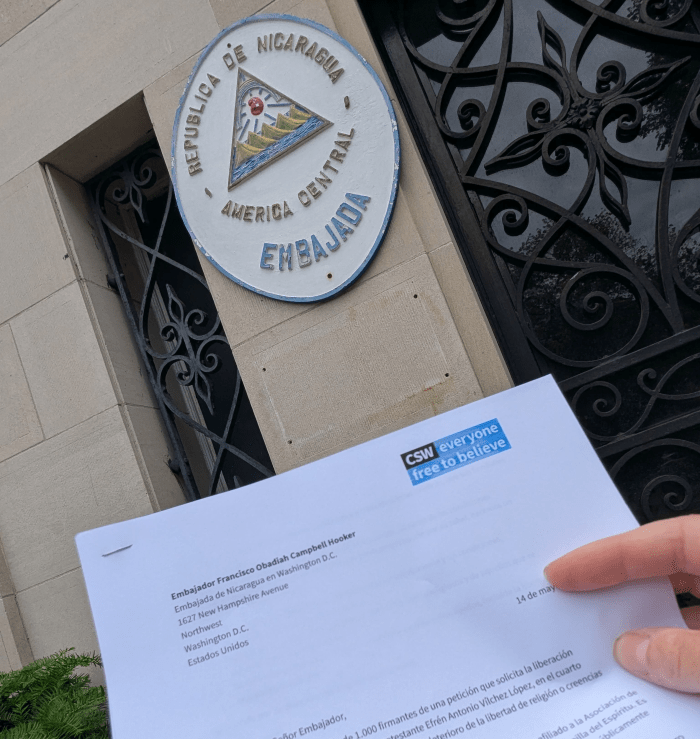
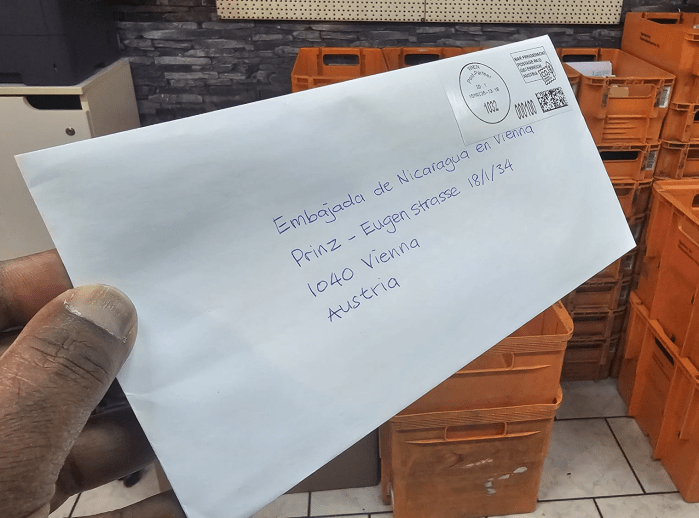
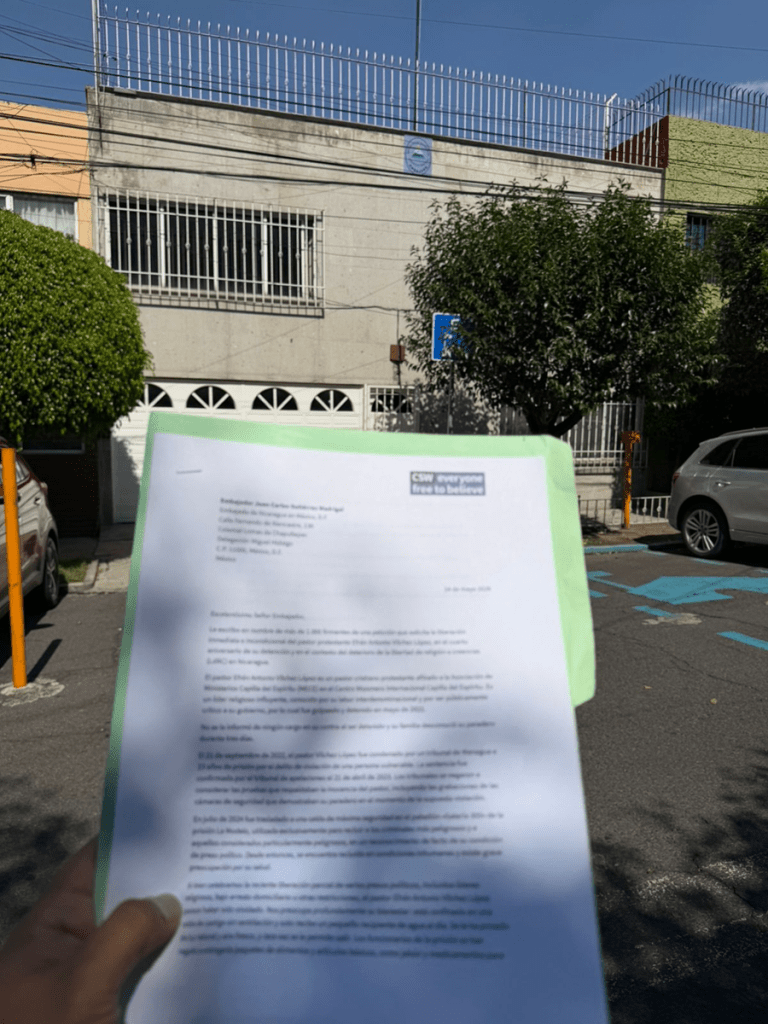
One of my colleagues in Mexico City nearly had a similar experience to myself, travelling to what was listed as the embassy address only to find a ‘SE VENDE’ (for sale) sign on the front of a clearly empty building. Unlike in London however, this time the embassy had simply relocated. At the new site across the city, a representative opened the door and initially said they would be happy to present the petition to the local ambassador, even offering to provide a stamp of receipt.
My colleague waited outside for a while before concluding that the representative wasn’t coming back. Presumably she or her boss had read the content of the petition and decided that they did not want to engage with us.
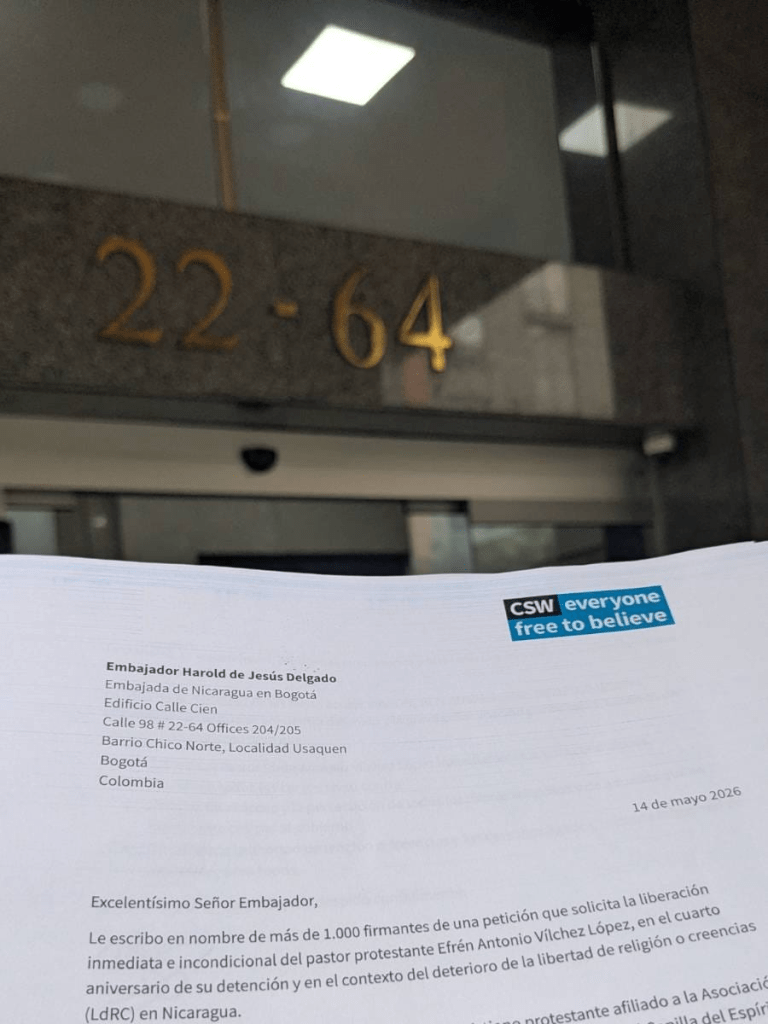
Meanwhile, in Bogota, Colombia, another colleague waited for over an hour outside the Nicaraguan consulate that sits within a larger building before her patience was rewarded as someone came out to meet her and actually stamped the letter and received it officially.
As photos and stories like these came in from around the world I couldn’t help but think of a blog my colleague, CSW’s UN Officer Claire Denman, wrote just over a year ago about how the Nicaraguan government had ‘flipped its middle finger’ to the UN Human Rights Council (HRC) – and by extension much of the international community – following the publication of a damning report on the extensive human rights violations committed by the regime since the nationwide protests of April 2018.
In the restrictive opening hours and disappearing officials and in my own case the complete absence of any embassy at all I saw echoes of that same mentality, of a withdrawal from the international community and particularly from anywhere the Nicaraguan government might expect scrutiny of its human rights record (it is noteworthy, for example, that in the midst of severing ties around as part of its isolation efforts, Nicaragua became the second country in the world after China to establish diplomatic relations with the Taliban in June 2024).
Even in cities where we were able to deliver the petition without a hitch, many of the embassies and consulates were marked by small plaques rather than the flags or insignias you might expect. Some weren’t even formal embassies, just ‘offices closed to the general public where Nicaraguans find some assistance’ as one of our sources described it.
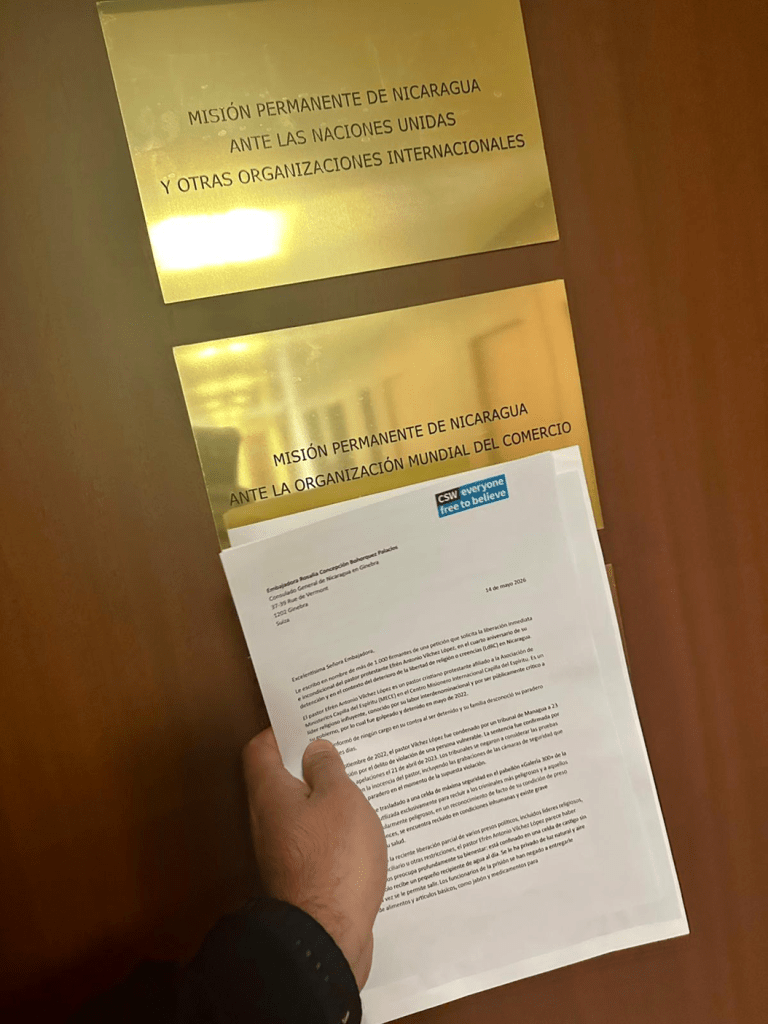
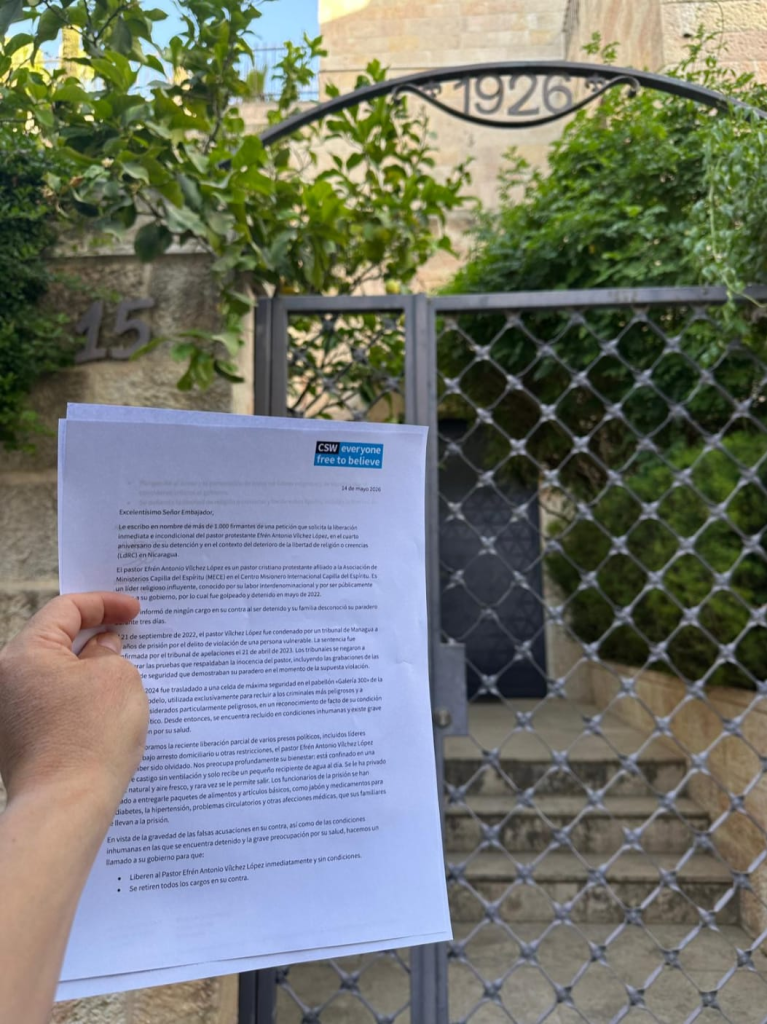
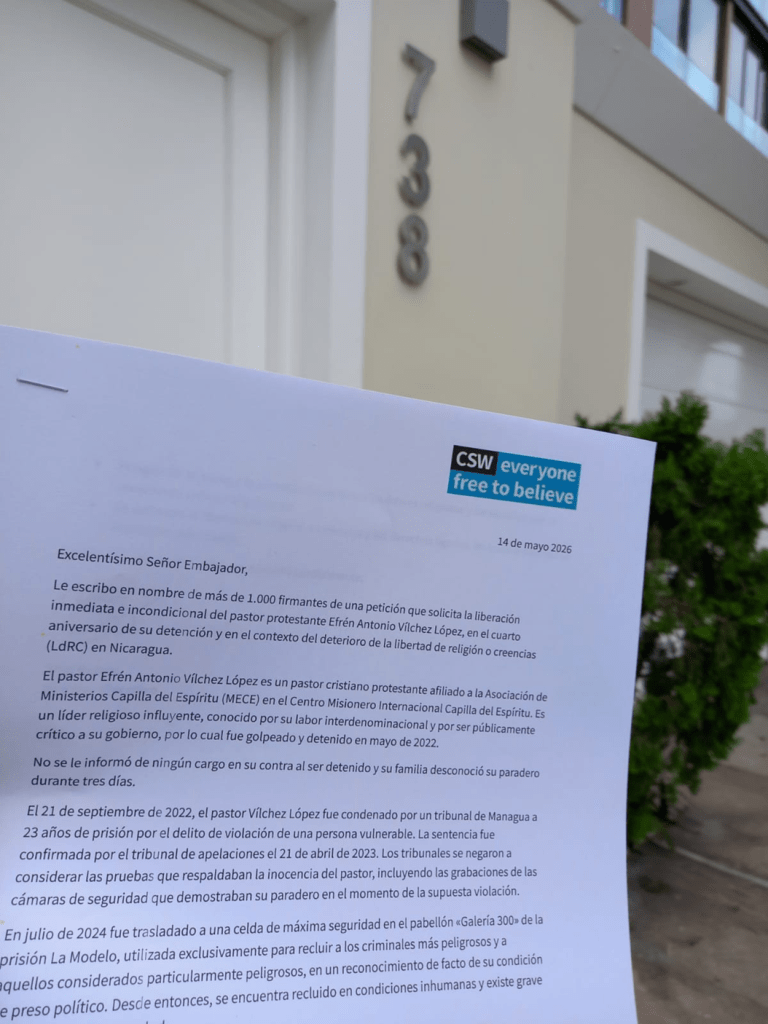
It is important to emphasise that we did not do any of this for the sake of it, or for the publicity of CSW. We did it to raise awareness about the continued imprisonment of an innocent man, and to send a message that the world is watching.
Pastor Vílchez López is currently serving a 23-year prison sentence on unfounded and extremely defamatory charges relating to the sexual assault of a person with a disability. He was arrested on 15 May 2022 and sentenced the following September after a court refused to consider any evidence supporting his innocence, including CCTV footage proving his whereabouts at the time of the supposed assault.
He has been targeted, in reality, because of his influence as a prominent religious leader, and particularly because of his use of that influence to boldly criticise President Daniel Ortega and the actions of his government. In 2018 he condemned the use of violence against protesters on social and was swiftly visited and threatened by a police officer. From then on, officers routinely surrounded his home, and one occasion when he confronted them he was severely beaten and suffered multiple fractures to his hand.
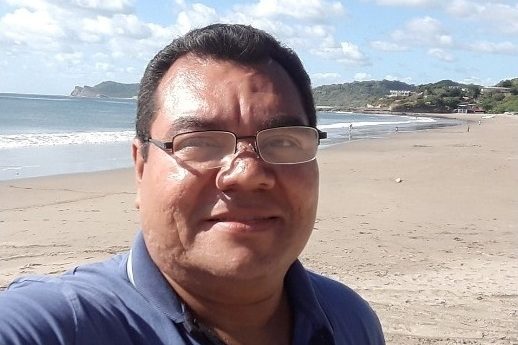
Today, he finds himself a political prisoner in ‘La Modelo’ Jorge Navarro National Penitentiary System. He is not permitted any books and has been provided with only one small container of water a day since August 2024. His Bible and glasses have been confiscated, he is rarely permitted to go outside, and he is regularly subjected to verbal abuse by the prison director. Prison officials have also refused to pass on packages of food and basic supplies, including medicine for hypertension, blood circulation and other health issues, brought by his relatives to the prison.
But he is not forgotten. From Brussels to Bogota to Geneva to Havana to Jerusalem to Lima to Mexico City to Milan to San Salvador to Vienna to Washington DC our message is the same: that the Nicaraguan government must release Pastor Vílchez López immediately and without condition, and that we will not be silent about this until they do.
By CSW’s Press & Public Affairs Officer Ellis Heasley