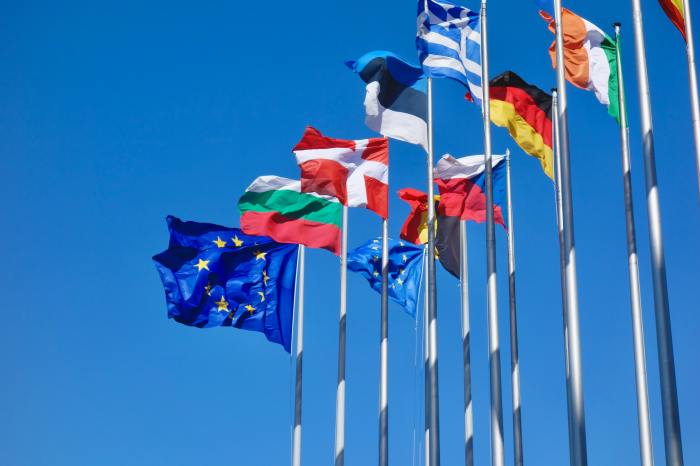
European flags flying in Strasbourg.

How trade can be leveraged as a foreign policy tool to press for human rights improvements

Trade can be used as a foreign policy tool – including as leverage on human rights issues. But there are two foundational principles of international trade law which dictate how this can and cannot be done.

The first, ‘national treatment’, requires that once a good or service has entered a country’s market, it should be treated equally to those produced locally. This means, for example, that once an item of clothing manufactured in Sri Lanka enters the Belgian market, the government generally cannot impose additional restrictions on the product which differ from those applied to clothing manufactured in Belgium; and there are restrictions on giving domestic companies advantages through, for example, subsidies (‘state aid’).

The second, known as ‘Most-Favoured-Nation (MFN)’, restricts countries from granting special access to only select other countries. It does this by requiring that if a country wants to grant special trade preferences to another country, it must do so for all. This means that the UK, for example, cannot unilaterally offer special exceptions to imports from India or the US without also offering them universally.

Continue reading “How trade can be leveraged as a foreign policy tool to press for human rights improvements”
Protesters with Myanmar/Burma flag painted on their wrists.

Two years after the coup, we must do all we can to stop the carnage in Myanmar

By Benedict Rogers

Two years ago today, the Commander-in-Chief of Myanmar/Burma’s military, Senior General Min Aung Hlaing, shattered the dream of a democratic, free Myanmar and plunged the country back into bloody, brutal repression. When he seized power in a coup d’etat on 1 February 2021, overthrowing the country’s democratically elected civil leader Aung San Suu Kyi and her National League for Democracy (NLD)-led government, he tore up a decade of the military’s own reform process and returned Myanmar to pariah status in the international community.

The coup unleashed a new war on this beautiful but benighted country that has already endured 76 years of civil war. The impoverished country which had been beginning to emerge into the world economy, attracting foreign investment as it liberalised politically, has been consigned to even harsher levels of poverty, and a humanitarian and human rights crisis even more severe than under previous military regimes.

According to the Assistance Association for Political Prisoners (AAPP), 17,492 people have been arrested in the past two years since the coup, and 13,689 are still in prison. The junta has killed at least 2,894 people, including 282 children. At least 143 people have been sentenced to death, including 42 in absentia. But these are only the figures recorded – the real death toll, taking into account the military’s offensives in the ethnic regions, is likely to be much, much higher. Indeed, in his September 2022 report, the United Nations special rapporteur for human rights in Myanmar Thomas Andrews estimated that more than 13,000 children have been killed, while 1.3 million people have been displaced and 28,000 homes have been destroyed. He said Myanmar’s crisis was spiralling from ‘bad to worse to horrific.’

Continue reading “Two years after the coup, we must do all we can to stop the carnage in Myanmar”
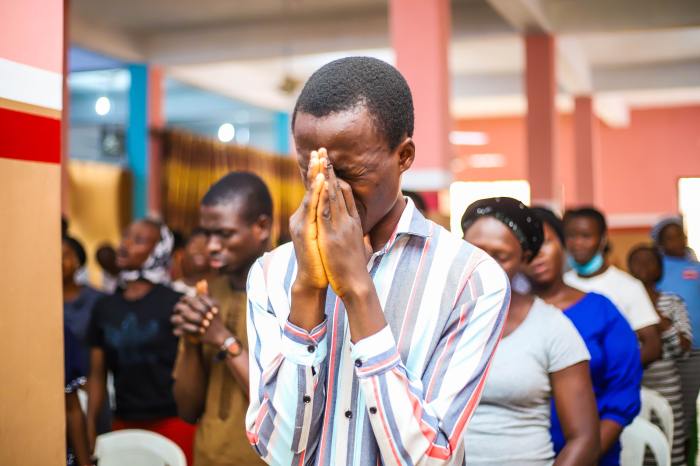
A man prays in a church in Ogbomosho, Nigeria.

Nigeria’s Muslim-Muslim ticket has implications for national cohesion

Nigeria’s ruling All Party Congress (APC’s) decision to do away with traditional convention and opt for a same faith ticket, which would result in a same faith presidency, feeds into a religious exclusivism that is inconsistent with the healing balm that a major political party such as the APC – or any other party – should be deploying at this crucial stage of the country’s political development, when instability and insecurity are at such unprecedented levels.

The nation is heavily fragmented along tribal and religious lines, among others. Therefore, political leaders from all parties ought to be advocates of unity through inclusivity, as a reflection of the country’s diversity.

This diversity holds many advantages for the strengthening mutual understanding, oneness, ensuring social cohesion, and fostering sustainable development, when handled correctly. Unfortunately, the APC’s decision to adopt a Muslim-Muslim ticket runs the risk of undermining the remaining gains of harmonious coexistence that the country has been battling to entrench.

Continue reading “Nigeria’s Muslim-Muslim ticket has implications for national cohesion”
A restricted area in Chhattisgarh, India.

Las comunidades cristianas tribales de Chhattisgarh (India) continúan viviendo con miedo

Para las comunidades cristianas tribales en el estado de Chhattisgarh en India, el Año Nuevo no ha comenzado realmente con la esperanza de un futuro mejor o más seguro.

El 2 de enero, una mafia nacionalista hindú irrumpió en el campus de la Escuela Cristiana Vishwa Dipti en el distrito de Narayanpur y destrozó una iglesia ubicada dentro de las instalaciones de la escuela. Los videos de los agresores golpeando repetidamente estatuas de Jesús y María, y los destrozos a los muebles aparecieron en Internet. Los miembros de la mafia y los feligreses pertenecían a las tribus locales en Narayanpur, de las cuales las dos más destacadas son las tribus Gond y Muria.

Pero lo que sobresalió en los titulares nacionales y se volvió viral en las redes sociales fue la imagen de un oficial de policía de alto nivel que fue atacado por los agresores cuando intentó intervenir. El Superintendente de la policía de Narayanpur, Sadanand Kumar, fue llevado de urgencia al hospital después de sufrir una lesión grave en la cabeza. Los cristianos en Chhattisgarh han sufrido ataques como estos durante varios meses con casi ningún interés de los medios de comunicación, pero fue hasta que una persona de poder resultó herida que alguien prestó atención.

Continue reading “Las comunidades cristianas tribales de Chhattisgarh (India) continúan viviendo con miedo”
A restricted area in Chhattisgarh, India.

Chhattisgarh’s tribal Christian communities continue to live in fear

For tribal Christian communities in India’s Chhattisgarh State, the new year hasn’t really come with hopes of a better or safer future.

On 2 January a Hindu nationalist mob barged into the Vishwa Dipti Christian School campus in Narayanpur district and vandalised a church located within the premises of the school. Videos of the mob repeatedly hitting statues of Jesus and Mary, and scattering furniture surfaced on the internet. Both members of the mob and the churchgoers belonged to local tribes in Narayanpur, the two most prominent of which are the Gond and Muria tribes.

But what grabbed national headlines and went viral on social media was the image of a bleeding senior police official who was attacked by the mob when he tried to intervene. Narayanpur’s Superintendent of Police Sadanand Kumar was soon rushed to the hospital after suffering a serious head injury. Christians in Chhattisgarh have suffered attacks like these for several months with hardly any interest from the media, but it was only when a person of power was injured that anyone paid any attention.

Continue reading “Chhattisgarh’s tribal Christian communities continue to live in fear”