Even in death, Christians in India’s tribal communities are denied their rights and dignity

On 5 November the family of Gajendra Sahu, whose name has been changed for security reasons, attempted to bury him in his ancestral village of Kodekhursi, in Kanker District, in India’s Chhattisgarh State.

Gajendra had converted to Christianity three years previously. He had also given up drinking after years of alcohol addiction, but sadly passed away following a prolonged period of ill-health caused by it.

His relatives should have been permitted to lay him to rest in peace, however, because of his conversion to Christianity, residents of Kodekhursi refused to permit his burial within village boundaries, and even on his family’s own plot. Repeated requests for intervention from the authorities proved unsuccessful, and the family was ultimately forced to travel close to 200km – with a police escort – to the state capital Raipur where they were finally able to conduct a dignified funeral service in a Christian cemetery.

Continue reading “Even in death, Christians in India’s tribal communities are denied their rights and dignity”

‘Do but don’t speak’: The impact of China’s 709 Crackdown ten years on

On 9 July 2015 the Chinese authorities launched an extensive crackdown on activists, lawyers, human rights defenders and their friends and family members. Dubbed the ‘709 Crackdown’ after the date on which it began, the campaign saw over 300 people detained, interrogated or imprisoned.

It is regarded as one of the worst crackdowns on human rights defenders in China’s history, and marked the start of a relentless stifling of dissent and activism that continues to date.

On the tenth anniversary of the crackdown, CSW presents an account from Christian lawyer Xiangui Fang who was caught up in it, and who has since had to flee China after the authorities threatened him with further imprisonment for continuing to defend human rights cases after his release:

Continue reading “‘Do but don’t speak’: The impact of China’s 709 Crackdown ten years on”
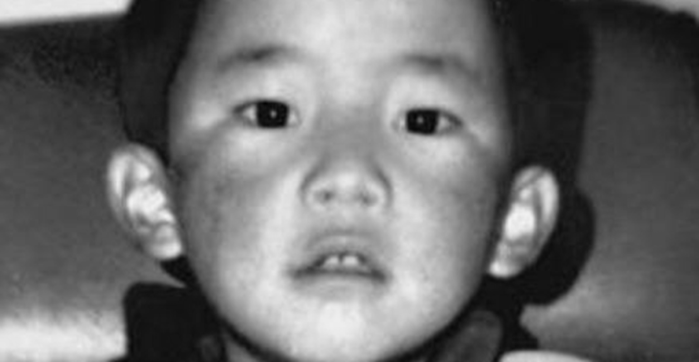
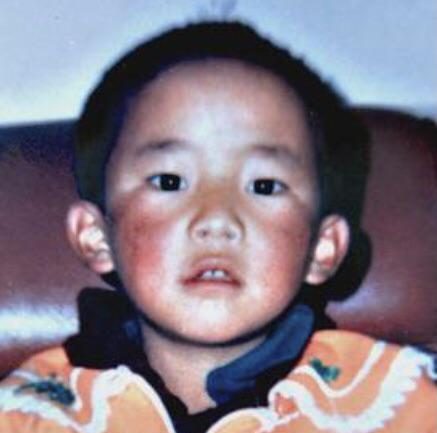
Thirty years since it disappeared Gedhun Choekyi Nyima, the Chinese government must be made to provide the truth about his whereabouts

On 14 May 1995 the Dalai Lama publicly announced the six-year-old Gedhun Choekyi Nyima as the 11th Panchen Lama.

Tasked with recognising the next Dalai Lama, the Panchen Lama, or ‘Great Scholar’, is one of the most important figures in the Gelug school of Tibetan Buddhism, with a spiritual authority second only to that of the Dalai Lama. For centuries, successive Panchem Lamas have lived in and led the influential Tashilhunpo Monastery in Tibet’s second largest city Shigatse, playing a key role in the development of Tibetan Buddhist scholarship.

Gedhun Choekyi Nyima

But Nyima has been denied this. Three days after he was recognised as the Panchen Lama, he and his family were abducted by the Chinese Communist Party (CCP). Nyima became the world’s youngest political prisoner, and he has not been seen in public since.

Continue reading “Thirty years since it disappeared Gedhun Choekyi Nyima, the Chinese government must be made to provide the truth about his whereabouts”

Pope Francis leaves a legacy of standing up for freedom of religion or belief. His successor must build on it. 

‘There can be no peace without freedom of religion, freedom of thought, freedom of expression and respect for the views of others.’ 

It is both fitting and moving that Pope Francis included these words in what was to be his final public address, delivered on his behalf by Master of Liturgical Ceremonies Archbishop Diego Ravelli to a crowd of over 20,000 people at the Vatican’s St. Peter’s Square on Easter Sunday. 

Throughout his 12-year papacy, Francis was a committed friend to the poor and the marginalised, a vocal advocate for freedom of religion or belief (FoRB) and other fundamental human rights, and a man who spoke truth to power right up to the final days of his pontificate. 

At a time when leaders of such humility and integrity appear to be in increasingly short supply, it is essential that his successor follows his example. 

Continue reading “Pope Francis leaves a legacy of standing up for freedom of religion or belief. His successor must build on it. “

In China’s sprawling, complex legal system, it’s easy to trap the innocent

The Chinese criminal justice system is complex and expansive. There are multiple forms of detention, multiple types of arrest, and countless opportunities for the authorities to delay and defer proceedings – as they have done with increasing frequency in recent years – before a case even makes it to trial. 

This, of course, suits the Chinese Communist Party (CCP). A system that is difficult to navigate is easy to manipulate. It makes it harder for detainees, suspects, their lawyers and family members to know where they stand or even the charges they may be facing; it becomes more challenging for activists and journalists to report on and respond to crucial developments in a case, and ultimately nigh impossible for anyone the CCP is set on imprisoning to clear their name. 

This blog aims to shed light on the key steps in the Chinese judicial process, and how they can be subverted as the authorities take advantage of vague language and myriad loopholes in the country’s Criminal Procedure Law (CPL) to prolong the suffering of those they have arbitrarily detained and imprisoned. 

Continue reading “In China’s sprawling, complex legal system, it’s easy to trap the innocent”