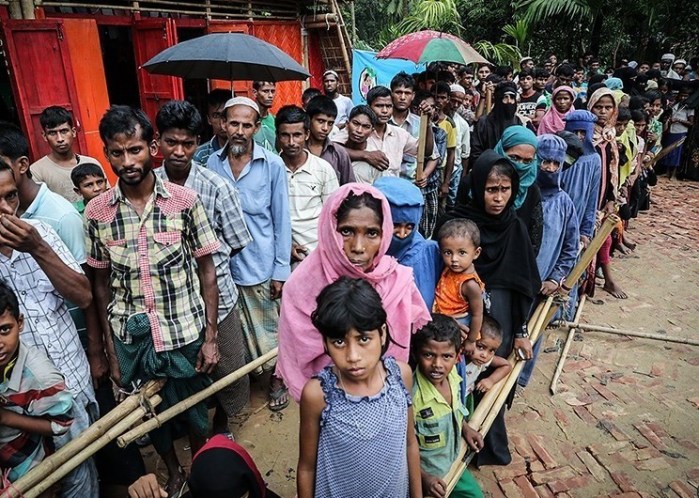
Rohingya Muslims displaced from Myanmar/Burma.

We must not let the Rohingya people slip to the bottom of the international agenda

On 2 December 2022 a group of approximately 180 Rohingya refugees boarded a boat in Cox’s Bazar in Bangladesh. Their intended destination was Malaysia, where many hoped to be reunited with family and loved ones, or to build a better life than the one available to them in the overcrowded, unsanitary and increasingly dangerous camps in Bangladesh.

They never made it.

In a statement issued on 25 December, the United Nations expressed concern that the boat had sank after it went missing in the Andaman Sea. Relatives of those onboard told the Guardian that they had little hope that their family members were still alive, and if confirmed it would bring the number of Rohingya refugees who have died on sea crossings to Malaysia in 2022 close to 400.

Continue reading “We must not let the Rohingya people slip to the bottom of the international agenda”
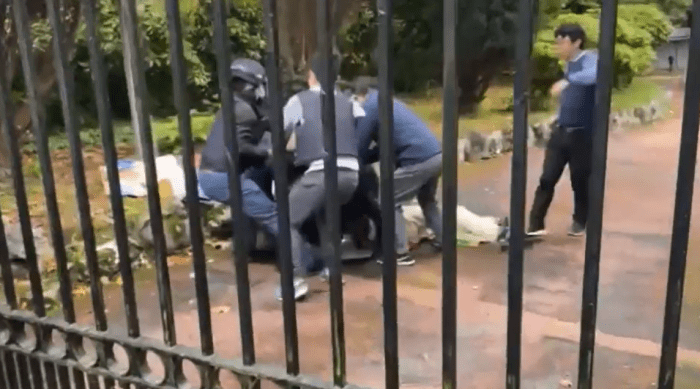
Bob Chan is beaten inside the grounds of the Chinese consulate in Manchester, UK.

As China, Eritrea, Iran and more extend repression beyond their own borders, we must do better

In November last year, Ken McCallum, the Director General of the UK’s Security Service known as MI5, claimed that his agency had identified “at least ten” potential threats to kidnap or even kill British or UK-based individuals perceived as enemies of the Iranian regime. He added that the Iranian intelligence services “are prepared to take reckless action” against opponents in the West, including by luring individuals to Iran.

Coming at a time of intense civil unrest in Iran following the death in police custody of 22-year-old Mahsa Amini, who was arrested for incorrectly wearing her hijab, McCallum’s comments highlighted a concerning issue that applies to several of the countries CSW works on: repressive regimes are becoming increasingly unafraid to reach beyond their borders.

China

Perhaps one of the most obvious examples is China, a global superpower which regularly uses its economic and geopolitical influence to shape decisions in international fora such as the Human Rights Council, and routinely metes out sanctions against Western parliamentarians and others who openly condemn the widespread violations taking place in the country.

Continue reading “As China, Eritrea, Iran and more extend repression beyond their own borders, we must do better”
A woman in Vietnam.

Unregistered and unrecognised: the plight of Vietnam’s Duong Van Minh community

One year ago today, on 12 December 2021, hundreds of persons in medical protective suits and plainclothes, and police, some armed with shields and batons, disrupted the funeral of Duong Van Minh, the ethnic Hmong founder of an eponymous religious community in Northern Vietnam.

The authorities claimed they were there to force people to take COVID-19 tests, despite no infection having been reported in the area.

Police in Tuyen Quang province arrested and beat at least 36 people as they attempted to attend the funeral. Seven more were arrested a day later, on 13 December, when they went to protest the police action. On 15 December, police announced over loudspeakers that five more people had to surrender. These five were subsequently arrested and accused of assaulting officials.

In total, at least 48 people were arrested.

Continue reading “Unregistered and unrecognised: the plight of Vietnam’s Duong Van Minh community”
Indian human rights activist John Dayal.

‘Freedom of expression and the courage to express oneself go hand in hand’ – an interview with John Dayal

Indian human rights activist, senior journalist and former president of the All India Catholic Union John Dayal is this year’s winner of the prestigious annual Louis Careno Award for Excellence in Journalism, awarded to an individual or institution for their outstanding contribution to the press by the Indian Catholic Press Association (ICPA). Dayal has spent over four decades as a champion of minority rights and the right to freedom of religion or belief in India and is a household name within the Indian Christian community.

The award will be conferred by the ICPA on 10 December, Human Rights Day, which follows International Human Rights Defenders Day, during the 27th National Convention of Christian Journalists in Chennai. The ICPA described Dayal as “a prophet of our times who is among India’s foremost voices against human rights violations, particularly on the persecution of religious minorities.”

Last month, CSW spoke to Dayal about his early years as a journalist, the state of freedom of religion and belief in India today, role of the press and more.

Continue reading “‘Freedom of expression and the courage to express oneself go hand in hand’ – an interview with John Dayal”
A Dalit manual scavenger in Nasik, Maharashtra, India.

Intolerance towards Christians in many tribal communities in India does not end even in death

Janki Sori’s family were not given much time to grieve. Having laid her to rest in their own land on 1 November, only two days passed before her body was exhumed against her family’s wishes by members of a tribal group known as the Sarv Adivasi Samaj – all because of her conversion to Christianity.

Ms Sori, who was 35 years old when she died, lived in the village of Antagarh in India’s Chhattisgarh state, where the majority of the community are animists who worship nature and spirits, while also drawing some influence from Hinduism.

Those who exhumed her body claimed that their village belongs only to those who follow their religion, and, after burying Ms Sori in a different village on 4 November, the group claimed that they would continue to target converts to Christianity in the same manner until they ‘re-convert’ to the religion or their ancestry and culture.

Continue reading “Intolerance towards Christians in many tribal communities in India does not end even in death”