The case for EU sanctions on Sudan’s military leaders

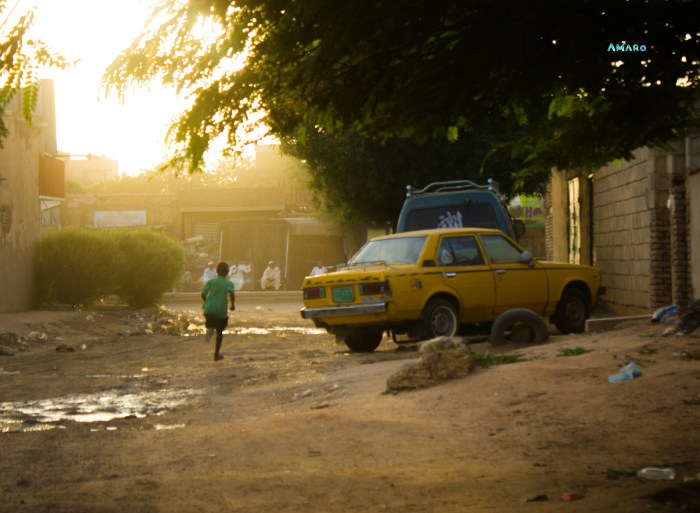
With over 14 million people displaced, the world’s largest humanitarian crisis is currently taking place in Sudan. Abdel Fattah al-Burhan (“Burhan”), leader of the Sudan Armed Forces (SAF, i.e. the national army); and Mohamed Hamdan Dagalo (“Hemedti”), leader of the Rapid Support Forces (RSF) militia, have vested interests in the continuation of conflict, and were this larger one to settle, there would likely be other domestic conflicts with armed groups in Darfur, South Kordofan and Blue Nile which have not taken a side in this war. Additionally, the current conflict has seen the formation of a coalition of militias that have joined with either the SAF or RSF.  

The international community must therefore seek concertedly to secure a lasting ceasefire, and to bring an end to this war in such a way that neither Burhan nor Hemedti is in a position to play a role in the country’s future governance. There have been moments in recent history when the international community has fallen for compromises that appeared to offer  stability in the short-term, for example the civilian-led transitional government that gave both Burhan and Hemedti prominent positions in a power sharing Sovereign Council following the ouster of President Omar al-Bashir in 2019, only for their October 2021 coup to remove civilian leaders and effectively install a military-controlled government, which has been in place since then. The only path toward a viable and stable future for Sudan is through an unencumbered civilian leadership. 

Continue reading “The case for EU sanctions on Sudan’s military leaders”
Is European democracy too immature to address freedom of religion or belief? 

While the situation of people in other countries is too rarely a priority electoral issue, some politicisation of human rights is nevertheless common. From the perspective of an advocate for freedom of religion or belief, when done correctly and appropriately, party-political engagement on this human right can of course be expedient. At its best, it can elevate public attention to often severe injustices occurring abroad, and lay a strong policy platform for how they will be addressed post-election. But, at its worst, political positions and electoral tactics can be employed that lack sincerity, nuance, and even basic good will. 

Mistakes in this area are perpetrated by both conservatives and progressives. This piece summarises some of the things that these political blocs tend to get wrong and right, respectively. It is meant both for the benefit of voters, making them more aware of the calculations and strategies happening behind the scenes in party HQs; and also, to hold up a mirror to those directly involved in campaigning, challenging them to think more critically, and constructively, about their approaches. 

Continue reading “Is European democracy too immature to address freedom of religion or belief? “
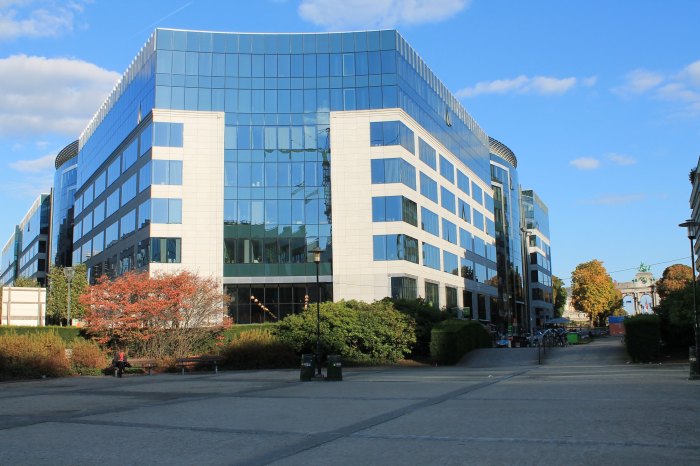
European External Action Service Headquarters in Brussels.

The Myanmar junta should have no place at the ASEAN-EU Human Rights Dialogue

Last week, soldiers of the Myanmar/Burma military reportedly beheaded three men in Pale Township in the Sagaing Region of Myanmar. Two of them were civilians, and the third a member of a People’s Defense Force in Nyaunggon Village.

A witness told The Irrawaddy news website that the men had been killed as they returned to their village on 27 September, thinking that the junta troops who had occupied it for the past two and half weeks had left. One man’s head was hung on a fence, another placed on a chair, and the third ‘had his abdomen cut open, intestines taken out, limbs cut off and [then] put into his abdomen.’

The same day, at least 19 children and their teacher were injured when the regime shelled a monastic school in Wuntho Towsnhip, also in the Sagaing Region. Most were aged between five and eight, and seven of them were critically wounded.

Continue reading “The Myanmar junta should have no place at the ASEAN-EU Human Rights Dialogue”
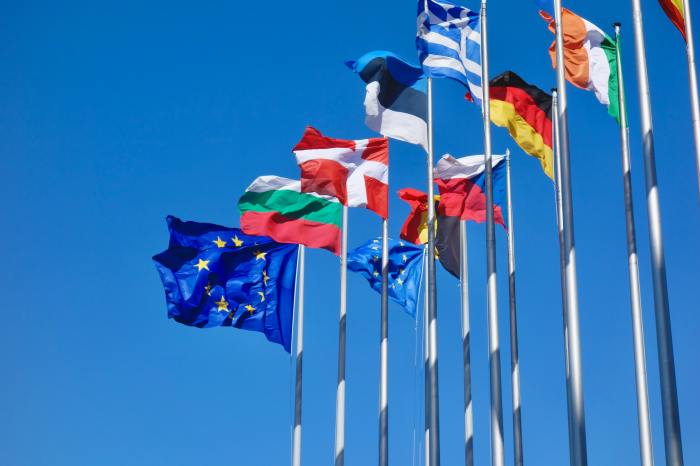
European flags flying in Strasbourg.

How trade can be leveraged as a foreign policy tool to press for human rights improvements

Trade can be used as a foreign policy tool – including as leverage on human rights issues. But there are two foundational principles of international trade law which dictate how this can and cannot be done.

The first, ‘national treatment’, requires that once a good or service has entered a country’s market, it should be treated equally to those produced locally. This means, for example, that once an item of clothing manufactured in Sri Lanka enters the Belgian market, the government generally cannot impose additional restrictions on the product which differ from those applied to clothing manufactured in Belgium; and there are restrictions on giving domestic companies advantages through, for example, subsidies (‘state aid’).

The second, known as ‘Most-Favoured-Nation (MFN)’, restricts countries from granting special access to only select other countries. It does this by requiring that if a country wants to grant special trade preferences to another country, it must do so for all. This means that the UK, for example, cannot unilaterally offer special exceptions to imports from India or the US without also offering them universally.

Continue reading “How trade can be leveraged as a foreign policy tool to press for human rights improvements”

Human rights advocacy in a world of interests: why the EU fell short at India’s Raisina Dialogue

India’s Minister of External Affairs, Subrahmanyam Jaishankar, was recently asked how he saw the country’s role in defending free societies globally – a diplomatic way of confronting India on its failure to condemn Russia’s invasion of Ukraine.

His answer was, if not reassuring to human rights proponents, certainly honest: “Countries evolve a combination of values, interests […] and all of us would like to find the right balance”.

This has always been the tension at the heart of foreign policy. And the European Union (EU) is no exception. Article 2 of the Lisbon Treaty (which forms the constitutional basis for the bloc) reads: “In its relations with the wider world, the Union shall uphold and promote its values and interests”.

In our interactions with the EU, human rights organisations repeatedly appeal to the Union’s stated values. Whilst, in general, the EU is a benevolent global actor on human rights, there are instances where an appeal to values alone is not sufficient to galvanise action.

Continue reading “Human rights advocacy in a world of interests: why the EU fell short at India’s Raisina Dialogue”