No matter how hard it tries, the Nicaraguan government cannot make the evidence of its human rights violations disappear

On 24 February, the United Nations Group of Human Rights Experts on Nicaragua (GHREN) published its latest report to the UN Human Rights Council (HRC).  

The GHREN, tasked with conducting thorough and independent investigations into all alleged human rights violations and abuses committed in Nicaragua since April 2018, focused its report on the institutions and individuals responsible for violations in Nicaragua, complete with an annex of 10 functional diagrams ‘illustrating the de jure and de facto connexions between different State and non-State entities.’  The report also drew attention to the four-phase strategy of the Ortega-Murillo regime designed to gain absolute control of the country and to how the regime’s recent constitutional reforms provide unchecked executive authority.  

The findings of the GHREN’s report are supported by a total of more than 1,500 interviews and 7,500 documents, and are also backed by reports by civil society organisations (CSOs) who have consistently and independently documented human rights violations. CSW, for example, documented 222separate cases involving violations of freedom of religion or belief (FoRB) in 2024 alone, with most involving multiple violations and some affecting thousands of people. 

Continue reading “No matter how hard it tries, the Nicaraguan government cannot make the evidence of its human rights violations disappear”

Why don’t they just come here legally?

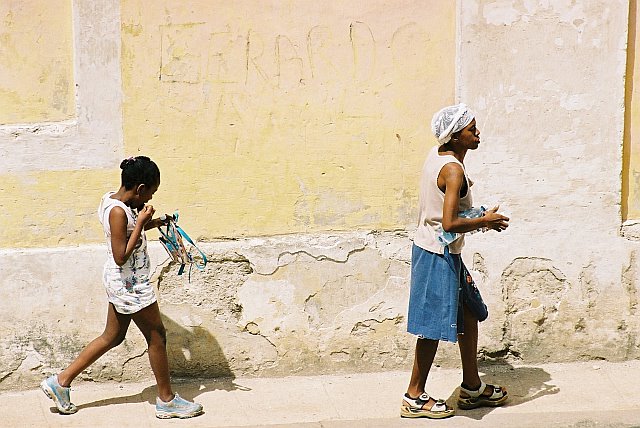
They are called illegals, migrants, aliens, refugees, immigrants, asylum seekers, invaders, displaced – each word carrying with it a subtext of who they are, what they want, and where they fit. They have been accused of bringing disease, ‘poisoning the blood’ of a nation, participating in a massive invasion that aims to bring about violent anarchy, and even eating people’s beloved pets. In this discourse each of ‘them’ rarely has a face, a name, and much less their own story (unless they do something terrible that pushes their name and face into the headlines).

The question ‘Why don’t they just come here legally?’ is asked over and over. Again, there is a subtext to that question – an implication that if ‘they’ were good people, they would seek out and follow the rules. The question also assumes that there are legal, and presumably safe, channels for those in genuine distress to request and receive asylum in a safe country, as allowed for under international law, primarily under the UN Refugee Convention. However, the reality is that even those countries that recognise and uphold the Refugee Convention, (and there are many which do not), maintain byzantine systems, set up to make it as difficult as possible for someone, especially an asylum seeker, to petition for and be granted the right to start a new life in a safe country.

The vast majority of those ‘safe’ countries require visas for individuals traveling there from much of the world. The quickest way to ensure that a visa is denied, is to respond truthfully – that the motive for travelling is to request asylum upon arrival – and when a visa is denied on those grounds, the individual is almost always put on a blacklist for future requests.

Continue reading “Why don’t they just come here legally?”
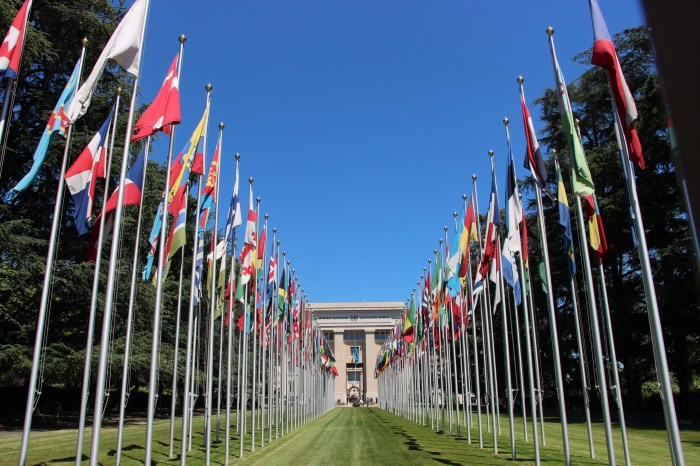
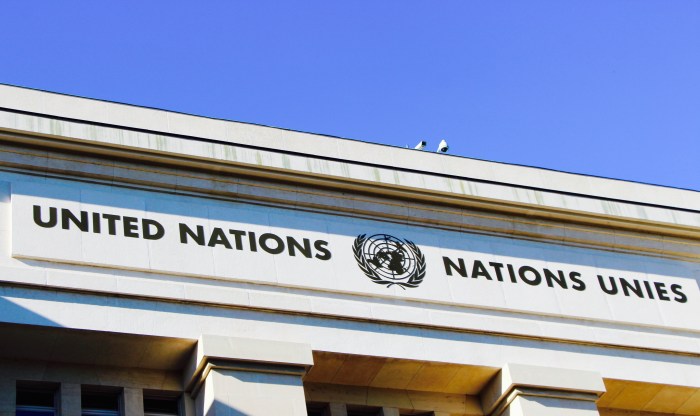
A United Nations building in Geneva, Switzerland.

Disappointments at the UN, but we must not let the challenges obscure the good that it can achieve

Earlier this month, the UN General Assembly (UNGA) voted to elect 14 new members to the Human Rights Council (HRC) to serve from 2023 to 2025. Among those elected were Sudan and Vietnam. The former was selected in a clean slate election, meaning that the number of candidates equaled the number of seats available, while the latter defeated Afghanistan and the Republic of Korea (South Korea). 

The election of both of these states is deeply disappointing.  

Sudan is currently led by a military leader who seized power illegally from the civilian-led transitional government in an October 2021 coup, and where the past year has been characterized by the killing and brutalising of peaceful protesters, and attempts to reverse the limited human rights gains made under the transitional government, including in relation to the right to freedom of religion or belief (FoRB). 

The Vietnamese Communist Party (VCP) has led the northern part of Vietnam since 1954, and took control of the rest of the country in 1975, following the collapse of the South Vietnamese government. During that time, the VCP has repeatedly violated human rights, including FoRB and land rights, whilst routinely targeting those who request or advocate for such rights with harassment, arbitrary detention, imprisonment, physical violence and even torture

Continue reading “Disappointments at the UN, but we must not let the challenges obscure the good that it can achieve”

Human Rights Day: Standing up and speaking out until everyone is free to believe

Today is Human Rights Day. It marks the 73rd anniversary of the United Nations (UN) General Assembly’s adoption of the Universal Declaration of Human Rights (UDHR), a milestone document which proclaims the inalienable rights that everyone is entitled to as a human being.

Article 18 of the UDHR declares “Everyone has the right to freedom of thought, conscience and religion; this right includes freedom to change his religion or belief, and freedom, either alone or in community with others and in public or private, to manifest his religion or belief in teaching, practice, worship and observance.”

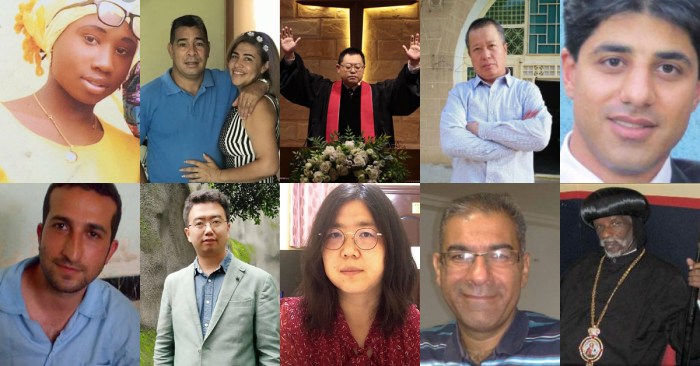
It conveys the principle that everyone should be free to believe whatever they choose to believe; however, in many countries around the world, individuals have not only been denied this freedom, but their physical freedom also on account of their religion or belief.

Continue reading “Human Rights Day: Standing up and speaking out until everyone is free to believe”

Remembering the Victims of Acts of Violence Based on Religion or Belief

There have been numerous case examples of acts of violence based on religion or belief from every corner of the world – but one that repeatedly stands out for me is the incident that occurred back in 2008, in Kandhamal district, Odisha, India.

Kandhamal is home to some of the poorest and most marginalized communities in Odisha. On 25 August 2008, it was the epicentre of widespread communal violence targeting the Christian community. Local monitoring groups estimate that over 90 people were killed with at least 54,000 displaced, over 300 churches destroyed, and unknown numbers of women brutally sexually assaulted by groups belonging to the Rashtriya Swayamsevak Sangh (RSS) that espouse Hindutva ideology. More than a decade on, and most of the victims are yet to receive justice. In addition, attacks on religious minorities and on freedom of expression continue, and a lack of official condemnation towards acts of intimidation and violence has further empowered these groups. 

International Day Commemorating Victims of Acts of Violence Based on Religion or Belief

In 2019, in an effort to recognise, respond to and prevent such acts from occurring, the United Nations General Assembly (UNGA), designated 22 August as the International Day Commemorating the Victims of Acts of Violence Based on Religion or Belief.

The resolution establishing the international day does not highlight any specific religion or belief group, but refers to all victims, regardless of creed. It strongly deplores all acts of violence against persons on the basis of their religion or belief specifically, and “any such acts directed against their homes, businesses, properties, schools, cultural centres or places of worship, as well as all attacks on and in religious places, sites and shrines that are in violation of international law”.

Remarkably, the resolution received broad support and recognition from UN Member States across the world. It was tabled by Poland alongside Brazil, Canada, Egypt, Iraq, Jordan, Nigeria, Pakistan and the USA, and subsequently cosponsored by over 80 states, including the UK. However, with global recognition comes global responsibility; both the responsibility to commemorate victims of acts of violence based on religion or belief, and the responsibility to protect and promote the right to freedom of religion or belief (FoRB) for all.

Continue reading “Remembering the Victims of Acts of Violence Based on Religion or Belief”