Every Sunday…

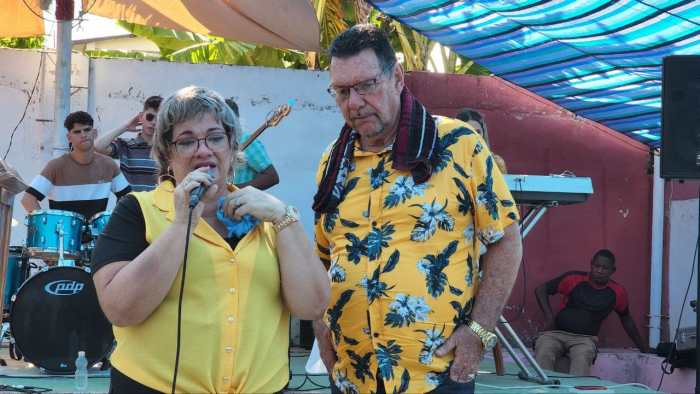
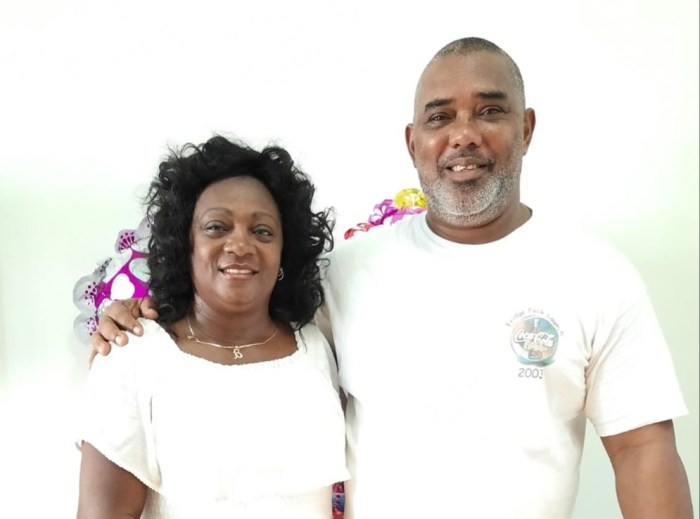
Every Sunday, between 12:30pm and 1pm, Berta Soler Fernández prepares herself.  She and her husband, Ángel Moya Acosta step outside their home, a square, two story building painted red, with a light green porch. They have every intention of making their way to a Roman Catholic Church in the Miramar section of Havana, Cuba. The church is named for Saint Rita of Cascia, the patron saint of abuse, loss, peace, desperate cases and lost causes. They will attend Mass and offer up prayers.  

Berta is dressed all in white. 

Every Sunday, between 12:30pm and 1pm, Berta and Ángel open the door of their home and are met by National Revolutionary Police (NRP) officers and Department of State Security (DSS) agents. Mobs of paramilitary members, some holding signs with offensive and insulting messages, hold up mobile phones as they record the couple’s movements. The two are forced into DSS cars with private license plates and, instead of going to Mass, they are taken to an NRP station. They are ordered to undergo an intrusive medical examination. They refuse because they have not asked for an examination and know that they will not be provided with the results anyway. Those will go to the DSS. Berta and Ángel are then sent to semi-dark prison cells where they will be held until the following morning. They will be taken by car and dropped off near their home, which also serves as the national headquarters for the Ladies in White, a dissident group that has been holding peaceful protests in support of political prisoners since 2003. 

Continue reading “Every Sunday…”
The Cuban Family Code two years on

22 July 2024 marked two years since the Cuban Family Code was approved by the National Assembly, and, just as CSW warned, the legislation has extended far beyond equality for the LGBT+ community. Although this aspect was the focus of the government’s efforts to encourage a ‘yes’ vote in the public referendum that followed, only a handful of the 474 articles were relevant to that subject.

Implementation of the legislation has pressured entire families into emigrating, to protect their children and not lose parental custody as is a real possibility under Article 191 of the code. The legislation allows for minors to be transferred into the care of the state, if the parents fail to fulfil the responsibilities detailed in Article 138 of the code including ‘inculcating love for the family, for the homeland, respect for its symbols… the norms of social coexistence [based on the ideology of the Cuban Communist Party] and respect for the authorities’.   Parents are at risk if they demonstrate behaviour that ‘induces their daughter or son to commit a criminal act…’ (191 (c)) and/or ‘[are responsible for] vicious, corrupt or criminal conduct that is incompatible with the proper exercise of parental responsibility…’ (151 (e)).

At first glance the code may appear harmless, however, it is necessary to understand that all the concepts of homeland, family, respect for patriot symbols, criminal act, and vicious or corrupt conduct are interpreted within the framework of the socialist system on which the 2019 constitution is founded. However, continuing protests, such as that of 11 July 2021 and other smaller scale social uprisings since then,1 indicate that the population is rejecting the system that the constitution obligates Cuban citizens to defend, even with their life.2

Continue reading “The Cuban Family Code two years on”

A change in government in Venezuela can only benefit the religious sector

Over the past 11 years of President Nicolas Maduro’s leadership, Venezuelan religious leaders have increasingly practiced a form of self-censorship when it comes to preaching or speaking on topics like social justice, peace, poverty, or any topic that might be perceived negatively by the dictatorship. While they may appear to have imposed this censorship on themselves, it comes from a very real fear having witnessed the cruelty that President Maduro has unleashed against those he and his regime identify as political enemies.

Elections are due to be held on Sunday, 28 July. In the run up, the Maduro regime has dedicated itself to attacking the opposition and creating an environment of terror with warnings of a ‘bloodbath’ and ‘civil war’ if Maduro does not win a third six-year term. It has been heavily implied that he could refuse to recognize the victory of Edmundo González Urrutia, the most popular candidate according to several polls.

In response to Maduro’s threats, the Inter-American Court of Human Rights (IACHR) warned that ‘this type of discourse by the highest authority of the State and the security forces has the effect of intimidating and curtailing the political freedom of the electorate… These actions affect democratic institutions and the freedoms of association, assembly, and expression, as they discourage the political participation of opposition individuals, their electorate, and the general public.’

Continue reading “A change in government in Venezuela can only benefit the religious sector”

Where the laws don’t apply: Rural Christian communities in Laos and Mexico face similar challenges

Pastor Mum and five members of his church – Liang, Pa, Laen, Lan and Khoon – have been prisoners in their own village since 22 June. 

The six Christians were arrested by the chief of Tahae village, in Laos’ Khammouane Province, after they held a small church service in Pastor Mum’s home, which was deemed ‘illegal’ as their church is not officially registered. 

It has proven challenging to get updates since – perhaps as to be expected of a small remote village in a rural province in central Laos – however when CSW first reported on the arrests five days after they took place, the group had not been formally charged or permitted to see their families or access legal counsel.  

Continue reading “Where the laws don’t apply: Rural Christian communities in Laos and Mexico face similar challenges”

In the eyes of the Cuban government, leading a church can make you a threat to national security

Pastors Mario Jorge Travieso Medina and wife Velmis Adriana Mariño González just want to be allowed to visit their daughters in the United States. They long to attend an international conference for leaders affiliated with their religious network. They would very much like to be able to accept an offer, made by friends, to send them on a long overdue and well-deserved holiday. But they are unable to do any of these things, because since 2020, the Cuban government has prohibited them from leaving the island for ‘reasons of national security’.

It would be logical to assume that in order to be considered a threat to national security, the couple must be guilty of criminal activity. In the eyes of the Cuban government, this is so. Though they have never been charged or tried, Pastors Travieso Medina and Mariño González founded and have led an illegal association for over 20 years. Rather than an organised criminal organisation, however, their association is religious in nature, peaceful, and provides much needed humanitarian aid to those in the surrounding community. This is the kind of work that the Cuban government considers to be a threat to national security.

Pastor Travieso Medina graduated with a teaching degree in 1980, after completing his studies in physical education. Ten years later, he decided on a change of career, and took a full-time position as a pastor at a church associated with a legally recognised Protestant Christian denomination. In 1998, he completed post-graduate work via distance learning with a US-based seminary, earning a master’s degree and a doctorate in theology, neither of which was recognized by Cuban institutions.

Continue reading “In the eyes of the Cuban government, leading a church can make you a threat to national security”