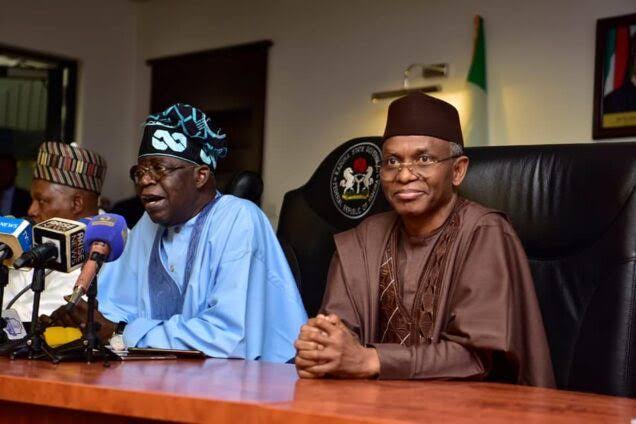
Former governor of Kaduna State Nasir El-Rufai with current Nigerian president Bola Ahmed Adekunle Tinubu.

We must not let Nigeria slide any further into failed statehood

‘Of course, we do consider religion, but I would not tell them that…’. It seems that Nasir El-Rufai, governor of Nigeria’s Kaduna State from May 2015 until May 2023, is no longer hiding his biases.

Addressing a group of Muslim clerics on his penultimate day in office after his party, the All Progressives Congress (APC), was declared the winner of the Kaduna State gubernatorial election, El-Rufai spoke extensively about how the APC had capitalised on religion, including by running on a Muslim-Muslim ticket, to secure electoral victory.

‘What we are able to achieve in Kaduna, we’ve now achieved on the national level,’ he added – a reference to the controversial and disputed victory of the APC in the presidential elections in February this year, also via a Muslim-Muslim ticket.
Continue reading “We must not let Nigeria slide any further into failed statehood”

Five years is too long: the Nigerian government must deliver on its promises to secure the release of Leah Sharibu

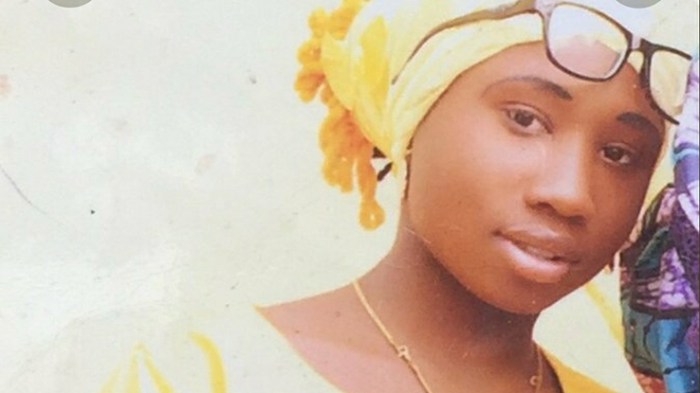
Leah Sharibu has been the hostage of terrorists for five years now.

She was just 14 years old when she was taken – the sole Christian among a group of 110 schoolgirls abducted from their school in Dapchi, Nigeria, by members of the Islamic State West Africa Province in February 2018.

Those familiar with her case will recall that just one month later all of Leah’s surviving classmates – five died in transit – were loaded onto trucks and returned to their families following negotiations by the government. But Leah was not among them.

The terrorists told her they would only release her if she renounced her faith and converted to Islam in exchange for her freedom. At just 14 years of age, Leah refused to give in to their pressure.

Continue reading “Five years is too long: the Nigerian government must deliver on its promises to secure the release of Leah Sharibu”
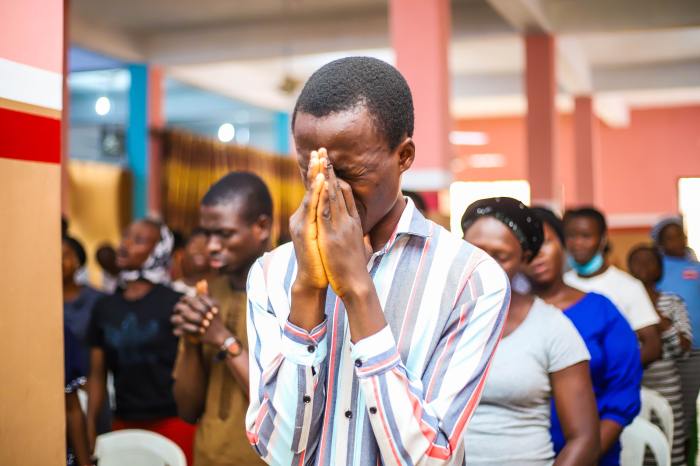
A man prays in a church in Ogbomosho, Nigeria.

Nigeria’s Muslim-Muslim ticket has implications for national cohesion

Nigeria’s ruling All Party Congress (APC’s) decision to do away with traditional convention and opt for a same faith ticket, which would result in a same faith presidency, feeds into a religious exclusivism that is inconsistent with the healing balm that a major political party such as the APC – or any other party – should be deploying at this crucial stage of the country’s political development, when instability and insecurity are at such unprecedented levels.

The nation is heavily fragmented along tribal and religious lines, among others. Therefore, political leaders from all parties ought to be advocates of unity through inclusivity, as a reflection of the country’s diversity.

This diversity holds many advantages for the strengthening mutual understanding, oneness, ensuring social cohesion, and fostering sustainable development, when handled correctly. Unfortunately, the APC’s decision to adopt a Muslim-Muslim ticket runs the risk of undermining the remaining gains of harmonious coexistence that the country has been battling to entrench.

Continue reading “Nigeria’s Muslim-Muslim ticket has implications for national cohesion”
Assorted houses in Abuja, Nigeria.

“We do not sleep with our eyes closed” – how long will the international community fail the people of southern Kaduna?

“We do not sleep with our eyes closed; we take a nap, then wake up and keep watch… we are just depending on the grace of God.”

These are the words of a villager from the Maro Ward of Kajuru Local Government Area (LGA) in the southern part of Nigeria’s Kaduna state. In the absence of effective security or government assistance, this is what targeted communities across the state have been forced into: spending their days and nights on alert patrolling, living in fear of terrorists who destroy their crops, take their lives, and abduct hundreds, if not thousands, for ransom.

Kaduna has been an epicentre of violence and banditry for several years now, with attacks on non-Muslim farming communities in the south increasing exponentially with the advent of the current administration amid a general deterioration in security.

Continue reading “We do not sleep with our eyes closed” – how long will the international community fail the people of southern Kaduna?

A helicopter’s alleged involvement in Kaduna terrorist attacks could mean one of two things

5 June brought with it familiar agony for four villages in southern Kaduna state, Nigeria. According to local reports, attackers of Fulani ethnicity are said to have descended on the villages of Dogon Noma, Maikori, Ungwan Gamu and Ungwan Sarki at around noon, with violence continuing for approximately six hours.

In consistency with previous reports of militia attacks in the region, the assailants were reportedly grouped three to a motorcycle, with one man to drive, and two others to shoot to the right and left respectively.

At least 32 people were killed across the four villages, while an unknown number remain missing following the latest attack to specifically target the Adara people, who have suffered violence at the hands of Fulani assailants for several years now.

Continue reading “A helicopter’s alleged involvement in Kaduna terrorist attacks could mean one of two things”