Citizenship and conflict: How the militaries of Israel and Myanmar are taking advantage of displaced persons

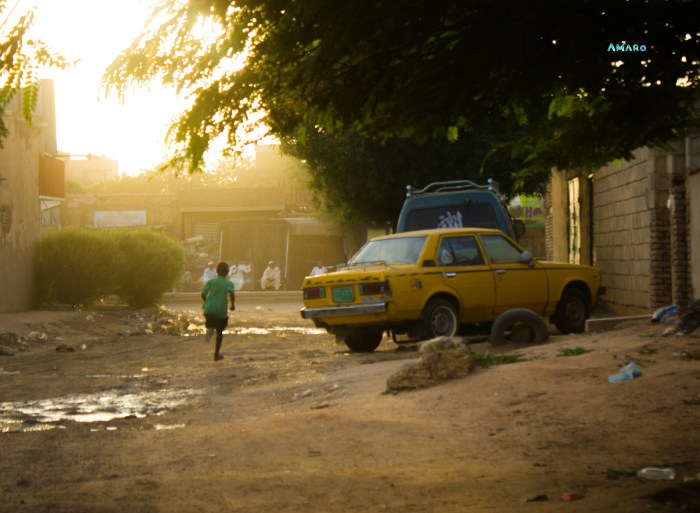
There are currently around 30,000 asylum seekers in Israel. Most have fled severe repression, including religious persecution, under a government responsible for decades of widespread crimes against humanity in Eritrea, or come from Sudan, where a gruelling 18-month conflict between the Rapid Support Forces and Sudan Armed Forces is the latest in a series of calamities to cause a severe humanitarian crisis.

Most will have travelled through Egypt before arriving there, typically with the help of people smugglers, and at great risk of assault, extortion, gender-based violence, or arrest and possible refoulement. The majority of those who complete this journey are young men, together with some young women who have likely endured unimaginable atrocities en route.

Upon their arrival, these asylum seekers find themselves in legal limbo; according to the Hotline for Refugees and Migrants, Israel’s leading refugee advocacy organisation, Israel approves less than 1% of the asylum claims it receives, with many cases pending for over five or even ten years.

Continue reading “Citizenship and conflict: How the militaries of Israel and Myanmar are taking advantage of displaced persons”

Women from Africa and the diaspora call for action to protect women and girls in Sudan from conflict-related sexual violence

As women from Africa and the diaspora, we have signed this open letter to express our solidarity with women and girls in Sudan who are being targeted in a relentless campaign of conflict-related sexual violence (CRSV) and to appeal for the urgent initiation of international protection measures and accountability mechanisms.

The war in Sudan began in April 2023 and has been described as a conflict fought on the bodies of women and girls. A total absence of protection for women and girls heightens the risk of sexual and gender-based violence.

Distressing reports have emerged of rape, gang rape, and forced ‘marriages’, with many of these violations occurring in people’s homes.1

Continue reading “Women from Africa and the diaspora call for action to protect women and girls in Sudan from conflict-related sexual violence”

UN International Day of the Victims of Enforced Disappearances: Honouring Eritrea’s Missing Voices

On the International Day of the Victims of Enforced Disappearances, CSW shares a guest blog post from our friends and partners at Human Rights Concern-Eritrea (HRC-E).

As the world marks the UN International Day of the Victims of Enforced Disappearances, we stand in solidarity with the countless Eritrean families who have endured decades of pain, uncertainty, and fear. This day is a poignant reminder of the grave human rights violations committed by the Eritrean government, which continues to use enforced disappearance as a means to silence dissent and control its population.

Eritrea is one of the most repressive states in the world, where enforced disappearances are not isolated incidents, but part of a systematic campaign to quash opposition. Thousands of Eritreans, including political dissidents, journalists, religious figures, and ordinary citizens, have been forcibly disappeared—detained without trial, often in secret prisons, leaving their families in the dark about their fate or whereabouts.

Continue reading “UN International Day of the Victims of Enforced Disappearances: Honouring Eritrea’s Missing Voices”

‘They realised their guns weren’t fast enough’

As we mark the second anniversary of the Pentecost Sunday massacre in Ondo State, Nigeria, the UK government needs to be doing more to advance FoRB through its foreign policy commitments. 

As Margaret is invited to speak, the room falls silent. We are in Parliament, off the side of Westminster Hall. It is the day of the Autumn budget and the news is flooded with discussion on whether a tax cut of 1% will be announced, how it will happen, and who it will benefit. Experts are pontificating on inflation and Conservative Party posing ahead of the 2024 general election. Seats to watch PMQs and the Chancellor’s statement are fully booked. The overflow queue stretches past the lobby and into St Stephen’s Chapel. There is no real possibility of those at the end of the queue getting in before the Chancellor is back at No. 11; but there is a small glimmer of hope, and so they stay. 

But Margaret is not standing in the queue. In fact, she couldn’t if she’d wanted to. Margaret lost her legs in the massacre at St Francis Xavier Catholic Church in Owo, Ondo State, Nigeria, on 5 June 2022 in the first ever terror attack on a church in the south of the country. This is her first time in the UK. She is supported by her husband Dominic to give a face to this year’s Red Wednesday, an event coordinated by Aid to the Church in Need aimed at raising awareness of Christian persecution. 

Continue reading “‘They realised their guns weren’t fast enough’”

Twenty years is too long: The Eritrean government must release imprisoned church leaders

Twenty years ago today the Eritrean authorities arrested Reverend Haile Naizge and Dr Kuflu Gebremeskel. Both were prominent religious leaders in the country, the former serving as the chair of the Full Gospel Church, and the latter as chair of the Eritrean Evangelical Alliance and a visiting lecturer at the former University of Asmara.

They have been detained incommunicado ever since.

The arrests of Reverend Naizge and Dr Gebremeskel are not the only anniversaries Eritrea marks this month. In May 2002 the government effectively outlawed religious practices not affiliated with Sunni Islam or the Catholic, Evangelical Lutheran or Orthodox Christian denominations. Since then, all other religious groups have been required to register in order to freely practise their faith, but the process to do this is onerous, intrusive and ultimately inconclusive, as the final step consists of the president’s signature.

Continue reading “Twenty years is too long: The Eritrean government must release imprisoned church leaders”