On 4 April Maribel Silva, Isaíd Gómez and Isaíd’s uncle, Carlos Valero obeyed the summonses of an illegal armed group operating in the Calamar Municipality of Colombia’s Guaviare Department. The next day, James Caicedo, Jesús Valero, Maryuri Hernández, Nixon Peñalosa and Oscar García did the same.
After the individuals failed to return home to their families in the hamlet of Agua Bonita in Pueblo Seco their family members reached out to representatives of the illegal armed group who had issued the summonses, but the group denied that any summonses had been issued. Later, the family members were indirectly warned that they should stop looking for their loved ones and ‘consider the case to be closed.’
So their families were left waiting, in the horrific uncertainty of what might have happened to them, wondering whether to sit tight, holding onto hope that their family members still might return home, or to flee the region out of fear of reprisals and for the safety and protection of the lives of the children and parents of the disappeared individuals. All eight individuals had already relocated and settled in Guaviare after being displaced from Arauca Department due to violence and severe violations of freedom of religion or belief (FoRB), including the closure of churches and the targeting of Protestant pastors by illegal armed and criminal groups over the past decade.
Several days after their disappearance, churches from both affected denominations began to hold prayer vigils. ‘Fear is in all of us,’ a source told CSW, ‘and although we trust that God is righteous and never abandons us, there are circumstances that can happen, such as the death of our brothers and sisters.’
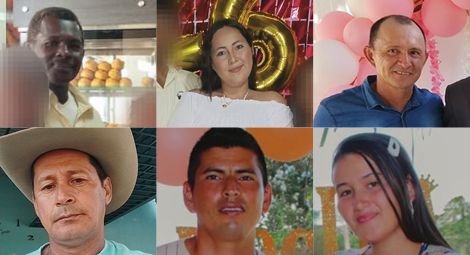
Early on, Pastor Fabian Cárdenas, president of the Evangelical Alliance of Colombia Denomination (DEAC), called on the Colombian government to intervene to clarify the location of the group of eight, which included four leaders and members of his denomination. His calls were repeated by Farid Castaño Garcia, mayor of Calamar, who also expressed concern that he had received no response from the Guaviare Department or national governments to his requests for an urgent meeting of the national Security Council, and by the Evangelical Confederation of Colombia (CEDECOL).
It is clear that any investigations were not carried out with any sense of urgency. The government appeared to be dragging its feet.
It took almost three months before the families’ worst fears were realised on 1 July when the Attorney General’s Office called to inform them that their bodies of their loved ones had been found in a shallow mass grave.
‘Obey us or suffer the consequences’
According to the Attorney General’s Office, the Central General Staff (EMC) were responsible. The EMC is a dissident faction under the command of Nestor Gregorio Vera Fernández, alias ‘Iván Mordisco’, which broke away from the Revolutionary Armed Forces of Colombia (FARC) guerrilla group in rejection of a 2016 peace agreement between the FARC and the Colombian government.
During Colombia’s decades-long internal conflict, the FARC, a Marxist-Leninist guerrilla group, maintained a strong presence in Guaviare where it imposed severe restrictions on FoRB. In September 2009 Manuel Camacho, a 33-year-old Protestant pastor, who had defied FARC orders to cease sharing his faith in Choapal, Guaviare, was shot six times in the face by guerrillas in front of his young children and left to die. His wife and children were subsequently forced to flee the area after receiving threats for having reported the crime.
The demobilisation of the FARC created a vacuum in Guaviare and other regions. The EMC and the Central Staff of Blocks and Fronts (EMBF), a separate FARC dissident faction, maintain an active presence in Calamar Municipality. The two groups are in conflict with each other and other iillegal armed or criminal groups, all vying for territorial control of the region.
While the government claims the EMC is responsible, any known motive for the assassinations of Maribel, Isaíd, Carlos, James, Jesús, Maryuri, Nixon and Oscar has not been shared.
What is clear, however, is that the families no longer feel safe in their respective churches. Their church communities and other local religious leaders are acutely aware of what has happened, and what could happen to them, in turn, should they defy any future demands or requests made by illegal armed or criminal groups.
A clear message has been sent: ‘obey us or suffer the consequences’. A culture of fear threatens to further take root, tearing apart the social fabric of communities, and fulfilling the aims of the illegal armed or criminal groups in their efforts to gain total control over these areas.
In practice, this means that church leaders must practice self-censorship, being cautious about preaching and praying on subjects that might inadvertently ‘upset’ the groups – such as peace or justice, or a call to avoid illegal activities. If the groups impose strict curfews or restrictions on movement, as they almost always do, the people in these areas may find their ability to worship curtailed or stopped altogether.
Total Peace?
When President Gustavo Francisco Petro Urrego, a vocal supporter of the 2016 peace agreement, came to power in August 2022, hopes were high that his key policy, ‘Paz Total’ (Total Peace), would bring a reduction in violence.
The objectives of Paz Total were ambitious, to say the least. Three years on, illegal armed and criminal groups continue to have significant influence or control in parts of the country, and key components of peace, truth, justice and reparation have been neglected. A disconnect between security and peace policies, leniency towards some illegal armed groups including the FARC and the National Liberation Army of Colombia (ELN), and a lack of suitable policies to incentivise members of the armed groups to renounce violence and surrender their weapons have meant that these hopes have been left unfulfilled.
The collapse in monetary value of coca leaf and paste, on which many of the illegal armed and criminal groups rely for money, has incentivised a huge increase in extortion, kidnappings for ransom and child recruitment. These groups have also continued to expand their activities beyond the cultivation and trafficking of narcotics to other areas of business, such as illegal mining.
Despite the failure of the final report of the Truth Commission of Colombia, presented in June 2022, to include any reference to violations against individuals based on religion or belief, the assassinations of the eight individuals in Calamar, Guaviare did not occur in isolation.
On 29 December 2024 Protestant Pastor Marlon Lora was assassinated in Cesar Department, along with his wife and adult son and daughter. Around ten days later, Protestant Pastor Iván García was also killed in Madgalena Department after being shot six times, including twice in the head. In July, Catholic priest Father Carlos Saúl Jaimes Guerrero, was apparently abducted in Cundinamarca Department and held for around ten days.
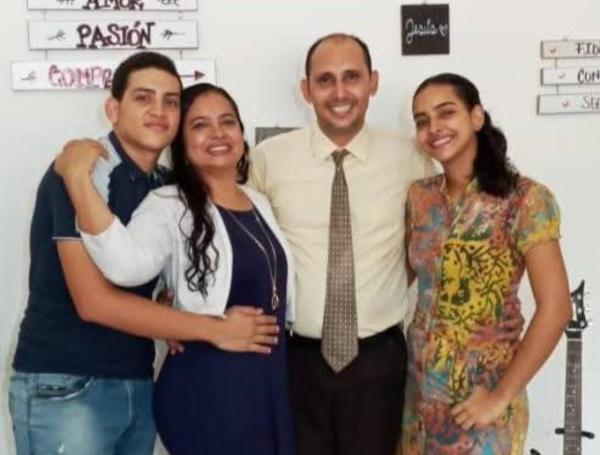
These incidents evidence the urgent need for a policy that includes specific safeguards for religious leaders and which recognises the important work they carry out, often extending far beyond the confines of a church building or a Sunday meeting.
And yet, in 2023 the Colombian government removed religious leaders from an official list of categories of particularly vulnerable populations. In practice, this means that even in cases where religious leaders have received credible and serious threats, they are no longer able to access official security mechanisms and protection programs designated for those considered to be vulnerable.
Any policy which purports to be working toward ‘Total Peace’ must guarantee real protections of the right to FoRB. The reinstatement of religious leaders under Decree 1066, recognising the unique vulnerabilities they face, to ensure they are afforded their rightful access to government protection programs and security mechanisms, is far overdue.
By CSW’s Latin America Deputy Team Leader Emily Featherstone
Featured Image: “Peace Steps on Social Movilitation” by Alexasinomas is licensed under CC BY-SA 4.0.