All posts

The Elephant in the Room: Raising Human Rights in Bilateral Talks

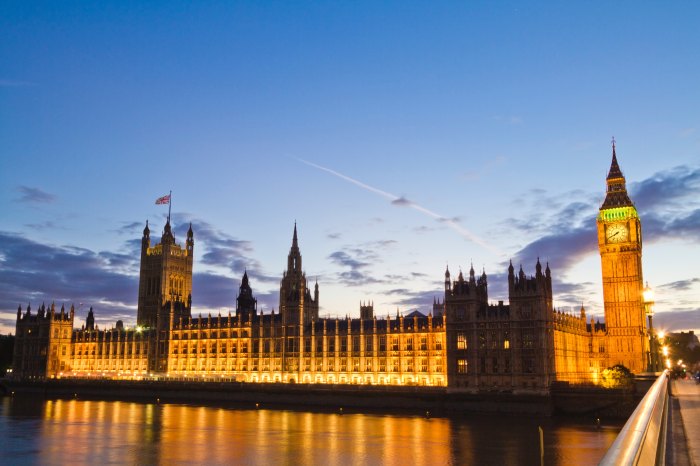
Since October 2015, the UK has hosted a state visit for the President of China and the first official UK visits of the President of Egypt and the Prime Minister of India.

While it is the responsibility of any government to foster good bilateral relationships, this should include full and frank discussions about human rights. The Conservative party committed to this in its 2015 manifesto where it stated:

“Our long-term security and prosperity depend on a stable international system that upholds our values… We will stand up for the freedom of people of all religions – and non-religious people – to practise their beliefs in peace and safety, for example by supporting persecuted Christians in the Middle East… and we will continue to support universal human rights.”  2015 Conservative Party Manifesto

During these visits, CSW made calls for the Prime Minister and his Government to honour their manifesto commitment and to raise the religious freedom situation in all three countries as part of bilateral talks. The Government was disappointingly quiet on human rights during all three visits, prompting many to question whether trade was being prioritised above human rights.

Continue reading “The Elephant in the Room: Raising Human Rights in Bilateral Talks”
Will the Foreign Office’s New Approach Strengthen the UK Government’s Human Rights Work?

Following the Conservative party’s election win in 2015, the Foreign and Commonwealth Office (FCO) took the opportunity to ‘re-configure’ their work in order to ensure the UK’s promotion of Universal Human Rights had the most impact.

Focus on Freedom of Religion or Belief under the Coalition Government

Under the Coalition Government in 2010-2015 the FCO undertook encouraging work on human rights, with freedom of religion or belief (FoRB) forming a significant part of the overall human rights programme as one of eight main thematic priorities.

Baroness Warsi, then the Minister responsible for Human Rights at the FCO, established the advisory group on FoRB, a group of experts from all faiths and none to advise the Minster on how to best protect and promote FoRB worldwide. After Baroness Warsi left her post, FoRB remained a human rights priority and the advisory group continued to meet and advise the new Minister.

Human Rights Work Reconfigured

The most significant part of the FCO reconfiguration was changing the eight thematic human rights priorities to three human rights ‘themes’. The rationale behind this was not to relegate nor promote any of the existing priorities, but instead to create overarching themes that encompassed everything the FCO human rights work does, while allowing for that work to be prioritised and developed in locally appropriate ways.

The themes are:

  • Democratic Values and the Rule of Law,
  • Strengthening the Rules Based International System,
  • Human Rights for a Stable World.
Continue reading “Will the Foreign Office’s New Approach Strengthen the UK Government’s Human Rights Work?”

Casto’s Choice: Forced Conversion or Forced Displacement

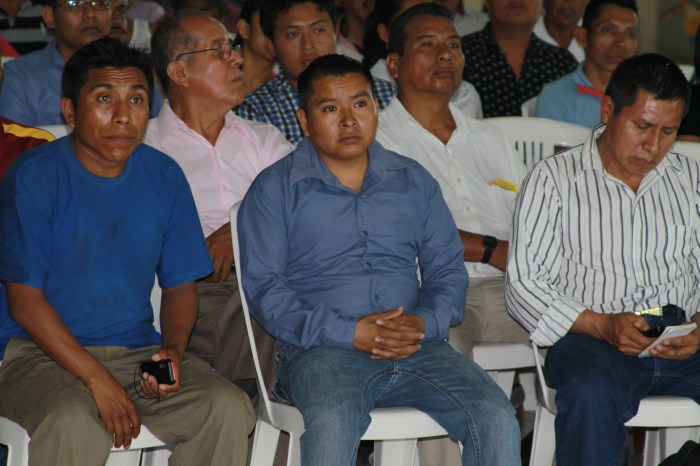
Casto sat at the table with other Christian leaders from the Huasteca region of Mexico. In April he had been talkative and his face had been animated. Now, in October, he was quiet and rarely looked up. One of the other leaders approached me privately and expressed concern about him. During the five-hour road trip to attend the workshop, he had told the other participants that he was so depressed that he hadn’t been able to attend church in a month.

This was the same man who, seven months earlier, had energetically defended his right to practice his religious beliefs at great cost. In March, he was summoned from his fields to appear at his community assembly in the village of Chichiltepec. Casto stopped his work and went to the assembly, accompanied by his cousin Juan. There, the village delegate (leader), Jesús Domínguez Hernández, told him to sign a document obligating him to renounce his Protestant beliefs – in violation of Mexico’s constitution, which protects freedom of religion or belief, and its international obligations, including the Inter-American Covenant on Human Rights which explicitly upholds the right to maintain or change ones religious beliefs.

Casto refused and Juan stood with him. The community assembly took the two young men by force and put them in a rustic jail cell carved into the side of a hill, with the bars of the door open to the chilly and damp weather. The two men were held there, with no sanitary facilities, for 30 hours. Casto was removed periodically to see if he would sign the document. He continued to refuse.  Finally the village delegate realised their pressure tactics were not going to work, released the men,  and gave Casto eighteen hours to leave the village – declaring it to be a ‘Catholic-only village’.

Continue reading “Casto’s Choice: Forced Conversion or Forced Displacement”

Religious Leaders as Human Rights Defenders?

In the early hours of 1 July 2015, Pastor Hafiz Mengisto, senior minister of the Khartoum Bahri Evangelical Church in Sudan, was arrested after trying to prevent police officers from demolishing a building on church property, which they did not have authorisation to do. While in police custody, he sustained injuries to his head and ear that required medical attention upon his release. Pastor Mengisto was only acquitted of ‘obstructing a public servant from performing the duties of his office’ on 29 December 2015.

While his acquittal is welcome, his case is not an isolated incidence of harassment but is indicative of a continued and wide crackdown on human rights defenders (HRDs) – including religious leaders or members of faith communities making a stand for human rights within their community. HRDs face various challenges ranging from de jure discrimination and bureaucratic hassles to harassment, violence, torture and murder.

Is the international community waking up to reprisals against HRDs?

In his report to the UN General Assembly in 2015, the Special Rapporteur on the situation of human rights defenders, Michel Forst drew attention to the “disturbing increase in the number of reprisals and acts of intimidation reported by defenders.” Today, thousands of human rights activists across the world face severe intimidation and harassment. One of the most difficult countries for human rights defenders is China where at least half of the country’s most prominent human rights lawyers – many of them Christians – have been interrogated, detained and in some cases disappeared since 9 July 2015. At least 30 of the over 300 HRD’s interrogated during this period, as well as others connected to them, have vanished into China’s detention system.

Since the adoption of the UN Declaration on Human Rights Defenders (1998), the international community has increasingly recognised the role of HRDs in promoting human rights. The work of the UN Special Rapporteur on the situation of human rights defenders has been instrumental in this. Moreover, the adoption of UN resolutions on human rights defenders has ensured that their situation remains visible in international human rights platforms.

In November 2015, the UN General Assembly passed an important resolution calling for states to adopt strong and effective measures to protect human rights defenders. The resolution was passed with 117 countries voting for it and 14 countries – including several Human Rights Council members such as Pakistan, China, Russia, Saudi Arabia – voting against. A further 40 countries abstained from the vote. It’s clear that many countries, including several members of the Human Rights Council, still remain uncomfortable with the work of HRDs.

Continue reading “Religious Leaders as Human Rights Defenders?”

A ‘New’ India? From a Secular to a Hindu Nation.

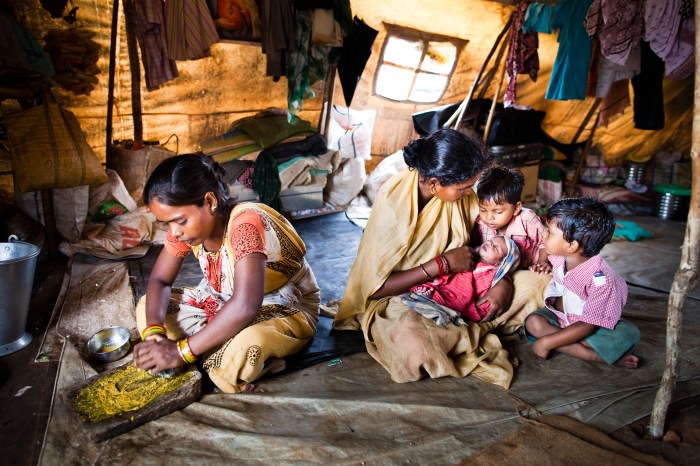
Featured Image: These women and their families are among several who share a single tent in a displacement camp housing 45 Catholic families. These families had been accommodated in five separate places since being displaced by the communal violence in August 2008. Kandhamal District, Orissa. Marcus Perkins/CSW 2009.

Rising religious intolerance is increasingly visible; be it from ghar wapis (Hindu home coming ceremonies) of religious minorities to the open incitement of hate against Muslims and Christians by senior government officials; from mob lynchings over beef consumption to attacks on places of worship; and from the distortion of historical facts in text books to the murder of renowned rationalists such as Narendra Dabholkar, Govind Pansare and M. M. Kalburgi, who questioned certain Hindu practices in their writings.

The debate about the religious intolerance sweeping India is mainstream and has drawn international news coverage as India’s distinguished scientists, rationalists, actors, academics, and historians have voiced their concerns. Some have even returned their national awards in protest, including scientists, who unlike artists are not routinely engaged in public cultural critique and protest.

A Historically Secular State

One year after the Universal Declaration on Human Rights was adopted by the United Nations General Assembly, declaring in its preamble the universality of the innate nature of human dignity, the Constitution of India was written in 1949.

The founding fathers envisioned an India where freedom of conscience would be respected by all citizens and that every Indian would live freely and without fear according to their conscience, exercising the choice to adhere to a religion or not.

The Constitution in its 42nd amendment established India as a secular state. In India, religion was intended to be kept separate from the body politic, although today the reality on the ground is starkly different as communal and religious politics are being used to polarise society.

The influence of Hindutva nationalist ideology

At the centre of this polarisation is the Hindutva ideology, which was coined by V.D Savarkar, a Hindu nationalist leader who propagated an exclusionary political ideology and promoted religious nationalism of “majoritarianism”. The aim: to make India a Hindu ‘rasthra’ (nation).

Continue reading “A ‘New’ India? From a Secular to a Hindu Nation.”