All posts

Farmers in Vietnam.

A gap between policy and practice: In Vietnam, many indigenous communities are forbidden to use their own language

‘We had a Christmas celebration with banners in different languages such as Jarai [and] Ede. The authorities did not like it, so they forbade us from using the banners in our languages.’

Christian from an indigenous people group in Vietnam

Article 5 of Vietnam’s constitution states that ‘every ethnic group has the right to use its own language and system of writing, to preserve its national identity, and to promote its fine customs, habits, traditions and culture’.

And the International Covenant on Civil and Political Rights, to which Vietnam is a party, states that persons belonging to minority groups ‘shall not be denied the right, in community with the other members of their group, to enjoy their own culture, to profess and practise their own religion, or to use their own language’.

Continue reading “A gap between policy and practice: In Vietnam, many indigenous communities are forbidden to use their own language”
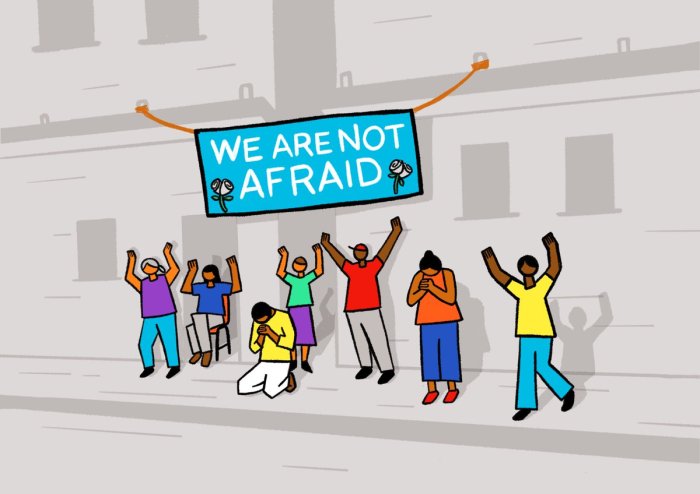

Cartoon depiction of protests in Cuba.

The international community must support the bravery of the Cuban people

‘I don’t think that any man can get used to this place, and even more so when one knows that one is here unjustly.’

– Pastor Lorenzo Rosales Fajardo

Pastor Lorenzo Rosales Fajardo has been a prisoner of the Cuban government for over 18 months. He was arrested, among many others, on 11 July 2021 in the midst of unprecedented nationwide protests in Cuba, and he is currently serving a seven-year prison sentence on completely fabricated charges of ‘disrespect’, ‘assault’, ‘criminal incitement’ and ‘public disorder’.

He is one of many political prisoners on the island, his continuing detention just one reminder of the Cuban authorities’ relentless hostility towards religious groups it views with suspicion and fear.

Continue reading “The international community must support the bravery of the Cuban people”

Five years is too long: the Nigerian government must deliver on its promises to secure the release of Leah Sharibu

Leah Sharibu has been the hostage of terrorists for five years now.

She was just 14 years old when she was taken – the sole Christian among a group of 110 schoolgirls abducted from their school in Dapchi, Nigeria, by members of the Islamic State West Africa Province in February 2018.

Those familiar with her case will recall that just one month later all of Leah’s surviving classmates – five died in transit – were loaded onto trucks and returned to their families following negotiations by the government. But Leah was not among them.

The terrorists told her they would only release her if she renounced her faith and converted to Islam in exchange for her freedom. At just 14 years of age, Leah refused to give in to their pressure.

Continue reading “Five years is too long: the Nigerian government must deliver on its promises to secure the release of Leah Sharibu”
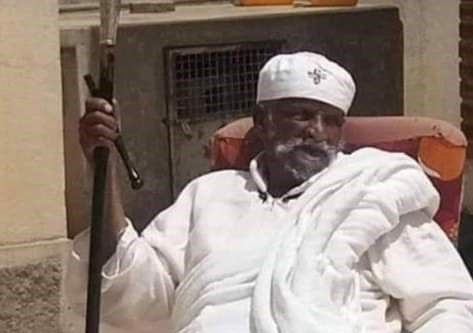
Abune Antonios, the legitimate patriarch of the Eritrean Orthodox Church.

Let us honour the memory of Patriarch Antonios by bringing an end to the violations of the Eritrean regime

Abune (Father) Antonios, the legitimate patriarch of the Eritrean Orthodox Church, died a year ago today. He was 94 years old, and had spent the last 16 years of his life under house arrest following his repeated objections to unwarranted government interference in church affairs.

In April 2004, the patriarch was appointed with the unanimous endorsement of the Holy Synod of the Church to lead one of only four recognised religious denominations in Eritrea (the others being Catholicism, Evangelical Lutheranism, and Sunni Islam). As a leader of one of the few religious communities not directly outlawed by the Eritrean authorities, one might have expected that he would not face the harassment and pressures the Eritrean regime excels in dispensing.

However, this was not the case. By August 2005 he had been removed by the government from administrative control of the patriarchate, and confined to ceremonial duties. Then in January 2006 he was removed from office in violation of canon law, his advisor Merigeta Yitbarek Berhe was detained, and he was held under de facto house arrest at his official residence. Eventually, in 2007 the patriarch’s personal pontifical insignia and clothing were seized, and he was formally placed under incommunicado house arrest in an undisclosed location in the Eritrean capital, Asmara.

Continue reading “Let us honour the memory of Patriarch Antonios by bringing an end to the violations of the Eritrean regime”
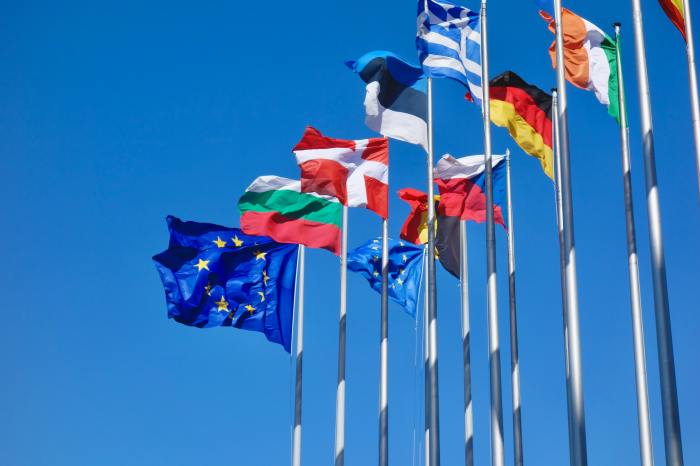
European flags flying in Strasbourg.

How trade can be leveraged as a foreign policy tool to press for human rights improvements

Trade can be used as a foreign policy tool – including as leverage on human rights issues. But there are two foundational principles of international trade law which dictate how this can and cannot be done.

The first, ‘national treatment’, requires that once a good or service has entered a country’s market, it should be treated equally to those produced locally. This means, for example, that once an item of clothing manufactured in Sri Lanka enters the Belgian market, the government generally cannot impose additional restrictions on the product which differ from those applied to clothing manufactured in Belgium; and there are restrictions on giving domestic companies advantages through, for example, subsidies (‘state aid’).

The second, known as ‘Most-Favoured-Nation (MFN)’, restricts countries from granting special access to only select other countries. It does this by requiring that if a country wants to grant special trade preferences to another country, it must do so for all. This means that the UK, for example, cannot unilaterally offer special exceptions to imports from India or the US without also offering them universally.

Continue reading “How trade can be leveraged as a foreign policy tool to press for human rights improvements”