An unfolding tragedy: The decline of religious diversity in the Middle East

By Lord Alton of Liverpool

The Middle East and North Africa (MENA) region has seen a significant decline in religious diversity in recent years. While ancient Christian communities have often suffered, practically no religious group has been safe from this ongoing tragedy, with Ahmadis, Baha’is, Jews, Yazidis and Zoroastrians all affected, as well as both Shia and Sunni Muslims. For a host of reasons, in several countries in the region, minority communities who have deep roots going back several generations are being forced to leave their ancestral lands.

Iraq and Syria: Unending violence

Since 2003, the numbers of Christians and Yazidis in Iraq have both dropped significantly. Thousands have been killed and hundreds of thousands have emigrated because of terrorism and sectarian violence. They will never return.

In 2014, the Islamic State (IS) captured Mosul and the Nineveh Plains. Thousands of non-Sunni men, women and children were either killed or enslaved. One study, by the Public Library of Science, estimates that 3,100 Yazidis were killed in a matter of days following the 2014 attack. Tens of thousands of Iraqi Christians subsequently emigrated to neighbouring countries over the following years, with their number now estimated at 250,000, down from 2.5 million before the 2003 invasion.

Continue reading “An unfolding tragedy: The decline of religious diversity in the Middle East”

Massacres, starvation and wanton destruction: The international community must act swiftly to save Ethiopia’s Tigray region

There are worrying indications that atrocity crimes may be underway in Tigray, where civilians are bearing the brunt of a conflict pitting the armies of Ethiopia, Eritrea, Somalia and an allied ethnic Amhara militia against the forces of the former regional administration.  

In a tragic irony, the government of Ethiopia, one of the first nations to sign the 1948 Genocide Convention, currently stands accused of permitting and participating in violence that could amount to genocide and crimes against humanity.

Equally ironic is the fact that the future of a Nobel Laureate who professes Evangelical Christianity, is now inextricably linked with that of the leader whose regime is deemed to have committed crimes against humanity, including the crime of religious persecution that largely targets Eritrean Evangelical Christians.

For Eritrea’s leader, Isaias Afewerki, the war on Tigray is the fulfilment of a long-held vendetta against the Tigray People’s Liberation Front (TPLF). He has effectively groomed the leaders of Ethiopia and Somalia, aided in this endeavour by Ethiopian Prime Minister Abiy Ahmed’s own antipathy towards the Tigrayan leadership and ambitions of centralising power.

Continue reading “Massacres, starvation and wanton destruction: The international community must act swiftly to save Ethiopia’s Tigray region”

Together for Uyghurs: Many beliefs, one voice

“I’m here not as a professional activist or a scholar but as a daughter and as someone directly affected by the atrocities that are being discussed today against Uyghurs – and as part of this week to remember one of the worst stains on human history, the Holocaust. I’m one of those who understand deeply how this horror must inform our response to present events.”

Ziba Murat, daughter of retired Uyghur doctor Gulshan Abbas who was recently sentenced to 20 years in prison.


Every year on 27 January, the world marks Holocaust Memorial Day, remembering the millions killed under Nazi persecution, as well as in subsequent genocides in Cambodia, Rwanda, Bosnia, and Darfur.

It is a day to honour the memories of those who lost their lives and to re-commit to never allowing such crimes to happen again.

Continue reading “Together for Uyghurs: Many beliefs, one voice”

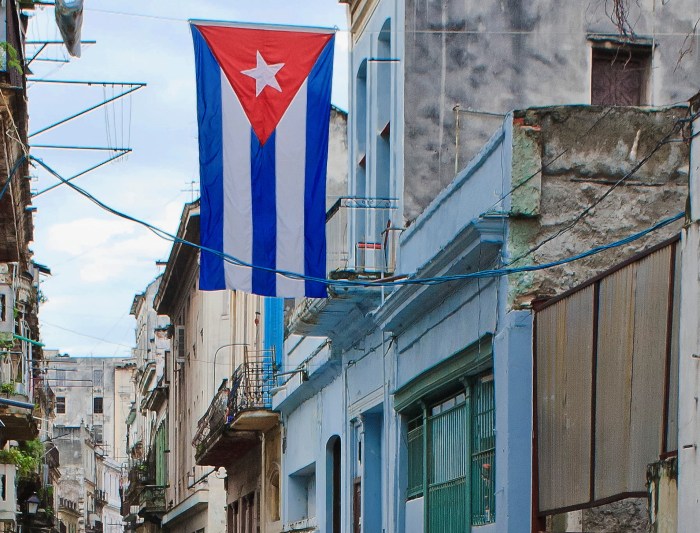
Even COVID-19 couldn’t halt Cuba’s severe violations of freedom of religion or belief

In most countries around the world, 2020 saw the suspension of at least some communal religious activities in response to the COVID-19 pandemic. Cuba was no exception. For several months, religious groups were unable to gather in public spaces and house churches, and the Ladies in White protest movement suspended their weekly marches after Sunday Mass.

Restrictions on aspects of the right to freedom of religion or belief (FoRB) such as these are permitted under Article 18 of the ICCPR, provided they are “prescribed by law and are necessary to protect public safety, order, health, or morals or the fundamental rights and freedoms of others.” However, what is particularly concerning in Cuba’s case is that, even with the permitted activities of religious groups severely curtailed, the authorities continued to target such groups with routine and systematic violations of FoRB.

Business as usual amid unprecedented circumstances

CSW’s latest report on the situation of FoRB on the island finds that “despite social unrest and economic crisis during an unprecedented global pandemic, the government continues to target members of the religious sector and abuse human rights.”

Continue reading “Even COVID-19 couldn’t halt Cuba’s severe violations of freedom of religion or belief”

For Sri Lankan Muslims, the coronavirus isn’t the only thing they’re hoping to see the back of in 2021

As the world enters a new year, and one in which many will be hoping to see the back of the COVID-19 pandemic, Sri Lanka’s Muslim community will surely be hoping that promising vaccines are also enough to bring an end to a policy which has violated a core tenet of their Islamic faith.

Since 31 March 2020, Sri Lankan government guidance has required all victims of COVID-19 to be cremated. This practice goes against the tradition of the Muslim community and infringes on their right to manifest their religion or belief, as protected under Article 18 of the Universal Declaration of Human Rights and Article 18 of the International Covenant on Civil and Political Rights (ICCPR).

Under Islamic law, a deceased Muslim should be buried in an individual grave, and the dignity of the dead must be preserved at all times. Cremation is prohibited ‘because it is considered a violation of the dignity of the human body.’ In addition, as the burying of the dead is considered a collective obligation, known as Fard Kifaya, the entire Muslim community is guilty if they fail this communal duty.

Continue reading “For Sri Lankan Muslims, the coronavirus isn’t the only thing they’re hoping to see the back of in 2021”