The inevitable result of Myanmar’s sham elections must not confer any legitimacy on its military regime 

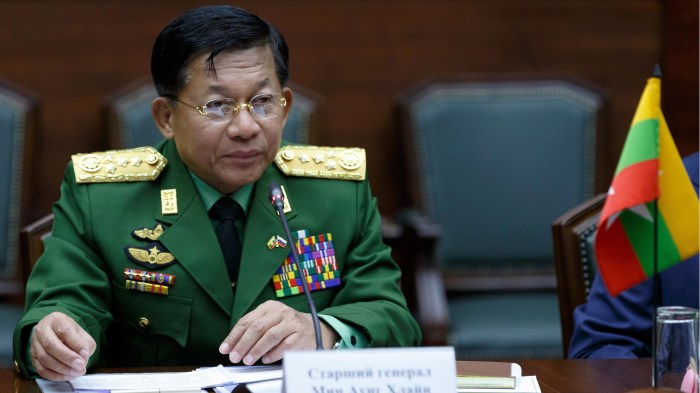
On 28 December Myanmar will begin its first general elections since its military junta seized power in a coup in February 2021. 

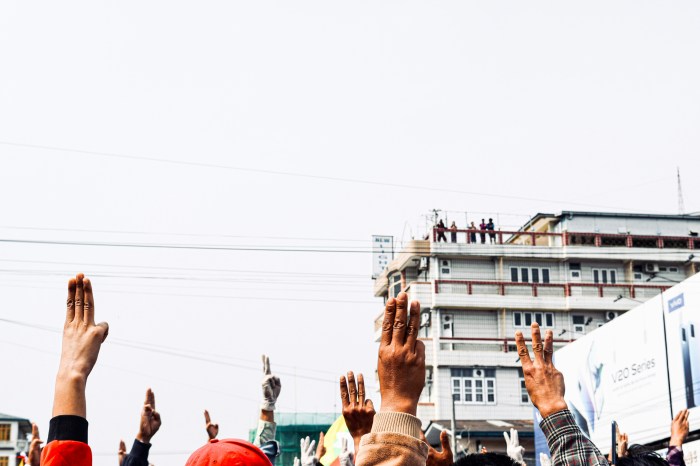
Of course, these elections will be neither free nor fair. They will take place against a backdrop of the continued detention of at least 22,000 political prisoners, including the country’s last freely elected leader Aung San Suu Kyi, the deregistration of numerous political parties by the military-controlled Union Election Commission (UEC), and the relentless killing of civilians. 

The outcome is guaranteed, but this can by no means be permitted to grant the regime a veneer of legitimacy on the international stage, and specifically among its neighbours in the Association of Southeast Asian Nations (ASEAN) where it seeks it most. 

Continue reading “The inevitable result of Myanmar’s sham elections must not confer any legitimacy on its military regime “

Even in death, Christians in India’s tribal communities are denied their rights and dignity

On 5 November the family of Gajendra Sahu, whose name has been changed for security reasons, attempted to bury him in his ancestral village of Kodekhursi, in Kanker District, in India’s Chhattisgarh State.

Gajendra had converted to Christianity three years previously. He had also given up drinking after years of alcohol addiction, but sadly passed away following a prolonged period of ill-health caused by it.

His relatives should have been permitted to lay him to rest in peace, however, because of his conversion to Christianity, residents of Kodekhursi refused to permit his burial within village boundaries, and even on his family’s own plot. Repeated requests for intervention from the authorities proved unsuccessful, and the family was ultimately forced to travel close to 200km – with a police escort – to the state capital Raipur where they were finally able to conduct a dignified funeral service in a Christian cemetery.

Continue reading “Even in death, Christians in India’s tribal communities are denied their rights and dignity”

Vietnam’s government restructuring: Streamlining or strongarming?

In April this year the Vietnamese government formally introduced sweeping reforms during the 11th Plenum of the 13th Party Central Committee. The meeting laid the groundwork for the restructuring plan, which was later affirmed at the first Congress of the Government Party Organisation for the 2025–2030 tenure held on 13 October. 

At the April plenum, Party General Secretary Tô Lâm described the reforms as part of a long-term vision for national development, stating: ‘The restructure is a strategic decision without precedent, aimed at ensuring fast, stable, and sustainable national development, and at better serving the lives of the people.’ 

The reforms have been hailed by officials as a bold step toward modernisation and efficiency, but behind the rhetoric of ‘streamlining’, human rights advocates warn that these changes may deepen state control, restrict freedoms further, and marginalise vulnerable communities—most of whom are ethnic and religious minorities. 

Continue reading “Vietnam’s government restructuring: Streamlining or strongarming?”

How the education system perpetuates religious intolerance in Pakistan, and how it could be a route to change 

‘No one is born hating another person because of the colour of his skin, or his background, or his religion. People must learn to hate.’ 

These oft-quoted words of Nelson Mandela have proven all too true in far too many contexts throughout human history, as indeed they do in a very literal sense in Pakistan today. 

While hatred can be ‘learned’ in many ways – from one’s family, or cultural background, or even from negative experiences with the object of said hatred – in Pakistan the teaching of hatred, specifically religious intolerance, is embedded in various forms into the very fibre of the country’s education system. 

Continue reading “How the education system perpetuates religious intolerance in Pakistan, and how it could be a route to change “

India’s ‘freedom of religion’ laws have nothing to do with preventing forced conversions

On 20 August India’s Uttarakhand state government introduced significant amendments to its controversial anti-conversion law. Building on the original 2018 legislation and an initial round of amendments made in 2022, the Freedom of Religion and Prohibition of Unlawful Conversion (Amendment) Bill, 2025, imposes harsher punishments on a range of offences.

Individuals convicted of using allurement, misrepresentation or fraud to induce conversion now face anywhere from three to ten years in prison and a minimum fine of 50,000 rupees (approximately GBP £420). If the case involves a minor, a woman, a person with a disability, or a member of a Scheduled Caste or Scheduled Tribe, these penalties are increased to five to 14 years in prison and a fine of at least 100,000 rupees (GBP £840).

‘Mass conversions’ and those involving foreign funding are punishable with seven to 14 years imprisonment and a minimum fine of 100,000 rupees, while punishments for cases involving threats, assault, human trafficking, or marriage as a pretext for conversion can extend to 20 years or life imprisonment, along with fines covering the victim’s medical and rehabilitation costs.

Continue reading “India’s ‘freedom of religion’ laws have nothing to do with preventing forced conversions”