The death of secularism in India: ‘Homecoming’ in the name of the Hindu rashtra

In 2014, months after the Bharatiya Janata Party (BJP) came into power, Praveen Togadia, the former President of the Visha Hindu Parishad (World Hindu Council [VHP]), said that his organisation will work towards making India a 100% Hindu nation.

This vision of a Hindu rashtra (nation) has continued to intensify over the past six years, with rhetoric promoting old narratives that all Indians are Hindus despite their religion or belief, as well as suggestions that Muslims in the country are perpetrating a “love jihad” campaign to strengthen Islamic influence, and that Western governments are providing support for the proselytisation of Christianity.

Misinformation and disinformation have been rife in India for decades. In 1999, false assertions about foreign missionaries preceded the horrific killing of the Australian Graham Staines and his two sons in Orissa (now Odisha). This marked a rise in suspicion towards and violence against Christians, which has continued to date.
Continue reading “The death of secularism in India: ‘Homecoming’ in the name of the Hindu rashtra”

World NGO Day: Standing up for those who stand up for others

27 February marks World NGO Day – a day to celebrate the work of non-governmental organisations (NGOs) around the world. As a key part of civil society, NGOs help to drive positive change, protecting and promoting fundamental human rights, democracy, and rule of law.

CSW networks and collaborates with hundreds of NGOs around the world, empowering communities whose concerns may often be overlooked, amplifying these issues in international advocacy arenas, and whenever possible, providing a platform for them to address policy makers directly.

Even as the world celebrates the invaluable work of civil society, there are many countries, including several on which CSW focuses, where the work of NGOs is not celebrated, but is instead stifled or shut down by state or non-state actors.

India: Civil society suffocated

Perhaps one of the most restrictive environments for NGOs to operate in is in India. In recent years, the country’s ruling Bharatiya Janata Party (BJP) and other Hindu nationalist groups have increasingly attempted to label dissent as damaging to India’s national interests, arguing that those who speak up about human rights are ‘anti-nationals.’

Continue reading “World NGO Day: Standing up for those who stand up for others”

Sri Lanka’s Anti-Cattle Slaughter Law: Lessons from India

In September 2020, the Sri Lankan cabinet approved Prime Minister Mahinda Rajapaksa’s proposal to ban domestic cattle slaughter. Cabinet spokesman and Mass Media Minister Keheliya Rambukwella announced that the decision would pass into law in ‘due course.’ The move may be considered a way of ‘thanking’ the country’s Buddhist majority, who have long lobbied for a beef ban, or to win support and maintain favour with the same group. Ultimately it is a politically motivated decision designed to appease the island’s majority population of Sinhalese Buddhists.  

According to Mr Rambukwella, the current governments ban follows requests from ‘various quarters’ and was mostly put forward as a ‘good gesture’ toward the Buddhist community. Under the proposed ban, beef imports are still permitted, and would be sold at a concessionary price to those who consume it. In addition to this, a programme will be launched for ageing cattle which can no longer be used for agricultural purposes.

Rampant and rising Islamophobia

Others are less convinced. In 2017, scholars Mohammad Agus Yusoff and Athambawa Sarjoon, of the Universiti Kebangsaan Malaysia and University of Peradeniya respectively, suggested that such campaigns are actually motivated by religious and ethnic concerns:

Continue reading “Sri Lanka’s Anti-Cattle Slaughter Law: Lessons from India”

Father Stan Swamy: The Indian authorities target one of the country’s oldest human rights defenders

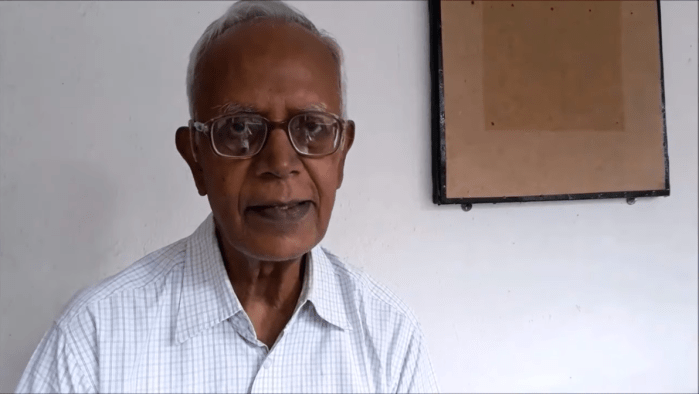
On 8 October, members of India’s National Investigation Agency (NIA) arrested Father Stan Swamy, a Jesuit priest and long-time activist on tribal rights in the country. While the targeting of those who stand up for human rights in India is nothing new, Father Swamy’s case has drawn particular international attention because, at 83-years-old, he is one of the country’s oldest human rights defenders (HRDs).

“The oldest person to be accused of terrorism in India”

Father Swamy has been working with India’s Adivasis (Scheduled Tribes) for over three decades. Even in his old age, and despite suffering from numerous health issues, he has continued to advocate for the group right up to the present day. In a video released just days before his arrest, Father Swamy said that he had filed a case in the Jharkhand High Court on behalf of 3,000 young Adivasis who had been imprisoned.

He was arrested at the Jesuit-owned Bagaicha social centre in Ranchi, the capital of Jharkhand state, and was subsequently informed that he would be remanded in custody in Taloja Jail near Mumbai until 23 October.

Continue reading “Father Stan Swamy: The Indian authorities target one of the country’s oldest human rights defenders”

The face of Hindu Rashtra in India – Towards a majoritarian state

Almost eight months since the Bharatiya Janata Party (BJP) was elected for a second term on promises of economic development, the BJP and its ideological ally the Rashtriya Swayamsevak Sangh (RSS) have instead focused their attentions on a familiar theme – fuelling communal tensions.

This time the alliance has made an unprecedented attack on the nation’s foundational tenets: the Indian Constitution. India is currently being ruled by a regime of executive orders and polarising policies, which are being used to manoeuvre around issues of race, religion and identity.

Violent integration: Jammu and Kashmir (J&K)

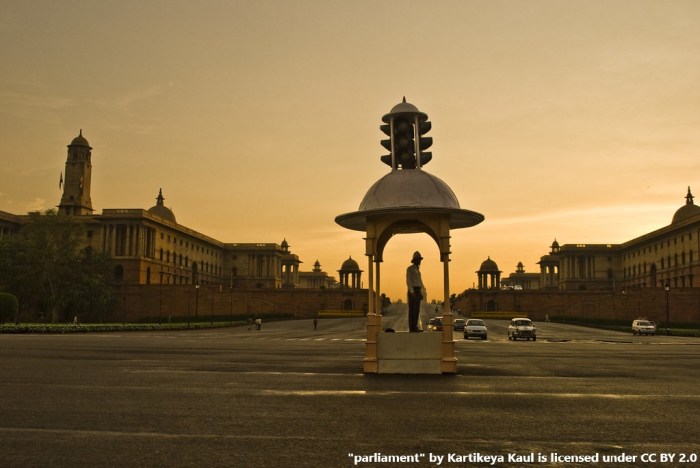
On 5 August 2019, possibly one of the darkest days in India’s history, Home Minister Amit Shah tabled a motion in Parliament to abrogate Article 370 and 35A of the Indian Constitution. The move essentially stripped Jammu and Kashmir (J&K) of the degree of autonomy the region had enjoyed since its secession to India on 26 October 1947.

Continue reading “The face of Hindu Rashtra in India – Towards a majoritarian state”