The Story of the Loc Hung Vegetable Garden, Part 3: “We just want to find a solution”

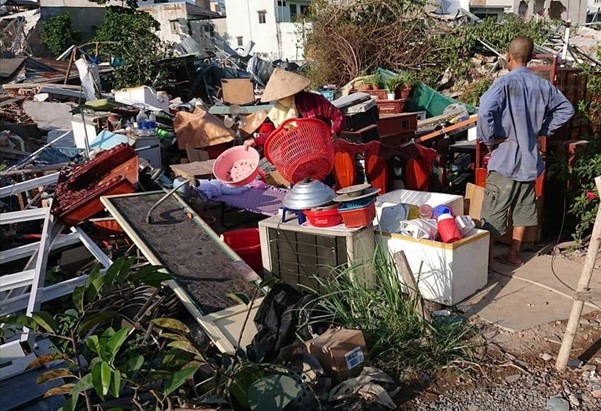
Over the past few weeks we have been looking at the story of the expropriation of the Loc Hung Vegetable Garden in Ho Chi Minh City (Saigon), Vietnam. The operation took place in January 2019 and saw the forcible eviction of thousands of residents and the destruction of over 500 homes. Today, nearly two years later the residents of Loc Hung continue to await justice.

Last week we heard from a 13-year-old resident of the garden who faced harassment at school. This week we are talking to Tran Minh-Thi, a local music teacher, who shares about her own experiences and reflects on the broader situation for children from the garden.

What is your connection with the Loc Hung Vegetable Garden case?

I was born and grew up in the vegetable garden and have lived here for over 40 years. My paternal grandparents migrated south to live and farm on the land. They passed it down to my parents, and myself and all my siblings all worked on the land as well until January 2019, when the demolition happened. My nieces and nephews also live and work on this land, so it has been in my family for four generations now. There are a lot of us – more than 70 in total – my grandparents had five children and my parents had 11, so with extended family it’s almost like one hundred.

Continue reading “The Story of the Loc Hung Vegetable Garden, Part 3: “We just want to find a solution””

The Story of the Loc Hung Vegetable Garden, Part 2: “Even though I was scared, I didn’t comply”

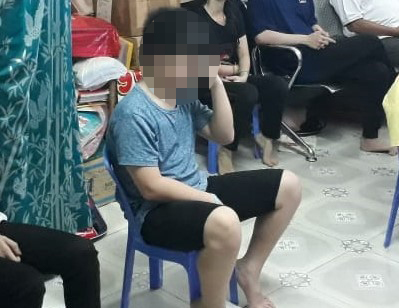
Last week we published the first instalment in our series looking at the story of the Loc Hung Vegetable Garden in Vietnam, in which we interviewed Cao Ha Truc about his experiences. For the second instalment we spoke to a child from the community who told us about his experiences of harassment at his school.

How old are you?

I am 13 years old.

Continue reading “The Story of the Loc Hung Vegetable Garden, Part 2: “Even though I was scared, I didn’t comply””

The Story of the Loc Hung Vegetable Garden, Part 1: “Their whole world collapsed around them”

In January 2019 Vietnamese authorities carried out a massive operation in the Loc Hung Vegetable Garden in Ho Chi Minh City (Saigon), Vietnam, which saw the forcible eviction of thousands of residents and the destruction of over 500 homes. Today, nearly two years later the residents of Loc Hung continue to await justice.

Over the next few weeks, CSW will be telling the story of the Loc Hung Vegetable Garden through a series of interviews with those who lived there. For our first instalment, we spoke to Cao Ha Truc, one of those leading efforts for the residents to receive some form of compensation.

How long have you lived in the Loc Hung Vegetable Garden and how did you come to live there?

My family have lived here for four generations, ever since my grandparents and parents heeded the call from President Ngo Dinh Diem to migrate from the north to the south after the Geneva Accords of 1954. I was born here and so were my children. I farmed on the land here from the day I got married until the day it was taken from my family.

Initially my family made a living from farming vegetables in the garden, but as we grew in size we needed to expand our living space so we built more houses on the land – some to live in and a few more to rent out to subsidise the income from the vegetable garden.

Continue reading “The Story of the Loc Hung Vegetable Garden, Part 1: “Their whole world collapsed around them””

Burma elections: This Sunday, the country needs a miracle

By Benedict Rogers

Five years ago, the overwhelming election victory of Aung San Suu Kyi and her National League for Democracy (NLD) in Burma heralded the dawn of a new democratic era after over fifty years of brutal military dictatorship and civil war.

After a total of 15 years under house arrest and more than a quarter of a century of courageous struggle for democracy, the Nobel Peace Prize Laureate known to everyone as “The Lady” was poised to head her country’s government. And although the military had deliberately drafted a constitution that excluded her from becoming President, her advisers ingeniously created a new role that circumvented that restriction – the position of State Counsellor, de facto prime minister. With the exception of the three key ministerial roles given to the military under the constitution – home affairs, defence and border affairs – she has absolute oversight of the civilian government.

Yet five years on, it’s a very different picture. Burma approached the crossroads of democratization, peace-building and national reconciliation – and went into reverse.

Continue reading “Burma elections: This Sunday, the country needs a miracle”

The COVID-19 pandemic could be an opportunity to save North Korean lives, if Moon Jae-In takes action

By Benedict Rogers

North Korea is ruled by the world’s most repressive, most brutal regime – one which does not allow any freedom whatsoever, one which violates every single article of the Universal Declaration of Human Rights every day. It is also the world’s most closed nation – extremely difficult to get in or out of. Those who do visit – as I have done once – are tightly monitored and controlled, while those who try to leave the country without permission face imprisonment, torture and even execution if caught.

The COVID-19 pandemic has served to tighten the restrictions on access even further. Like many countries dealing with coronavirus, North Korea has sealed its borders. Britain’s embassy in Pyongyang has been closed since 27 May, with Ambassador Colin Crooks stating on his Twitter page: “Working from London pending my return to Pyongyang.” And last week, the North Korean regime warned its citizens to stay indoors over fears that a “yellow dust” blowing in from China could bring coronavirus with it. The so-called “hermit kingdom” has become the “hermetically sealed” nation.

And yet this offers a rare opportunity to save lives, because due to its COVID-19 restrictions, North Korea has told China it will not receive repatriation of North Korean escapees. In normal times, China has a policy of forcibly returning North Koreans who escape across its border, sending them back to face certain torture, detention and in some cases execution – in flagrant breach of the international principle of ‘non-refoulement.’ Now, Kim Jong-Un’s regime says it does not want them.

Continue reading “The COVID-19 pandemic could be an opportunity to save North Korean lives, if Moon Jae-In takes action”