Father Stan Swamy: The Indian authorities target one of the country’s oldest human rights defenders

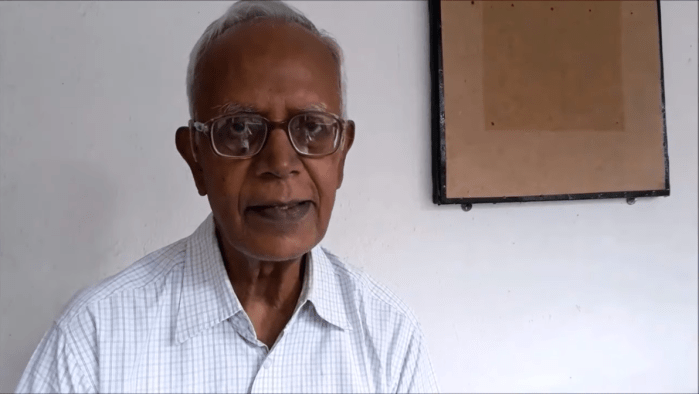
On 8 October, members of India’s National Investigation Agency (NIA) arrested Father Stan Swamy, a Jesuit priest and long-time activist on tribal rights in the country. While the targeting of those who stand up for human rights in India is nothing new, Father Swamy’s case has drawn particular international attention because, at 83-years-old, he is one of the country’s oldest human rights defenders (HRDs).

“The oldest person to be accused of terrorism in India”

Father Swamy has been working with India’s Adivasis (Scheduled Tribes) for over three decades. Even in his old age, and despite suffering from numerous health issues, he has continued to advocate for the group right up to the present day. In a video released just days before his arrest, Father Swamy said that he had filed a case in the Jharkhand High Court on behalf of 3,000 young Adivasis who had been imprisoned.

He was arrested at the Jesuit-owned Bagaicha social centre in Ranchi, the capital of Jharkhand state, and was subsequently informed that he would be remanded in custody in Taloja Jail near Mumbai until 23 October.

Continue reading “Father Stan Swamy: The Indian authorities target one of the country’s oldest human rights defenders”

“I’m not buying it, China”: The cost of fast fashion for religious and ethnic minorities in China’s Uyghur region

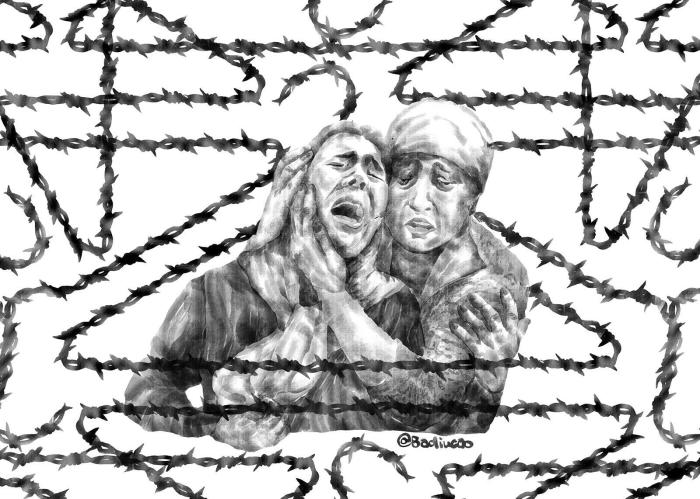
A new cotton jumper arrived in my post this week, with three words on the label that sent my mind spinning: ‘Made in China.’ Whereabouts in China? Was it made in the Uyghur region? Was this jumper a product of forced labour? A token of a part I had played – albeit unknowingly – in fuelling an industry which I knew to be entrenched in the plight of China’s religious and ethnic minorities?

Where does China’s cotton come from?

China is one of the world’s largest cotton producers and most of its cotton is produced in the Xinjiang Uyghur Autonomous Region (Uyghur Region), referred to by many Uyghurs as ‘East Turkestan.’ Credible reports claim that the Uyghur Region produces 84% of China’s cotton output, and it is the main supplier and exporter of cotton, apparel, and textile products to Chinese factories, within China and internationally.[1] The Coalition to End Uyghur Forced Labour believes that 20% of the world’s cotton comes from the Uyghur Region.

Continue reading ““I’m not buying it, China”: The cost of fast fashion for religious and ethnic minorities in China’s Uyghur region”

“No respect for human dignity”: Remembering China’s 709 Crackdown

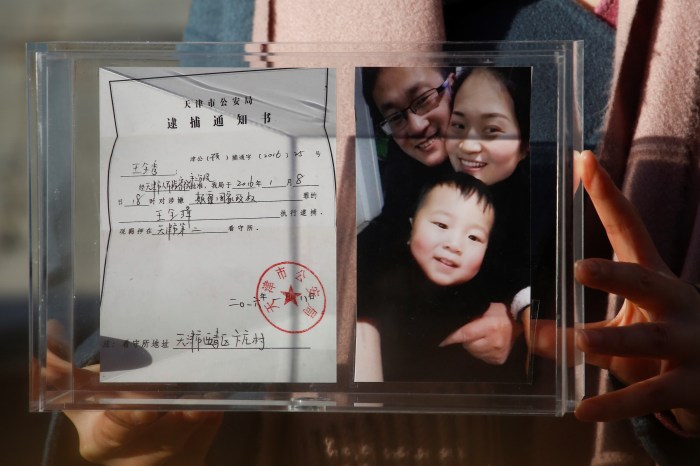
On 9 July 2015 the Chinese authorities began an extensive crackdown on human rights defenders (HRDs) and their friends and family members. Dubbed the ‘709 Crackdown’ after the date on which it began, the campaign saw over 300 lawyers, activists and their associates detained, interrogated or imprisoned.

Some of those detained have since vanished into China’s prison system. Many others have since been released, and with them have emerged reports of physical and psychological torture, including frequent beatings, sleep deprivation, forced medication, violent threats, and prolonged isolation. One of those released is human rights lawyer Wang Quanzhang, who was finally reunited with his family in April 2020 after serving nearly five years in prison. During his imprisonment, Wang suffered several health issues, losing approximately 30 pounds and showing signs of memory loss.

Five years since the crackdown began, pressure on HRDs in China continues to increase, with some forced to scale back their work on ‘sensitive’ cases or leave the profession entirely. Today we reflect on the crackdown, and its repercussions which continue to be felt across China, in the words of those who lived through it:

Continue reading ““No respect for human dignity”: Remembering China’s 709 Crackdown”

On 4 June We Remember…

On 4 June 1989 Chinese army troops brutally supressed peaceful protests for freedom and democracy, killing and wounding thousands of people in Tiananmen Square in Beijing, in what has become one of the most infamous days in China’s history.

31 years on, the current human rights situation is itself a tragedy. The Chinese Communist Party continues to violate the rights of citizens across the country, stamping out dissent, stifling freedom of expression, and tightening its stranglehold on the right to freedom of religion or belief.

Today we remember all those who lost their lives in the bloodshed and stand with their families as they continue to seek justice. We also remember those who have since been targeted by China’s oppressive regime, and urge the international community to hold China to account for severe violations of human rights.

Continue reading “On 4 June We Remember…”

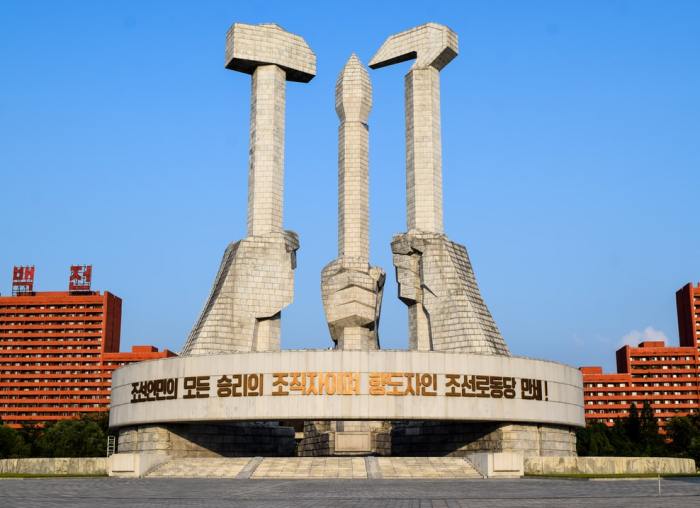
Instead of gossiping about the Kim dynasty, the world should focus on North Korea’s human rights atrocities

By Benedict Rogers

One of the very few non-COVID-19 stories that hit the headlines last month was the rumoured near-death of North Korea’s dictator Kim Jong-Un. For almost three weeks the speculation grew that he was dying or had died, and the discussion around who would succeed him reached near-fever pitch. Would it be his sister Kim Yo-jong? But would conservative North Korea be ready for a female leader? Would it be a senior military leader? But then what would that do to the regime’s credibility in the eyes of the North Korean people, if the Kim dynastic succession was broken?

But then, almost as mysteriously as he disappeared, the man known as “the Dear Leader” re-emerged, opening a fertilizer plant outside Pyongyang. Precisely what had happened remains known only to the core leadership of the world’s most secretive state. There was no shortage of rumours. It was suggested that he may have had surgery, that he may have had coronavirus, that he may simply have escaped Pyongyang to avoid infection and even that he had been injured in a missile test. But will we ever know?

Continue reading “Instead of gossiping about the Kim dynasty, the world should focus on North Korea’s human rights atrocities”