“We are not safe anymore”: Burma’s coup shatters hopes for democracy, religious tolerance and human rights

By Benedict Rogers

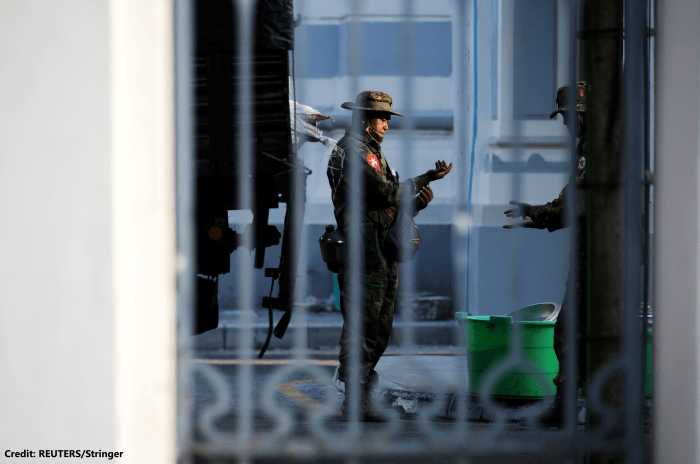
Images of tanks and soldiers on the streets of Burma’s cities, and the sound of gunfire against peaceful protesters take us back in time almost 14 years, and reverse a decade of fragile reform and democratization in the country. From the scenes of her release from house arrest in November 2010 via her talks with Burma’s then-President Thein Sein in August 2011, and through to her subsequent election to Parliament, victory in a nationwide election and the past five years as de facto head of government, Aung San Suu Kyi is now back where she started: in detention.

The generals have remained in power throughout, but now they have abandoned any pretense and seized direct control once more.

The coup on 1 February stunned the world. Although it had been rumoured, few expected the military to really do it. It is true that the army in Burma has a history of staging coups – in 1958, 1962 and 1988 – and it isn’t keen on losing elections, as it showed in 1990 when it refused to accept Suu Kyi’s first victory, consigning her to 15 years under house arrest, and her colleagues to prison or exile. In 2008 it drafted a new constitution designed to keep Suu Kyi out of power, rammed it through in a sham referendum and two years later heavily rigged the country’s first elections in two decades. Nevertheless, since then it had appeared that the military had come to some kind of accommodation with Suu Kyi and her National League for Democracy (NLD).

Continue reading ““We are not safe anymore”: Burma’s coup shatters hopes for democracy, religious tolerance and human rights”
Four years, no answers: The disappearance of Pastor Raymond Koh

On 13 February 2017 Pastor Raymond Koh was abducted in broad daylight. He was on his way to see a friend when he was kidnapped from his car by 15 men in three black SUVs and four other vehicles in Petaling Jaya, Malaysia.  Video footage of the incident, as well as eyewitness reports, appears to indicate that the men were professionally trained.

The abduction incident is infamously known as ‘7-15-40’; seven vehicles, 15 professional men and the whole process took just 40 seconds.

In 2018, I met his wife and son in Kuala Lumpur. The two of them have consistently called for answers regarding the pastor’s whereabouts, but today, over four years since his abduction, these answers remain elusive.

Continue reading “Four years, no answers: The disappearance of Pastor Raymond Koh”

Together for Uyghurs: Many beliefs, one voice

“I’m here not as a professional activist or a scholar but as a daughter and as someone directly affected by the atrocities that are being discussed today against Uyghurs – and as part of this week to remember one of the worst stains on human history, the Holocaust. I’m one of those who understand deeply how this horror must inform our response to present events.”

Ziba Murat, daughter of retired Uyghur doctor Gulshan Abbas who was recently sentenced to 20 years in prison.


Every year on 27 January, the world marks Holocaust Memorial Day, remembering the millions killed under Nazi persecution, as well as in subsequent genocides in Cambodia, Rwanda, Bosnia, and Darfur.

It is a day to honour the memories of those who lost their lives and to re-commit to never allowing such crimes to happen again.

Continue reading “Together for Uyghurs: Many beliefs, one voice”

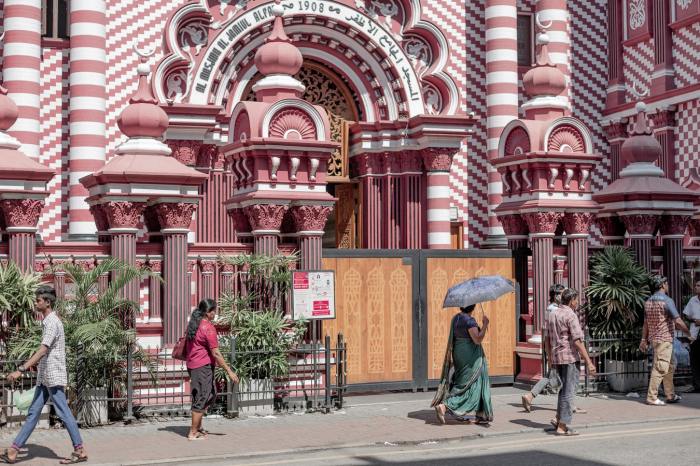
For Sri Lankan Muslims, the coronavirus isn’t the only thing they’re hoping to see the back of in 2021

As the world enters a new year, and one in which many will be hoping to see the back of the COVID-19 pandemic, Sri Lanka’s Muslim community will surely be hoping that promising vaccines are also enough to bring an end to a policy which has violated a core tenet of their Islamic faith.

Since 31 March 2020, Sri Lankan government guidance has required all victims of COVID-19 to be cremated. This practice goes against the tradition of the Muslim community and infringes on their right to manifest their religion or belief, as protected under Article 18 of the Universal Declaration of Human Rights and Article 18 of the International Covenant on Civil and Political Rights (ICCPR).

Under Islamic law, a deceased Muslim should be buried in an individual grave, and the dignity of the dead must be preserved at all times. Cremation is prohibited ‘because it is considered a violation of the dignity of the human body.’ In addition, as the burying of the dead is considered a collective obligation, known as Fard Kifaya, the entire Muslim community is guilty if they fail this communal duty.

Continue reading “For Sri Lankan Muslims, the coronavirus isn’t the only thing they’re hoping to see the back of in 2021”

Christmas in China’s prison cells: Remembering Zhang Zhan and others over the festive period

I love Christmas. I especially love the fact that it comes right in the middle of the darkest part of the year here in the UK. Just when I’ve had about enough of the cold, dark, rainy British wintertime, everything is brightened up by Christmas decorations in my neighbours’ windows, trees along our street festooned with lights, and plans for good times ahead with family and friends. 2020 is sure to be a Christmas like no other, including in the UK, but there are still things we can do to remind us of the festive spirit.

Just last week I received a lovely Christmas card with a heartfelt message. It came at just the right time, as I’d been thinking about friends and activists in China. This always makes me sad, not only because it’s impossible to visit the country right now, but more because so many of them – being Christian leaders, human rights lawyers or citizen journalists – will be spending Christmas and New Year in prison cells far away from their loved ones. Contemplating their situation, and the Chinese government’s crackdown on Christians, it seemed ironic to me that the card I held in my hands was ‘made in China’.

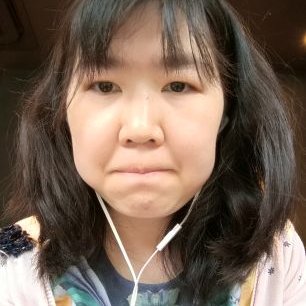
Zhang Zhan. Credit: Twitter/@consultorzhang

Take for example Zhang Zhan, a Christian citizen journalist and human rights defender. Zhang was one of the brave few who attempted to report the truth in the early days of the COVID-19 pandemic.

Continue reading “Christmas in China’s prison cells: Remembering Zhang Zhan and others over the festive period”