Truth matters: How misinformation and sensationalism undermines support for victims of human rights violations

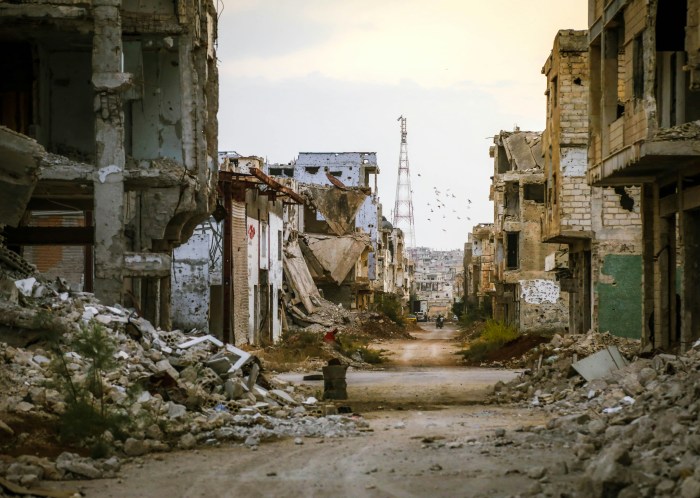
In early March, alarming reports surfaced of the killing of Christians in Syria. As a shocking outbreak of violence claimed the lives of over 1,000 people within just two days, including 745 civilians, many outlets were quick to claim that the country’s Christian community had been the target. 

GB News led with ‘Christians massacred as Syrian jihadist launches killing spree just weeks after toppling Assad’; a writer for the Times of Israel lamented what he identified as the media’s ‘predictable’ disdain for Syrian Christians; the Christian outlet Relevant Magazine claimed that ‘hundreds of Christians’ were among those killed, and countless posts on social media amplified claims of Christians being deliberately targeted and murdered in large numbers. 

Such reporting appeared to confirm the worst fears that many have harboured since December 2024, when President Bashir al-Assad was ousted by a coalition of rebel groups led by the Islamist military organisation Hayat Tahrir al-Sham (HTS), an organisation sanctioned by the US government. In the immediate aftermath of the takeover, many predominantly – though not exclusively – Christian outlets expressed understandable concern over impending threats to the country’s Christian community, with some warning of potential ‘ethnic cleansing’, ‘persecution’ and ‘genocide’. 

Continue reading “Truth matters: How misinformation and sensationalism undermines support for victims of human rights violations”

Pope Francis leaves a legacy of standing up for freedom of religion or belief. His successor must build on it. 

‘There can be no peace without freedom of religion, freedom of thought, freedom of expression and respect for the views of others.’ 

It is both fitting and moving that Pope Francis included these words in what was to be his final public address, delivered on his behalf by Master of Liturgical Ceremonies Archbishop Diego Ravelli to a crowd of over 20,000 people at the Vatican’s St. Peter’s Square on Easter Sunday. 

Throughout his 12-year papacy, Francis was a committed friend to the poor and the marginalised, a vocal advocate for freedom of religion or belief (FoRB) and other fundamental human rights, and a man who spoke truth to power right up to the final days of his pontificate. 

At a time when leaders of such humility and integrity appear to be in increasingly short supply, it is essential that his successor follows his example. 

Continue reading “Pope Francis leaves a legacy of standing up for freedom of religion or belief. His successor must build on it. “

In China’s sprawling, complex legal system, it’s easy to trap the innocent

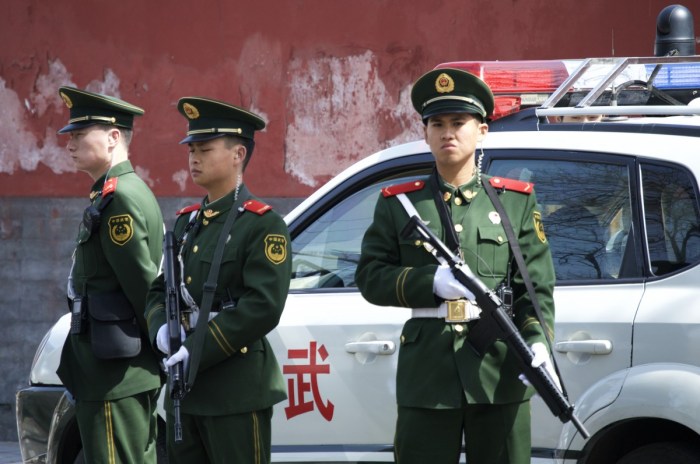
The Chinese criminal justice system is complex and expansive. There are multiple forms of detention, multiple types of arrest, and countless opportunities for the authorities to delay and defer proceedings – as they have done with increasing frequency in recent years – before a case even makes it to trial. 

This, of course, suits the Chinese Communist Party (CCP). A system that is difficult to navigate is easy to manipulate. It makes it harder for detainees, suspects, their lawyers and family members to know where they stand or even the charges they may be facing; it becomes more challenging for activists and journalists to report on and respond to crucial developments in a case, and ultimately nigh impossible for anyone the CCP is set on imprisoning to clear their name. 

This blog aims to shed light on the key steps in the Chinese judicial process, and how they can be subverted as the authorities take advantage of vague language and myriad loopholes in the country’s Criminal Procedure Law (CPL) to prolong the suffering of those they have arbitrarily detained and imprisoned. 

Continue reading “In China’s sprawling, complex legal system, it’s easy to trap the innocent”
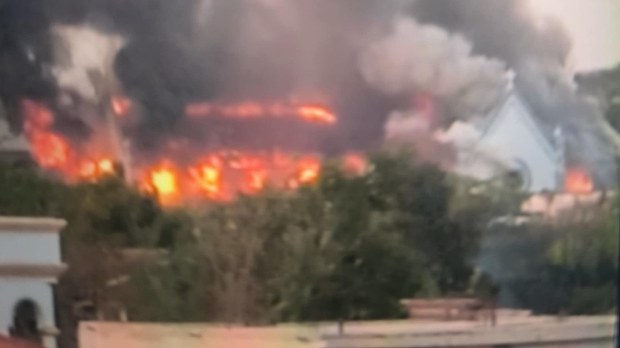
MYA Video footage shows St Patrick's Cathedral on fire on 16 March. CREDIT RVA Kachin Facebook

An attack on St. Patrick’s Cathedral the day before St. Patrick’s Day is yet another indicator of the remorselessness of the Myanmar military

17 March is a significant date for the community of St. Patrick’s Cathedral in the Banmaw diocese of Myanmar/Burma’s Kachin State.  

It is, of course, the feast day of the church’s patron saint – a day of prayer and celebration in honour of one of the most revered figures in Catholic Church history.  

This year, however, the community was unable to mark the occasion as they normally would have done, as on the evening of 16 March the cathedral was set on fire by soldiers from the State Administration Council (SAC), which falls under the authority of Myanmar’s ruling military junta. 

Continue reading “An attack on St. Patrick’s Cathedral the day before St. Patrick’s Day is yet another indicator of the remorselessness of the Myanmar military”

‘Hope is resistance’: An interview with CSW’s India Researcher

CSW relies extensively on the documenters, journalists, experts and activists that gather first-hand evidence of violations of the right to freedom of religion or belief (FoRB) in the countries we work on.

Last month, our Advocacy Intern Anna Shannon spoke with CSW’s India Researcher, whose name has been withheld for security reasons, to discuss what her work entails, the state of FoRB in India, and where she sees hope for the future.

As CSW’s India Researcher, what does your work entail?

My work entails documenting and reporting on violations of religious freedom across India, particularly against Muslims and Christians. So, whenever there are any attacks or any instances of discrimination against Muslims or Christians, I speak to victims, eyewitnesses, sometimes the lawyers who are working on these cases and I write the report.

Continue reading “‘Hope is resistance’: An interview with CSW’s India Researcher”