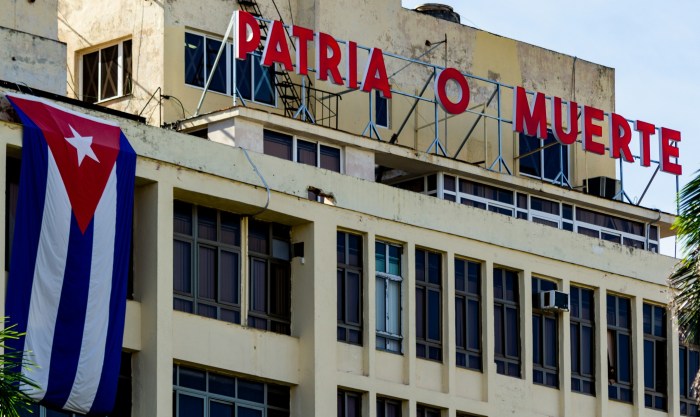
For authorities in Cuba’s prisons, the right to freedom of religion or belief is a tool to manipulate 

It has been understood for decades that conditions in Cuba’s maximum-security prisons are terrible. They have only grown worse over the past few years as the entire country has experienced an economic and infrastructure crisis, with critical shortages of food and medicine across the country alongside the repeat failure of the island’s entire electrical grid, sometimes for days at a time.  

Since 1989, the Cuban government has refused access to the International Committee of the Red Cross to monitor or assess prison conditions. Prisoners are held in unhygienic, sometimes overcrowded conditions, in cells infested with mosquitoes and bedbugs. The food served to prisoners is unpalatable, riddled with insects and worms, and low in nutrition. Despite rampant disease, including tuberculosis, dengue, and dysentery outbreaks, throughout the prison facilities, medical attention is inadequate, if provided at all.  

During the hot and humid summer months, temperatures inside the cells can rise to dangerous levels. Multiple former political prisoners have told CSW that the only water they had extremely limited access to, both for drinking and personal hygiene, was cloudy or dirty.  

Continue reading “For authorities in Cuba’s prisons, the right to freedom of religion or belief is a tool to manipulate “

Bridging the gap: The importance of finding common ground between religious groups and secular human rights organisations 

Oppressive governments depend, in part, on two things: unity among those who support them and divisions within the communities that do not. One of the greatest challenges in addressing freedom of religion or belief (FoRB) in countries where that right is regularly violated is bridging divisions between different groups within the religious sector, as well as the gap that often exists between the religious sector and secular human rights and other independent civil society organisations. 

Religious groups often occupy a unique position within larger independent civil society. They are networked and organised, to different extents, with members who regularly attend and participate in their activities. They often possess a dedicated physical space, where they are able to hold their activities with minimal outside interference. Some religious groups will run outward focused activities, providing social services. In many cases, religious leaders not only hold a significant decree of influence within their respective community – they may also be perceived as moral adjudicators more widely even by people who do not share their religious beliefs.  

Oppressive regimes are sensitive to the danger posed to them by a socially engaged religious sector and outspoken religious leaders who are willing to work hand in hand with larger civil society in defending civil and political rights. Division, therefore, is deliberately encouraged and stoked, often by intelligence and security agencies, with the goal of neutralising or coopting organised independent civil society, including the religious sector.  

Continue reading “Bridging the gap: The importance of finding common ground between religious groups and secular human rights organisations “

State repression knows no ideology

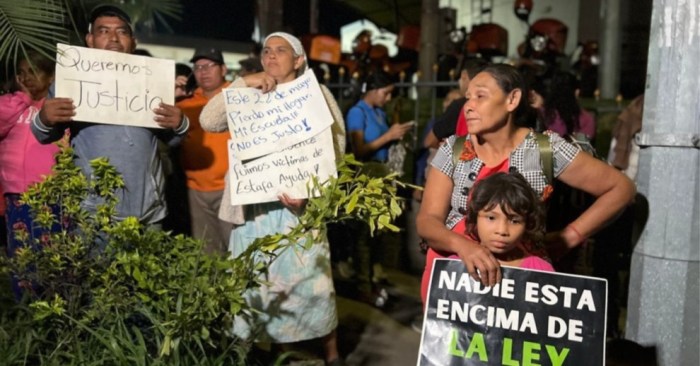
On 12 May a community in rural El Salvador gathered for a peaceful protest demanding their land rights. Within hours, the government responded with riot gear and arrests, striking fear among the families present. This is how authoritarian tendencies manifest themselves, no matter the political branding. 

In today’s polarised world, it is easy to label enemies by ideology. When we think of authoritarianism, our minds may leap to the right or the left. But beyond the party name or rhetoric lies something more universal: the impulse to silence those who question injustice. 

In recent weeks, two cases from opposite ends of the ideological spectrum have brought this to light. In one, a pastor in a country with a right-leaning government was arrested while seeking to protect his community from an unjust eviction. In the other, two pastors living under a left-leaning government were detained for speaking of God’s justice in defence of their son at a military tribunal. Though the contexts differ, the charges were similar: ‘public disorder’ and ‘resisting arrest’ in the former, and “‘disrespect’ and ‘disobedience’ in the latter. Neither government would tolerate independent voices raising moral concerns. 

Continue reading “State repression knows no ideology”

Prayer, outreach, free expression – the Cuban government won’t tolerate the truth

A mid-size church located in a population facing significant economic and social challenges organises a weeknight, evening prayer service. Members of the church attend and participate in a series of structured times of prayer. At times they pray silently, at others the pastor leads them in prayer, and in one session they gather around the national flag to pray for the needs facing those in their community and country. Their prayers speak of fundamental needs – for food, for medicine, for a reduction in crime, for the provision of basic services to all.  

In another part of the country, the pastor of a church takes steps to address a specific need in his community, which is also enduring hardship. Together with the church leadership, he coordinates a general collection to meet the needs. Members of the church, and many in the larger community, join in the effort and together they are able to put together packages of essential goods to give away to the most desperate.  

Neither of these scenarios would attract much notice in many parts of the world. Those who did not share the faith of those involved might think some of the practices a little strange, but not harmful. Not so in Cuba, however, where the simple act of praying for the country – especially in conjunction with the use of the national flag – and any effort by a religious group to meet the acute needs of the population, are met with hostility by the government, which is increasingly threatening religious leaders who organise such activities with criminal charges.

Continue reading “Prayer, outreach, free expression – the Cuban government won’t tolerate the truth”

Every Sunday…

Every Sunday, between 12:30pm and 1pm, Berta Soler Fernández prepares herself.  She and her husband, Ángel Moya Acosta step outside their home, a square, two story building painted red, with a light green porch. They have every intention of making their way to a Roman Catholic Church in the Miramar section of Havana, Cuba. The church is named for Saint Rita of Cascia, the patron saint of abuse, loss, peace, desperate cases and lost causes. They will attend Mass and offer up prayers.  

Berta is dressed all in white. 

Every Sunday, between 12:30pm and 1pm, Berta and Ángel open the door of their home and are met by National Revolutionary Police (NRP) officers and Department of State Security (DSS) agents. Mobs of paramilitary members, some holding signs with offensive and insulting messages, hold up mobile phones as they record the couple’s movements. The two are forced into DSS cars with private license plates and, instead of going to Mass, they are taken to an NRP station. They are ordered to undergo an intrusive medical examination. They refuse because they have not asked for an examination and know that they will not be provided with the results anyway. Those will go to the DSS. Berta and Ángel are then sent to semi-dark prison cells where they will be held until the following morning. They will be taken by car and dropped off near their home, which also serves as the national headquarters for the Ladies in White, a dissident group that has been holding peaceful protests in support of political prisoners since 2003. 

Continue reading “Every Sunday…”