Where the laws don’t apply: Rural Christian communities in Laos and Mexico face similar challenges

Pastor Mum and five members of his church – Liang, Pa, Laen, Lan and Khoon – have been prisoners in their own village since 22 June. 

The six Christians were arrested by the chief of Tahae village, in Laos’ Khammouane Province, after they held a small church service in Pastor Mum’s home, which was deemed ‘illegal’ as their church is not officially registered. 

It has proven challenging to get updates since – perhaps as to be expected of a small remote village in a rural province in central Laos – however when CSW first reported on the arrests five days after they took place, the group had not been formally charged or permitted to see their families or access legal counsel.  

Continue reading “Where the laws don’t apply: Rural Christian communities in Laos and Mexico face similar challenges”

In the eyes of the Cuban government, leading a church can make you a threat to national security

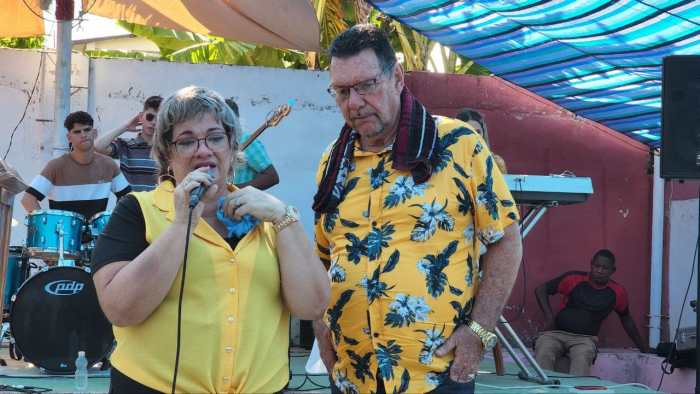
Pastors Mario Jorge Travieso Medina and wife Velmis Adriana Mariño González just want to be allowed to visit their daughters in the United States. They long to attend an international conference for leaders affiliated with their religious network. They would very much like to be able to accept an offer, made by friends, to send them on a long overdue and well-deserved holiday. But they are unable to do any of these things, because since 2020, the Cuban government has prohibited them from leaving the island for ‘reasons of national security’.

It would be logical to assume that in order to be considered a threat to national security, the couple must be guilty of criminal activity. In the eyes of the Cuban government, this is so. Though they have never been charged or tried, Pastors Travieso Medina and Mariño González founded and have led an illegal association for over 20 years. Rather than an organised criminal organisation, however, their association is religious in nature, peaceful, and provides much needed humanitarian aid to those in the surrounding community. This is the kind of work that the Cuban government considers to be a threat to national security.

Pastor Travieso Medina graduated with a teaching degree in 1980, after completing his studies in physical education. Ten years later, he decided on a change of career, and took a full-time position as a pastor at a church associated with a legally recognised Protestant Christian denomination. In 1998, he completed post-graduate work via distance learning with a US-based seminary, earning a master’s degree and a doctorate in theology, neither of which was recognized by Cuban institutions.

Continue reading “In the eyes of the Cuban government, leading a church can make you a threat to national security”

Elections in Mexico: Freedom of religion or belief remains an unaddressed issue 

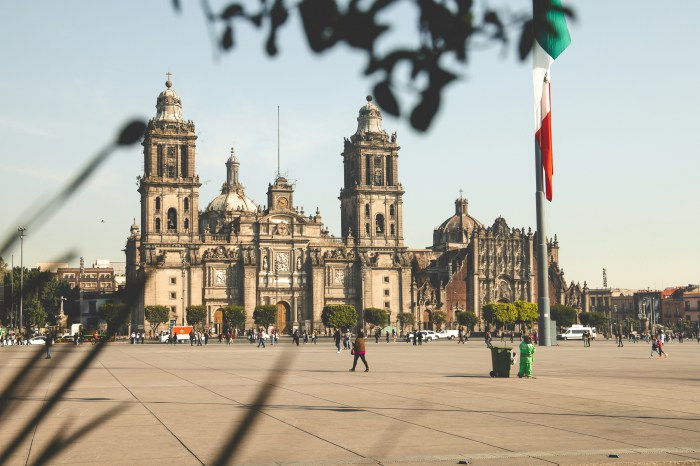
This weekend Mexico will elect 20,286 representatives, including a new president, 128 new senators, 500 federal deputies, governors, municipal presidents and members of state legislatures.  

Although several challenges have been addressed during the electoral campaigns, one topic that has hardly been talked about is human rights, despite the continued calls by civil society organisations for this to change.  

In 2022, Mexico’s National Institute of Statistics and Geography (INEGI) recorded 156,743 human rights violations. The most frequently occurring types of violations were arbitrary detention, acts of discrimination carried out by public officials, and the denial or inadequate provision of public services like water and electricity.  

Continue reading “Elections in Mexico: Freedom of religion or belief remains an unaddressed issue “

Protestant, Catholic, Critic, Ally: No-one is safe in Nicaragua 

The government decides to whom to extend its hand and to whom to close it, the Protestant churches that today shake the hand of the dictatorship could tomorrow be strangled by the same hand.  

A Nicaraguan human rights defender 

On Tuesday 12 December 2023, Nicaraguan security forces carried out an operation that would see 11 Protestant leaders arrested and detained across the country by the end of the day. The organisation with which the leaders were affiliated, Mountain Gateway, a Protestant organisation based out of Texas, and which has operated legally in Nicaragua since 2015 under the name Puerta de la Montana, was stripped of its legal status, and its assets, including 47 vehicles and four properties, were confiscated by the government.  

One month later, the government announced that it was pursuing criminal charges against those detained as well as three United States citizens (in absentia), on accusations of money laundering and organised crime. Show trials, in which the government produced no evidence to back up the charges, were held, and in March 2024, the 11 detainees were sentenced to between 12 and 15 years in prison and fined $80 million US dollars.  

Continue reading “Protestant, Catholic, Critic, Ally: No-one is safe in Nicaragua “

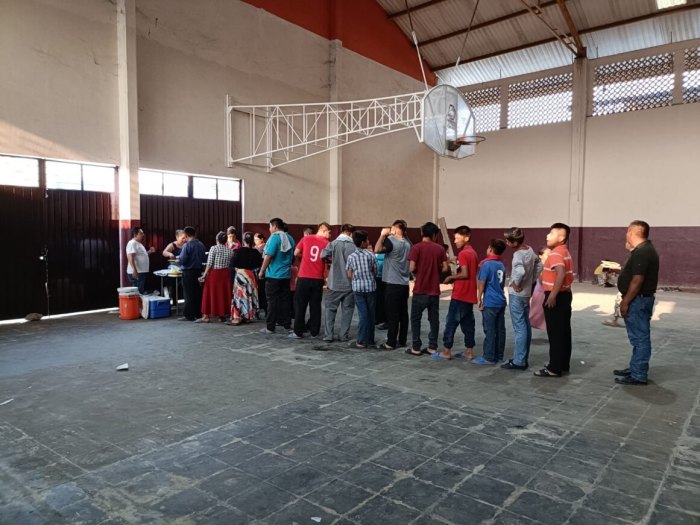
139 Protestant Christians are now living in an auditorium because the Mexican government has not done its job

In 2015, members of a religious minority living in neighbouring villages in the Huasteca region of Hidalgo State, Mexico were informed by their village leaders that they would no longer be permitted to perform their assigned acts of community service.  

To outsiders, this might seem insignificant, especially when compared to violations of freedom of religion or belief (FoRB) elsewhere in Mexico and the world. Being told to do less work might even seem like a positive development. Those in the villages of Rancho Nuevo and Coamila, both located in the municipality of Huejutla de los Reyes, however, understood that the non-completion of this work would mean the loss of recognition as members of the community. And, associated with that recognition are rights, including access to health care, government benefit programmes and education.  

The situation grew worse in 2016, as members of the religious minority were warned against accessing or using their land for cultivating crops, their main source of sustenance and income. Individuals who helped the group, who all belong to the Great Commission Baptist Church, to build a place of worship on privately owned land were threatened and violently assaulted. The Baptists were repeatedly forced to attend community meetings where local leaders demanded that they take part in Roman Catholic festivals including by making financial contributions and actively participating in acts of worship. The leaders warned them that more severe punishment, including permanent removal from the community membership rolls, would follow if they did not comply. 

Continue reading “139 Protestant Christians are now living in an auditorium because the Mexican government has not done its job”