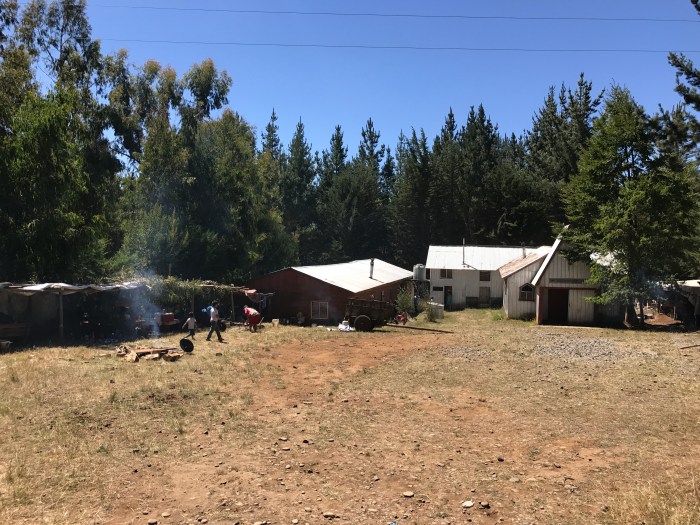
A church in Araucania, Chile.

‘The only church that enlightens is the one that burns’: The glowing embers of Chile’s Latin American success story

Today marks 50 years since Augusto Pinochet’s coup d’état forever changed the course of Chilean history. His rule brought about years of egregious human rights violations, during which many Chileans were tortured, murdered or forcibly disappeared, and their bodies never found. The trauma still scars the population today.

Pinochet was removed from power in 1990 after 17 years of brutal military dictatorship, and as President Patricio Aylwin took office on 11 March 1990, he declared, ‘Chile doesn’t want violence or war; it wants peace’. Whilst Chile has enjoyed relative peace and human rights have generally been respected since 1990 compared with the 17 years preceding it, Aylwin’s words still ring true more than 30 years later.

Success wearing thin

Chile has largely been heralded for its stability for the last decade or so; prosperous and peaceful, largely untouched by the levels of violence experienced by other countries in the region. The Latin American success story is largely backed up by statistics, such as those of the Global Peace Index, which ranked Chile at 58 out of 163 countries for its levels of peace in 2023.

Continue reading “‘The only church that enlightens is the one that burns’: The glowing embers of Chile’s Latin American success story”
A church in Araucania, Chile.

‘La única iglesia que ilumina es la que arde’: Las brasas ardientes de la historia de éxito de Chile en América Latina

Hoy se cumplen 50 años desde que el golpe de Estado de Augusto Pinochet cambió para siempre el curso de la historia chilena. Su gobierno provocó años de atroces violaciones de derechos humanos, durante los cuales muchos chilenos fueron torturados, asesinados o desaparecidos por la fuerza, y sus cuerpos nunca fueron encontrados.  El trauma aún hoy deja cicatrices en la población.

Pinochet fue derrocado del poder en 1990 después de 17 años de brutal dictadura militar, y cuando el presidente Patricio Aylwin asumió el cargo el 11 de marzo de 1990, declaró: “Chile no quiere violencia ni guerra; quiere paz”. Si bien Chile ha disfrutado de una paz relativa y los derechos humanos en general han sido respetados desde 1990 en comparación con los 17 años anteriores, las palabras de Aylwin todavía suenan ciertas, a más de 30 años después.

El éxito se está agotando

Chile ha sido ampliamente elogiado por su estabilidad durante la última década; próspero y pacífico, en gran medida al margen de los niveles de violencia experimentados por otros países de la región. La historia de éxito latinoamericana está respaldada en gran medida por estadísticas, como las del Índice de Paz Global, que ubicó a Chile en el puesto 58 de 163 países por sus niveles de paz en 2023.

Continue reading “‘La única iglesia que ilumina es la que arde’: Las brasas ardientes de la historia de éxito de Chile en América Latina”